Neighbors Call Cops On Kid Trying To Mow And Save For PS5. Guess what happens next?

PS5 Drives Kids to Raise Funds

Neighbors Call Cops On Kid Trying To Mow And Save For PS5. The Cops Pitch In And Buy The Kid A PS5

SunnySkyz.com | PS5 | Shield Insurance Blog | Start A Quote Today! | August 1, 2023

A heartwarming incident unfolded in Hapeville, Georgia, when a young boy, determined to earn money to buy a PlayStation 5 (PS5), faced an unexpected hurdle as neighbors called the police on him.

cops buy kid ps5
City of Hapeville Police

The ambitious boy had set his sights on owning a PS5 and decided to raise money for the console by offering lawn-mowing services to neighbors in his community.

However, neighbors wanted the juvenile removed from the area and called the police.

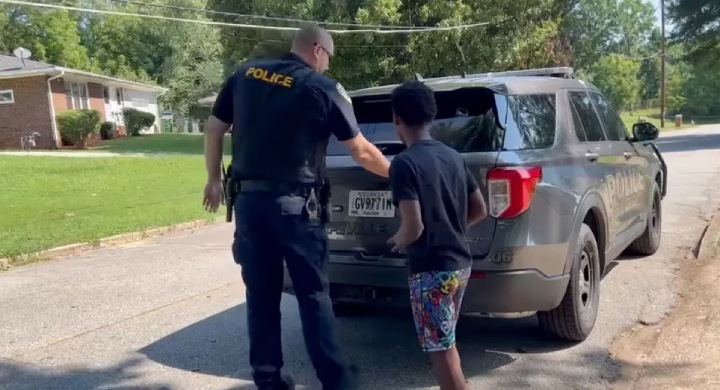
“Officer Colleran made contact with a young man that explained he was in the area because he wanted to do yard work: pulling weeds, cutting grass, and trimming hedges to save up for a PlayStation. The young man was polite, respectful, and truthful,” the Hapeville police department explained.

cops buy kid ps5
City of Hapeville Police

Officer Colleran, a gamer himself, was so impressed with the young man that he decided to help him reach his goal.

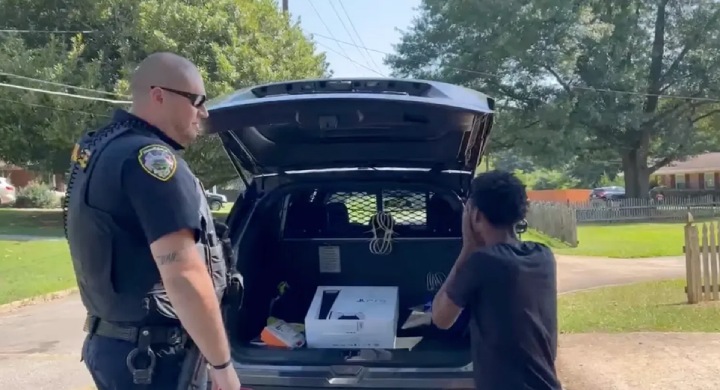
Officer Colleran and some of his friends came together to get the video game system and even a gift card to pay for the membership so the boy could play immediately.

A PS5 costs $500 and a membership is $10 a month.

“Officer Colleran made sure that this young man knew they would play on the same team online soon!” the department said.

The Playstation has come a long way!

PS5 or PlayStation 5

The PlayStation 5 (PS5) is a home video game console developed by Sony Interactive Entertainment. It was announced as the successor to the PlayStation 4 in April 2019, was launched on November 12, 2020, in Australia, Japan, New Zealand, North America, and South Korea, and was released worldwide one week later. The PS5 is part of the ninth generation of video game consoles, along with Microsoft‘s Xbox Series X/S consoles, which were released in the same month.

The base model includes an optical disc drive compatible with Ultra HD Blu-ray discs. The Digital Edition lacks this drive, as a lower-cost model for buying games only through download. The two variants were launched simultaneously.

The PlayStation 5’s main hardware features include a solid-state drive customized for high-speed data streaming to enable significant improvements in storage performance, an AMD GPU capable of 4K resolution display at up to 120 frames per second, hardware-accelerated ray tracing for realistic lighting and reflections, and the Tempest Engine for hardware-accelerated 3D audio effects. Other features include the DualSense controller with haptic feedbackbackward compatibility with the majority of PlayStation 4 and PlayStation VR games, and the PlayStation VR2 headset.

History of PS5


More Blogs by Shield Insurance Agency

Read More
Insurance 101 for Beginners

Insurance 101 for Beginners

Shield Insurance Blog | Insurance | Start a Quote Today!

What do I need to Know About Insurance?

Insurance is a crucial aspect of our lives that provides financial protection and peace of mind. Whether it’s car insurance, homeowners insurance, or any other type of insurance, understanding the basics is essential. In this blog post, we will explore the fundamental concepts of insurance, different types of insurance, and why it is important to have the right coverage.

Insurance is a contract between an individual or business and an insurance company. The individual or business pays a premium, and in return, the insurance company agrees to provide financial protection in the event of a covered loss. The purpose of insurance is to transfer the risk of potential financial loss from the insured to the insurance company.

Basic Terms and Definitions

To understand insurance better, it is essential to familiarize yourself with some basic terms and definitions. Here are a few key terms:

  • Premium: The amount of money paid to the insurance company for coverage.
  • Deductible: The amount the insured must pay out of pocket before the insurance company starts covering the loss.
  • Policy: The contract that outlines the terms and conditions of the insurance coverage.
  • Coverage: The specific protection provided by the insurance policy.
  • Claim: A request made by the insured to the insurance company for compensation for a covered loss.

Car Insurance for Beginners

Car insurance is one of the most common types of insurance that people need. It provides financial protection in case of accidents, theft, or damage to your vehicle. Here are a few things to consider when getting car insurance:

  • Liability Coverage: This coverage pays for damages and injuries you cause to others in an accident.
  • Collision Coverage: This coverage pays for damages to your vehicle in case of a collision.
  • Comprehensive Coverage: This coverage pays for damages to your vehicle caused by events other than collisions, such as theft or natural disasters.

Renters and Homeowners Coverage for Beginners

If you rent or own a home, it is crucial to have renters or homeowners insurance to protect your belongings and property. Here are a few key points to consider:

  • Renters Insurance: This type of insurance provides coverage for your personal belongings in case of theft, fire, or other covered events. It also provides liability coverage in case someone gets injured in your rented property.
  • Homeowners Insurance: This insurance covers your home and belongings against damage or loss caused by covered events. It also provides liability coverage and additional living expenses if your home becomes uninhabitable.

What other types of Insurance are there?

Apart from car insurance and homeowners/renters insurance, there are several other types of insurance that you may need depending on your circumstances. Some common types include:

  • Health Insurance: This insurance provides coverage for medical expenses and can help protect you from high healthcare costs.
  • Life Insurance: Life insurance provides financial protection to your loved ones in case of your death. It can help cover funeral expenses, pay off debts, and provide income replacement.
  • Disability Insurance: This insurance provides income replacement if you become disabled and are unable to work.
  • Umbrella Insurance: Umbrella insurance provides additional liability coverage beyond the limits of your other insurance policies. It can protect you from large lawsuits and claims.

Protection, Family, and Shield Agency

Insurance is all about protection, especially when it comes to your family and assets. Shield Insurance Agency understands the importance of having the right coverage and represents over 40 insurance companies to provide you with the best options. Whether you need car insurance, homeowners insurance, or any other type of insurance, Shield Insurance Agency can help.

Contact Shield Insurance Agency at (616) 896-4600 for a free quote today or start the quoting process by visiting this LINK, and an agent will be in touch soon. Don’t wait until it’s too late – protect yourself and your loved ones with the right insurance coverage.


Check out more blogs articles by Shiels Insurance

Read More
Hired and Non-Owned Auto Liability Insurance and Its Benefits Explained

Hired and Non-Owned Auto Liability Insurance and Its Benefits Explained

Shield Insurance Blog | Hired and Non-Owned Auto Liability Insurance | Business Insurance | Quoting Portal

What is hired and non-owned auto liability insurance?

Hired and non-owned auto liability insurance is a type of coverage that provides protection for businesses in the event of accidents or damages involving vehicles that are not owned by the company. This insurance is essential for businesses that rely on the use of vehicles, whether they are rented, leased, or owned by employees.

Hired auto coverage refers to insurance that protects a business when they rent or lease a vehicle for business purposes. This coverage typically includes liability insurance, which covers bodily injury and property damage that may occur as a result of an accident involving the rented or leased vehicle. It may also include coverage for physical damage to the rented or leased vehicle itself.

Non-owned auto liability coverage, on the other hand, provides protection for businesses when employees use their personal vehicles for business purposes. This coverage is important because personal auto insurance policies typically exclude coverage for accidents that occur while using a vehicle for business purposes. Non-owned auto liability insurance fills this gap and ensures that the business is protected in the event of an accident involving an employee’s personal vehicle.

It’s important to note that hired and non-owned auto liability insurance is not the same as commercial auto insurance. Commercial auto insurance is specifically designed for businesses that own vehicles and covers a wide range of risks associated with those vehicles, including liability, physical damage, and other types of coverage. Hired and non-owned auto liability insurance is meant to supplement commercial auto insurance or provide coverage in situations where a business does not own any vehicles.

So, why is hired and non-owned auto liability insurance important for businesses? Here are a few key reasons:

1. Protection against liability: Accidents happen, and if a business is found liable for bodily injury or property damage resulting from an accident involving a rented, leased, or employee-owned vehicle, the costs can be significant. Hired and non-owned auto liability insurance provides coverage for these potential liabilities, protecting the business from financial loss.

2. Peace of mind: Knowing that your business is protected in the event of an accident involving a hired or non-owned vehicle can provide peace of mind. It allows you to focus on running your business without worrying about the potential financial consequences of an accident.

3. Compliance with contracts and agreements: Many contracts and agreements require businesses to carry certain types and amounts of insurance, including hired and non-owned auto liability insurance. By having this coverage in place, businesses can ensure that they are in compliance with these requirements and avoid potential legal issues.

4. Coverage for employees’ personal vehicles: If your business relies on employees using their personal vehicles for business purposes, it’s important to have non-owned auto liability coverage. This coverage protects both the business and the employee in the event of an accident, ensuring that medical expenses and property damage are covered.

In conclusion, hired and non-owned auto liability insurance is a crucial type of coverage for businesses that use vehicles but do not own them. It provides protection against liability, offers peace of mind, ensures compliance with contracts, and covers employees’ personal vehicles. If your business falls into this category, it’s important to consider obtaining this insurance to protect your business and its assets.

Shield Insurance Agency represents over 40 insurance companies and can help you find the right hired and non-owned auto liability insurance policy for your business. Contact Shield Insurance Agency at (616) 896-4600 for a free quote today or start the quoting process by visiting this LINK and an agent will be in touch soon.


More Blogs by SHield Insurance Agency

Read More
Meet the young graduate who lives in a nursing home

Nursing Home and the graduate who lives there

Positive News.com | by Oliver Balch | July 24, 2023 | Nursing Home | More Blog Articles

Meet the young graduate who lives in a nursing home

There aren’t many twentysomethings who would opt to live in an old people’s home, but for broke student Teun Toebes, it’s an experience that has changed his life – and the lives of his housemates

Cake, candles, banter, games, laughter, fresh air. Teun Toebes remembers his recent birthday as a total blast. He and his pals – Christi, Janny, Jopie, Ad. All of them just hang out, shooting the breeze, savoring the moment, and enjoying life.

It doesn’t bother him that they are all at least three times his age. Nor that they might have forgotten the event by now. They are his housemates. The people who this 24-year-old care ethics graduate has chosen to live with – first as a broke student researcher looking for a cheap room, now as a friend, ally, and campaigner.

Ad is his best friend in the care facility in the small Dutch town of Amstelveen that Toebes has called home for the last couple of years. As with all the venue’s elderly residents, Ad lives with dementia.

A former electrician and father of two, 78-year-old Ad is one of 55 million people worldwide with the condition. On average, most will live eight to 10 years after their initial diagnosis – the latter part of which many in the industrialized north will spend living in institutional care.

Toebes’ first exposure to the condition came as a 17-year-old intern in a local nursing home. Three years later, his great-aunt Greet was diagnosed with Alzheimer’s and came to live there. The serendipity allowed him to care for her directly, an experience that left him with a strange sense of privilege.

Despite Greet’s confusion, she read his moods and called him “my boy”; he, in turn, washed her, laughed with her, and, ultimately, coordinated her palliative care at the end. From that moment on, Toebes became convinced that it’s not only possible to connect with people with dementia but also to enjoy a lasting and reciprocal relationship.

Regrettably, that isn’t how institutional care in Europe and the UK works. Individuals like Greet stop being someone’s sister, someone’s neighbor, or someone’s lover; instead, they become someone primarily defined by their condition.

“Dehumanising” is the word Toebes comes back to most often to describe the situation. As he puts it: “I live together with the most beautiful 130 housemates, but they are all sorted together according to their dementia, the system sees them as the same.”

The most startling result of this logic is the restrictions. In Toebes’ facility, the doors are kept locked. Even access to the garden is restricted. So, for his birthday party, he had to request the key from the care home’s authorities. The latter cites understandable safety concerns, yet the parallels with the penitentiary system are as unavoidable as they are unfortunate. Hairdressers, doctors, dentists – all are brought into the facility, extreme risk-aversion means there are few opportunities for the residents to go out.

I live together with the most beautiful 130 housemates

Inside, protocols reign. If the temperature tops 30C, everyone must eat ice cream. The risk of salmonella means no soft-boiled eggs. ‘Care’ trumps ‘home’ every time, adds Toebes. Just consider the décor: a 200-meter-long corridor, easy-to-wipe tile flooring, strip lights everywhere, and walls with safety notices as decoration.

The effect of such a “surrealistic nobody’s land” on people’s identities is profound, he believes. Even the toilet habits of residents are monitored. ‘Firm’, ‘watery’, ‘discolored’: down it all goes, recorded in his housemates’ medical dossiers.

“If you’re reading in your mother’s records what kind of sh*t she has every day, then you will start seeing her more and more as a patient.

He doesn’t hold individual carers to blame. In a way, they too are subjects of a system that, as Toebes puts it, places “control and safety” above “happiness and being together”. To combat this, Toebes introduced Friday drinks, camping evenings, and trips to visit grown-up children for the residents, small things that have transformed the torpid atmosphere of the care home.

To kick off a conversation about what an alternative, people-centered dementia care might look like, Toebes has penned a book – The Housemates, out in English in August – already a No.1 bestseller in the Netherlands.

He recently set off on a tour of 11 countries on four continents to see how other nations approach dementia care, making a documentary that will be screened at a G20 summit on the disease later this year.

If we keep seeing the human being, he or she never really disappears

Each country adopts a slightly different strategy, he discovered. In South Korea, for instance, the emphasis weighs heavily on prevention through healthy lifestyle habits. In South Africa, the focus is on care within the family. In Moldova, residential care is not segregated by disease, meaning dementia-only facilities don’t exist.

His main takeaway lessons? Firstly, money alone won’t solve the problem. The UK spends £14.2bn a year caring for people living with dementia. That comes out of people’s taxes. Yet, it’s money for a system that no taxpayer in their right mind “would ever want to live in”.

An even more important lesson: everyone needs freedom and friendship, whatever their condition. Even if their mind is lost to dementia? Even then, he insists: “If we keep seeing the human being, he or she never really disappears.”

Positive News.com


Visit more Shield Insurance Agency Blogs

Read More
Choose a health insurance plan that meets your specific needs

Peace of Mind: Understanding the Importance of Health Insurance for Your Well-Being

Shield Insurance Blog | Health Insurance | Start a quote today! Contact Brianna or Carlos for help

Health insurance is an important aspect of life in Michigan. Understanding the different types of health insurance, key terms, availability, and cost is vital to finding the right policy for you. Shield Insurance Agency understands the importance of finding the best health insurance plan for you and they have the expertise to help determine the best coverage to fit your needs. Read on to learn more about health insurance in Michigan, including HMOs, PPOs, HRAs, HSAs, and more.

HMOs and PPOs

Health Maintenance Organizations (HMOs) and Preferred Provider Organizations (PPOs) are two common types of health insurance. HMOs are health insurance plans that provide access to a network of healthcare providers and usually require referrals in order to see a specialist. PPOs also provide access to a network of healthcare providers, but they allow you to choose your own doctors and do not require referrals. Both have different structures that affect how much you pay for services and how much deductible and copayments you pay.

HRAs and HSAs

Health Reimbursement Arrangements (HRAs) are employer-provided plans that allow employees to set aside pre-tax dollars to use for eligible medical expenses. Health Savings Accounts (HSAs) are also employer-provided plans that allow employees to save pre-tax dollars to use for eligible medical expenses. They are similar to 401k accounts, in that investments are allowed and the money rolls over from year to year. Both of these accounts can be used to help pay for out-of-pocket medical expenses, such as copays and deductibles.

Key health insurance terms

When thinking about health insurance in Michigan, there are several key terms to keep in mind. Copayments (or copays) are fixed amounts that customers pay for services, such as doctor visits or prescriptions. Deductibles are the amount of money the customer pays out of pocket before the insurance company pays for services. Coinsurance is the percentage of costs the customer pays once the deductible is met.

How much does health insurance cost


The cost of health insurance is different for everyone depending on factors such as age, family size, location, and type of plan. Generally speaking, HMOs tend to be less expensive than PPOs, and the higher the deductible, the lower the monthly premium. Health insurance premiums also depend on whether or not you receive subsidies or tax credits. In Michigan, the average monthly premium for family coverage with an employer-sponsored plan is about $735.

What are the different health insurance metal levels are

Health insurance plans also differ from one another depending on their level of coverage. Platinum plans typically have the highest premiums but also the most coverage, while bronze plans have the lowest premiums with the least coverage. Silver and gold plans are in the middle, offering somewhere between the two extremes of platinum and bronze plans.

When you can buy health insurance

The Annual Open Enrollment Period (OEP) is the time when everyone can buy a health insurance plan or make changes to their existing plan. In Michigan, the OEP runs from November 1st through December 15th each year. If you miss the OEP, you can still buy coverage outside of open enrollment if you experience certain life events, such as marriage, the birth of a child, or a move to a different state.

Where you can buy health insurance

You can buy health insurance from Shield Insurance Agency which represents over 40 insurance companies and specializes in helping individuals and businesses find the right plan for them. They can help determine the best level of coverage and answer any questions you have about health insurance in Michigan. Contact Shield Insurance Agency at (616) 896-4600 for a free quote today or start the quoting process by visiting this LINK and an agent will be in touch soon.

Health insurance in Michigan is an important aspect of life and it is essential to understand the types of health insurance, key terms, availability, and costs when shopping for a plan. Shield Insurance Agency has the expertise to help guide you through the process of finding the right policy for your needs and they can provide a free quote. For more information about health insurance in Michigan, contact Shield Insurance Agency at (616) 896-4600 today or visit this LINK to start the quoting process.


More blogs by Shield Insurance Agency

Read More
Important details about Home Insurance

Home Insurance and Important Details about Your Home Insurance

Shield Insurance Blog | Home Insurance | Start A Quote Today!

Home insurance is a type of insurance that provides financial protection for homeowners and their property. It is designed to cover the costs of repairing or replacing a home and its contents in the event of damage or loss caused by various perils. Home insurance also provides liability coverage, which protects homeowners in the event that someone is injured on their property and files a lawsuit.

Types of Home Insurance

There are several types of home insurance policies available, each offering different levels of coverage. The most common types of home insurance policies include:

  • Homeowners’ Insurance: This type of insurance is designed for homeowners who live in their own homes. It provides coverage for the structure of the home, as well as personal property and liability protection.
  • Condos/Strata Insurance: This type of insurance is specifically designed for condominium owners. It provides coverage for the interior of the unit, personal property, and liability protection.
  • Tenant/Renter’s Insurance: This type of insurance is for individuals who rent their homes. It provides coverage for personal property and liability protection but does not cover the structure of the home.
  • Seasonal/Secondary Residences: This type of insurance is for homes that are not occupied year-round, such as vacation homes or second homes. It provides coverage for the structure of the home, personal property, and liability protection.
  • Heritage Homes: This type of insurance is for homes that are designated as heritage properties. It provides coverage for the unique features and historical value of the home, as well as personal property and liability protection.
  • Short-Term Rentals: This type of insurance is for homeowners who rent out their homes on a short-term basis, such as through platforms like Airbnb. It provides coverage for the structure of the home, personal property, and liability protection.

Levels of Home Insurance Coverage

Within each type of home insurance policy, there are different levels of coverage available. The levels of coverage determine the amount of protection provided and the cost of the insurance premium. The most common levels of home insurance coverage include:

  • Basic Coverage: This level of coverage provides protection for the structure of the home and limited coverage for personal property and liability.
  • Broad Coverage: This level of coverage provides more comprehensive protection for the structure of the home, personal property, and liability.
  • Comprehensive Coverage: This level of coverage provides the highest level of protection for the structure of the home, personal property, and liability. It typically includes additional coverage for perils such as water damage, earthquakes, and sewer backups.

Understanding the Perils of Home Insurance

Perils are events or circumstances that can cause damage or loss to a home or its contents. Common perils covered by home insurance include fire, theft, vandalism, and natural disasters such as hurricanes or tornadoes. It is important to review the specific perils covered by a home insurance policy to ensure that it provides adequate protection for your needs.

Personal Property Coverage

Personal property coverage is a key component of home insurance. It provides protection for the contents of a home, such as furniture, appliances, electronics, and clothing. In the event of damage or loss, personal property coverage will reimburse homeowners for the cost of repairing or replacing their belongings.

Personal Liability Coverage

Personal liability coverage is another important aspect of home insurance. It provides protection in the event that someone is injured on your property and files a lawsuit. Personal liability coverage will cover the cost of legal fees, medical expenses, and any damages awarded to the injured party.

Shield Insurance Agency

When it comes to choosing the right home insurance policy, it is important to work with a reputable insurance agency. Shield Insurance Agency represents over 40 insurance companies, ensuring that they can find the best coverage options for their clients. Whether you are a homeowner, condo owner, renter, or have a seasonal residence, Shield Insurance Agency can help you find the right policy to protect your home and family.

Contact Shield Insurance Agency at (616) 896-4600 for a free quote today or start the quoting process by visiting this LINK and an agent will be in touch soon.


More Insurance Blogs

Read More
Wounded Soldiers are being enlisted to restore coral reefs of the Florida Keys, giving them a new mission and purpose.

Wounded Soldiers Help Scientists Save Coral Reefs

GoodNews Network | By Andy Corbley | Jul 28, 2023 | Wounded Soldiers | Shield Blog

‘A Blessing’ For Wounded Soldiers Who Help Scientists Save Coral Reefs

Wounded US Army veterans are being enlisted to restore coral reefs of the Florida Keys, giving them a new mission and purpose.

Feeling like they have no purpose is a common despair from veterans of several generations, and the work under the waves is helping combat that sense of listlessness, not to mention putting them in an environment where a lost leg is not nearly as impeding.

The work is part of a collaboration between the Mote Marine Laboratory and the non-profit Combat Wounded Veteran Challenge (CWVC).

Veteran Woulded Soldiers

For a week every year, a team of veterans comes down to help Michael Crosby “re-skin” coral reefs below the waves off the southern tip of Florida.

Crosby has been breeding corals of specific phenotypes that demonstrate tolerance and resilience to rising temperatures and more acidic water, representing conditions that may arise during the next 50 years as the climate changes.

Taking the nursery-raised coral down with them, this year’s work saw a team of 31 veterans seed 1,040 new corals in a reef called Higgs Head. This takes the total of such corals planted by the Mote Laboratory to over 200,000.

They dive down to first clean the dead or dying corals of algae, then use an epoxy resin to glue new, lab-grown coral fragments.

MORE GOOD CORAL NEWS: $25 Million Donation Launches Largest Coral Restoration Project in Hawaii to Renew 120 Miles of Reef

“They have been instrumental in my recovery, helping me learn what I was going to be able to do after losing my leg,” said 41-year-old Army veteran Billy Costello. “It’s great for the heart and the soul, especially when you’re around a group of veterans that have gone through very similar situations and have beat the odds and recovered in such a positive way… It is such a blessing.”

“The coral planting gives the wounded, ill, or injured service member a new found sense of purpose, they get to help the environment and work as a team with other military members who have been what they have been through,” said Lt. Col. (Ret) Andrew Lourake, CWVC Vice President of Operations. “The challenge, camaraderie, and knowing they are making a difference is the highlight of the year for almost all our participants.”

Click here for some more images of wounded soldiers helping the great reefs.


Recent Blogs from Shield Insurance Agency

Read More
Personal Auto Insurance & Shield Agency

Secure a hassle-free Auto Insurance Quote From Shield Agency

Shield Insurance Blog | Auto Insurance | Start A Quote Today

Personal Auto Insurance

Car insurance is a type of insurance that provides financial protection in the event of an accident or damage to your vehicle. It is a legal requirement in most states to have car insurance if you own a vehicle. Automobile insurance policies vary depending on the coverage you choose and the insurance company you select. In this blog post, we will explore the basics of personal auto insurance and answer some common questions.

Click here to choose your own auto policy with your specific carrier, and we will contact you with the details.
Click here to choose your own policy with your specific carrier, and we will contact you with the details.

What is car insurance?

Auto insurance is a contract between you and an insurance company that protects you financially in the event of an accident or damage to your vehicle. It provides coverage for liability, which means it pays for the damages you cause to others. It also provides coverage for your own vehicle, depending on the type of coverage you choose.

Do I need car insurance?

Yes, car insurance is mandatory in most states. It is required by law to have at least liability coverage, which pays for the damages you cause to others. Driving without car insurance can result in fines, license suspension, and even legal consequences. It is important to have car insurance to protect yourself and others on the road.

What does auto insurance cover?

Auto insurance covers a range of situations and damages. The main types of coverage include:

  • Liability: This coverage pays for the damages you cause to others in an accident. It includes bodily injury liability, which covers medical expenses and lost wages, and property damage liability, which covers the cost of repairing or replacing someone else’s property.
  • Comprehensive: This coverage pays for damages to your vehicle that are not caused by a collision. It includes theft, vandalism, fire, and natural disasters.
  • Collision: This coverage pays for damages to your vehicle caused by a collision with another vehicle or object.
  • Medical Payments/Personal Injury Protection (PIP): This coverage pays for medical expenses and lost wages for you and your passengers in the event of an accident, regardless of who is at fault.
  • Other optional coverages: There are additional coverages you can add to your policy, such as uninsured/underinsured motorist coverage, which protects you if you are involved in an accident with someone who does not have insurance or has insufficient coverage.

What does car insurance not cover?

Auto insurance does not cover regular maintenance and wear and tear on your vehicle. It also does not cover intentional damage or illegal activities. It is important to read your policy carefully to understand what is covered and what is not.

How is auto insurance priced?

Car insurance premiums are determined by several factors, including:

  • Your driving record: If you have a history of accidents or traffic violations, you may pay higher premiums.
  • Your age and gender: Younger drivers and male drivers tend to have higher premiums.
  • Your location: Insurance rates can vary depending on where you live. Areas with higher crime rates or higher accident rates may have higher premiums.
  • Your vehicle: The make, model, and age of your vehicle can affect your insurance rates. Newer and more expensive vehicles may have higher premiums.
  • Your coverage limits: The amount of coverage you choose will affect your premiums. Higher coverage limits will result in higher premiums.

What is a car insurance premium?

A car insurance premium is the amount you pay for your insurance coverage. It is typically paid on a monthly or annual basis. The premium is based on the risk factors associated with insuring you and your vehicle. Insurance companies use complex algorithms and statistical data to calculate premiums.

Does auto insurance cover maintenance?

No, car insurance does not cover regular maintenance and wear and tear on your vehicle. It is your responsibility to maintain your vehicle and keep it in good working condition. Car insurance is designed to protect you financially in the event of an accident or damage to your vehicle, not for routine maintenance.

How to get car insurance

It is important to shop around and compare quotes from different insurance companies to find the best coverage and rates for your needs. Shield Insurance Agency represents over 40 insurance companies and can provide you with a free quote. You can contact them at (616) 896-4600 or start the quoting process by visiting their website.

In conclusion, personal auto insurance is a necessary protection for you and your family. It provides coverage for liability, damages to your vehicle, and medical expenses. It is important to understand the different types of coverage and choose the right policy for your needs. Remember to shop around and compare quotes to find the best coverage and rates. Contact Shield Insurance Agency for a free quote today and ensure the protection of your family on the road.


Visit blogs by Shield Insurance Agency
Read More
Insects That Live In Your House

Insects That Live In Your House

Reliant Pest Control | BY TREY CLAWSON | October 19, 2022 | Insects | Home Insurance | Start A Quote!

The Roommates You Never Knew About (A Deep Dive Into The Insects That Live In Your House)

Unless you’re an entomologist, the thought of sharing your home with insects might not be a pleasant one. But the truth is, there are probably more insects living in your house right now than you realize. 

In fact, the average home has more than 100 different types of bugs living in it!

So, let’s take a closer look at some of the most common insects you’ll find in your home so you can take pest control steps to get rid of them once and for all. 

Bedroom Hiding Spots for Insects

From the cracks in your floorboards to the gaps between your furniture, there are countless hiding spots for bugs to take refuge in your bedroom. Plus, bedrooms are often full of dust, which provides a food source for many types of insects. And finally, most bedrooms are located near other rooms in the house (such as the kitchen or bathroom), making it easy for pests to travel from one room to another.

Bathroom

The bathroom is one of the most commonly used rooms in any home, and it’s also one of the most likely places to find pests. From ants and cockroaches to spiders and silverfish, a variety of creatures are drawn to the humid, dark environments found in bathrooms. In many cases, these pests are simply looking for a source of water or shelter. However, they can also be attracted by the food left behind on counters and in sinks. 

Common Areas

Your living room is a gathering place for your family and friends. It’s also a common gathering place for bugs. Why are there so many bugs in your living room? There are a few reasons. 

First, your living room is usually one of the warmest rooms in your house. Bugs are attracted to warmth. Second, there are usually lots of food and water sources in your living room. Third, there are usually lots of hiding places in your living room. 

Finally, your living room is usually full of people coming and going. Bugs can hitch a ride into your living room on clothing or shoes.

Click here for the full story and some great graphics… |


Insurance Blogs and more

Read More
5 simple tips to maintain a healthy cash flow

5 simple tips to maintain a healthy cash flow

BIZ Journals.com | Oct 17, 2022 | cash flow | Shield Business Insurance | Shield Quoting Portal

Every business needs cash to grow. A healthy cash flow opens the door to new markets, new products and services, and expanded advertising and hiring, among other things.

In short, cash is the lifeblood of a business. If you want to improve your company’s cash flow management, there are five key areas to focus on.

1. Improve your cash flow visibility and control

The first step in improving any business system is evaluating where it is today. For cash flow management, that means understanding your cash inflows and outflows.

Does your revenue vary throughout the year, or is it steady from month to month?

Are your expenses predictable, or are there areas that need a larger cushion?

Which divisions show the highest profit margins?

Are there any “loss leaders” that require cash to support the rest of your operations?

This kind of visibility into your cash flow is important at every stage of business growth, but larger operations have a lot more moving parts. That can make it tough to monitor your business finances.

For example, are siloed departments paying twice for the same service because they don’t realize they could be splitting that cost? Is the insurance plan that started five years ago still the best plan for the company today?

As a business expands and more people have authority to spend, centralized finance teams can find it challenging to oversee expenses.

Entrepreneurs in the early stages of startup growth might get the insights they need from accounting software like QuickBooks alone, but more complex operations can benefit tremendously by adding business payments software, like BILL, to their fintech stack.

2. Limit cash outflows by trimming expenses

Once you have good visibility into your expenditures, you’ll start to see places where you can cut costs and improve your business’s cash flow by limiting outlays that aren’t adding value.

Cut outdated subscriptions

Review business services that bill monthly to make sure your company is still getting value out of them. As people come and go, it’s far too easy to keep paying bills without thinking about it.

Check for any of these cost-bloating culprits:

  • Multiple subscriptions to the same service.
  • Services that duplicate functionality.
  • Services that have lower-cost alternatives.

Compare alternative suppliers and vendors

Shop for new options regularly for everything from internet providers to insurance policies. Remember to check in with department heads to see which services they’re happy with and which ones leave something to be desired. Subpar services are great opportunities to try something better that might be cheaper, more efficient, or both.

Control your energy use

Are you lighting, heating or cooling your buildings even during off hours? Use timers and motion sensors to reduce energy usage when facilities aren’t occupied, and look for energy-efficient upgrades like LED lights or sustainable energy systems that can pay for themselves over time.

Reduce short-term and long-term liabilities

Most companies depend on business loans or other financing to pay for assets and invest in business growth, at least to some extent. Review your current and noncurrent liabilities to compare interest rates and usage.

For example, are you paying high-interest rates on credit card purchases you could finance a better way? Are there long-term loans you could refinance to your advantage?

As your company improves its financials, lenders will be more willing to offer better rates, especially if those improvements include greater cash flow visibility, transparency, and control.

Control cash flow expense accounts

Some of the toughest challenges in managing cash flow are expenses you don’t see until after the fact, like employee reimbursements. Bring expense accounts under control by setting specific budgets ahead of time.

Sound easier said than done? Tools like Divvy, a BILL spend and expense management solution, can help you set and stick to those budgets, so you can release any “cushions” you’ve been holding to cover unknown expense accounts and earmark those funds for other things.

Look for vendor discounts

Many suppliers offer discounts based on volume, early payment or contract length. Call your suppliers and service providers regularly to discuss your accounts and explore opportunities for improved payment terms.

3. Control the timing of your cash flow

Click here for the full story on Cash Flow…


More Blogs by Shield Insurance Agency

Read More