The Top 2023 Bathroom Trends, According to Designers

The Top 2023 Bathroom Trends, According to Designers

Ultimate relaxation and personal style are high in demand.

Better Homes & Gardens | By Kristina McGuirk | January 4, 2023 | Bathroom Trends | Shield Insurance

Bathroom design in 2023 will continue to build on themes emerging since 2020, including clean lines, easy-maintenance materials, and heavy doses of natural colors. At the same time, an underlying current is shifting our view of bathrooms from task-focused spaces to rooms designed for comfort.

According to Jean-Jacques L’Henaff, a design expert with LIXIL Global Design, the bathroom has transformed into a space focused on health, wellness, and relaxation. At the same time, larger home design trends are influencing aesthetic styles. As a result, personalization is driving a lot of the design choices, encouraging homeowners to create comfortable rooms with custom bathing experiences.

1. Fabulous Walk-in Showers

It seems that everyone agrees 2023 is the year of the shower. Pinterest Predicts identified an “elevated shower routine” among its top trends for the year. Similarly, 2023 Design Trends research by the National Kitchen and Bath Association (NKBA) and 2022 Bathroom Trends research from Houzz both report continued and increasing popularity in shower upgrades. This includes expanding shower sizes—two-person showers are preferred, according to the NKBA–as well as shower seats, multiple showerheads, and zero-entry showers for ageless accessibility

But walk-in showers don’t just have a functional focus: Michele Youell, an NKBA member and designer behind Natural Domain Interiors, points to design elements like sources of natural light, accent lighting, and visually stunning wall tiles that create an eye-catching shower when paired with the popular glass shower enclosure.

2. Removing Oversize Tubs

“While modern standalone tubs have been trending for several years, I have clients requesting removal of their large unused built-in tubs and reclaiming that space,” says Youell. Instead, that area is being repurposed for other trending bath design elements, such as expanded showers or bathroom linen closets. Removing a tub can also open a floor plan to create a bath that feels less crowded and more serene.

3. Spa Bathroom Trends

There’s a shifting mindset when it comes to bathroom design: instead of seeing bathrooms as strictly task-focused, consider them as spaces in which to relax and take care of your body. “It can help heal a sore body when you have the flu, or it can even help with sore muscles from skiing,” says Lauren Schulte, NKBA member and owner and designer of Monarch Kitchen Design Studio.

Although showers are trending in favor of tubs generally, 2023 bathroom design is all about personalization, which means a rainfall shower for some, a soaking tub for others, or both. Steam showers are an increasingly popular solution, often including a bench or seating to encourage relaxation. “I am also designing with a lot of open shelves so clients can roll towels like you would see at a luxury spa and incorporate soft inviting colors to help it feel zen,” says Schulte.

Natural and dimmable lighting, and incorporating more greenery, are similar spa-inspired trends noted by Houzz. Altering the floor plan and creating separate spaces, like partitioning off the toilet for more privacy, is another way to get a spa-like bathing experience. 

4. Wood Vanity Bathroom Trends

Painted finishes, especially white, have been the dominant choice for bathroom vanities of all shapes and sizes for years. But in 2023, expect to see a lot more natural wood on bathroom vanities and cabinets. Both Houzz and the NKBA are seeing wood coming in close second to (if not surpassing) the once-domineering white vanities. Cane and wood-pattern inserts were also added to the NKBA’s vanity styles for the first time this year. This increasing appeal of wood complements the rapid rise of modern organic style and warm colors that we’ve seen in the last two years. 

Click here for more beautiful bathroom trends!


More great blogs from Shield Insurance Agency

Read More
10 Practical Science-Backed Ways Leaders Can Support Their Employees’ Mental Health During Challenges

10 Practical Science-Backed Ways Leaders Can Support Their Employees’ Mental Health During Challenges

Happier.com | BY NATALY KOGAN | Mental Health | Health Insurance

As a leader, your job is not to manage people or projects — it’s to manage mental health, including your own.

During this really challenging time (understatement of the year!) that can be really intense and since we don’t learn about emotional fitness skills in MBA or leadership development programs, you don’t always know what to do.

The first thing you can do is make your and your team’s emotional and mental health your number one priority. You can’t give what you don’t have and your team members can’t give what they don’t have. If everyone is depleted and overwhelmed, it doesn’t matter how many motivating talks you give. As mountains of research show, we can’t do great work unless we fuel our well-being first.

Since the pandemic broke out, I’ve done 100+ virtual sessions on emotional fitness skills for teams and leaders and have led 3 virtual leadership development groups, to help leaders bring their full capacity to the challenges they are facing right now — and help people they lead do the same. 

Here are my 10 favorite science-backed tips to help you strengthen the emotional and mental health of people you lead — starting with your own.

10 Practical Science-Backed Ways Leaders Can Support Their Employees’ Mental Health During Challenges

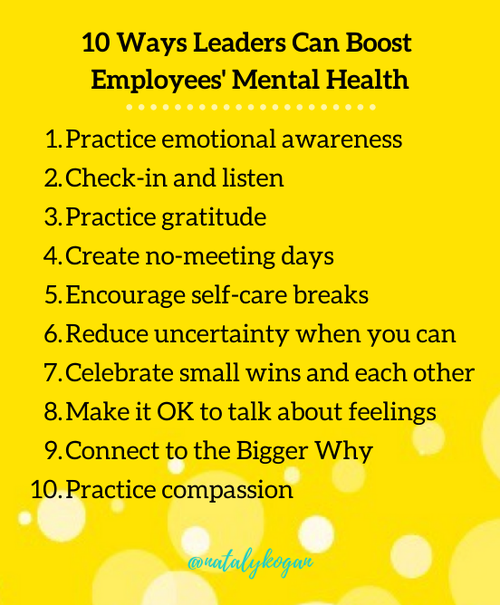
1. Practice emotional awareness and openness

Whether you like it or not, as a leader, your emotions have an amplified effect on everyone else. So begin by practicing emotional awareness: Check in with yourself by asking “How am I feeling? What is my energy like?” (Do this first thing in the morning and before meetings.)

When your emotions vary from the norm (upset, stressed, more tense than usual) acknowledge them openly by telling people a little bit about why you feel that way. You don’t need to write a novel about your feelings — just share enough so the other person knows what’s up. This reduces stress and wasted energy for people trying to guess why you’re acting differently and gives them permission to share their emotions more openly.

2. Check-in and listen


Be intentional about checking in with your colleagues one on one to ask them how they are doing. This practice has 2 steps: (1) Ask them how they are and then (2) listen, giving them your full attention, without multi-tasking or trying to fix or give advice. During this challenging time when everyone feels more isolated, checking in with others is a powerful way to create moments of genuine human connection. (And no, you don’t always need to do it on Zoom — scheduling a quick check-in call works great!)

3. Practice Gratitude


During challenges and difficulties, the human brain’s natural negativity bias — being more sensitive to what’s wrong or negative — is in overdrive, making it easy to become overwhelmed with negative thoughts and even hopelessness. Practicing gratitude openly is the best way to counter the negativity spiral. 

Add Gratitude Bookends to your meetings: Begin a meeting by sharing something specific you’re grateful for or expressing your gratitude for someone else and at the end of the meeting, ask someone to do the same. This simple practice elevates the importance of gratitude for your team, encourages people to practice it on their own, and makes meetings more productive and collaborative.

4. Create no-meeting days

More on this topic…


Read More
New Crash Data Highlights Need for Better Rear-Seat Protection

New Crash Data Highlights Need for Better Rear-Seat Protection

Consumer Reports | Jen Stockburger & Benjamin Preston | Dec 13, 2022 | Crash Data | Auto Insurance

IIHS pushes for proven front-seat safety technology to improve rear-seat passenger safety

The Insurance Institute for Highway Safety released its first crash ratings for a rear-seated dummy in its moderate frontal overlap crash test, a scenario the nonprofit has been running for some time. The rear-seat results mark the first frontal crash-test ratings in the U.S. focused on rear passengers, and the next step as IIHS continues to push for improved crash safety. However, the first round of the new testing showed that there is still work to be done to better protect rear-seat passengers.

“In our rear-seat safety features ratings, we reward manufacturers that put proven front-seat safety technologies in the rear seats,” says Emily Thomas, manager of auto safety for CR’s Auto Test Center. “The new ratings from IIHS have the potential to expand the implementation of these technologies, which can improve crash outcomes for rear occupants.”

The update IIHS has made to its moderate-overlap frontal crash test includes a Hybrid III crash-test dummy that represents a small adult or a 12-year-old child sitting in the rear outboard seat. The moderate-overlap test in combination with the small-overlap frontal and side-impact tests are key crash-related elements of a vehicle’s IIHS crashworthiness score.

The first round of testing covered 15 small SUVs, showing an overall imbalance in protection between front- and rear-seat passengers. The new testing focuses on the dummy’s potential for head, neck, chest, and thigh injuries; head contact with the vehicle interior; and the potential for seat belts to move from proper belt placement to higher injury risk areas on the dummy.

Among the models tested, IIHS found that only the Ford Escape and Volvo XC40 protected the rear occupant well enough to earn a Good rating overall—IIHS’ highest score. The Toyota RAV4 earned a second-tier Acceptable rating, while the Audi Q3, Nissan Rogue, and Subaru Forester received the second-from-bottom Marginal rating. Another nine SUVs—the Buick Encore, Chevrolet Equinox, Honda CR-V, Honda HR-V, Hyundai Tucson, Jeep Compass, Jeep Renegade, Mazda CX-5, and Mitsubishi Eclipse Cross—received the lowest rating, Poor. (Note that these tests were conducted on the previous generation CR-V, HR-V, and Tucson.)

The new IIHS test data complements Consumer Reports’ existing rear-seat safety features ratings, which combines CR’s longstanding work in evaluating a vehicle’s potential for child safety through child car seat and booster seat fit with crash-protection features intended for rear occupants of all ages and sizes. In its scoring, CR evaluates the presence of features already proved to provide benefits for front occupants, such as head restraints of adequate height and advanced seat-belt features that improve both fit and crash performance. Features that have become nearly universal in the front seat—namely adjustable upper seat-belt anchors and seat-belt pretensioners and load limiters—have been slow to become standard features in the back seat. In its new testing, IIHS illustrates those features’ potential to improve a vehicle’s rear-seat crash scores.

“In the front seat, crash tensioners (pretensioners) tighten the seat belts the instant a crash begins so that the occupant’s body begins to slow with the vehicle. Then, as the tightened belt stops the occupant from flying forward, force limiters allow some of the webbing to spool out to reduce the risk of chest injuries,” says IIHS.

Although this is the first time Hybrid III crash dummies are being used in the rear seat in frontal crash testing in the U.S., they have been part of safety testing in Europe—in the European New Car Assessment Program, or Euro NCAP—since 2015. In Europe, manufacturers moved quickly to include advanced seat-belt technology in rear seats as standard equipment to improve the injury outcomes for rear passengers.

“Manufacturers have been slower to include this technology in U.S.-market vehicles, but these new ratings should spur huge safety improvements for rear-seat passengers,” says Thomas. “Over the years, IIHS and Euro NCAP have shown the significant influence consumer crash-testing programs can have on the marketplace.”

More of the story…

Read More
10 Things You Need to Know About Social Security

10 Things You Need to Know About Social Security

Answers to frequently asked questions about your retirement benefits

AARP | Andy Markowitz | Updated June 21, 2022 | Social Security | Life Insurance

Social Security provides benefits to more than 65 million people, and those monthly payments have an enormous impact on older Americans’ financial health. According to Census Bureau data:

  • Social Security accounts for at least 50 percent of income for more than half of households headed by someone 65 or older.
  • It provides nearly 80 percent of income for 1 in 5 such households.
  • It keeps more than 26.5 million people from falling below the poverty line.

An institution that looms so large in American life is bound to generate questions about what it does and how it works. Here are the answers to some of the most frequently asked questions about Social Security. You’ll find more detailed information on these issues in AARP’s Social Security Resource Center.

1. Is Social Security just for retired workers?

No. As of April 2022, 72.7 percent of beneficiaries were retirees. The remainder were spouses, ex-spouses and children of retirees (4.3 percent); disabled workers and their families (14 percent); and survivors of deceased beneficiaries (9 percent).

2. At what age can I start collecting Social Security benefits?

You can begin receiving retirement benefits at age 62, but your payments will be more significant if you wait until your full retirement age (66 years and 4 months for people born in 1956, gradually rising over the next few years to 67). If you are eligible for survivor benefits or Social Security Disability Insurance (SSDI), you can start collecting earlier.

3. How do I sign up for Social Security?

You can apply for retirementspousal or disability benefits online, by phone at 800-772-1213, or at your local Social Security office. For survivor benefits, you can apply by phone or in person. Local offices reopened to walk-in traffic in April after being largely closed to visitors for more than two years due to the COVID-19 pandemic. Still, the Social Security Administration (SSA) strongly recommends calling ahead to make an appointment.

4. How long do I need to work to become eligible for benefits?

For retirement benefits, at least 10 years. Social Security uses a system of credits, which you collect by working and paying Social Security taxes. You can earn up to four credits a year, and you need 40 credits to qualify for retirement benefits. The credit threshold may be lower for disability benefits.

No, you can receive benefits while working. But if you are below full retirement age and earn more than a certain amount, your monthly benefits will be temporarily reduced. Once you reach full retirement age, the reduction is eliminated, and your benefits will be increased to make up for what was lost over time.

5. Must I stop working to collect retirement benefits?

No, you can receive benefits while working. But if you are below full retirement age and earn more than a certain amount, your monthly benefits will be temporarily reduced. Once you reach full retirement age, the reduction is eliminated, and your benefits will be increased to make up for what was lost over time.

6. How much will I get from Social Security?

That depends on a number of factors, most crucially your lifetime earnings from work in which you paid Social Security taxes. Social Security takes your 35 highest-earnings years, calculates an inflation-adjusted average, and plugs that into a progressive formula that determines your “basic” benefit. The amount will also be affected by how old you are when you claim benefits. You won’t know it for sure until you file, but you can use the AARP Social Security Calculator to get an estimate.

7. What’s the maximum monthly Social Security benefit? 

Read more…


More great reads from the Shield Insurance Agency Blog

Read More
There's a shortage of vets to treat farm animals. Pandemic pets are partly to blame

There’s a shortage of vets to treat farm animals. Pandemic pets are partly to blame

NPR.org | SCOTT NEUMAN | December 19, 20225:00 AM ET | Farm Animals | Farm & Ranch Insurance

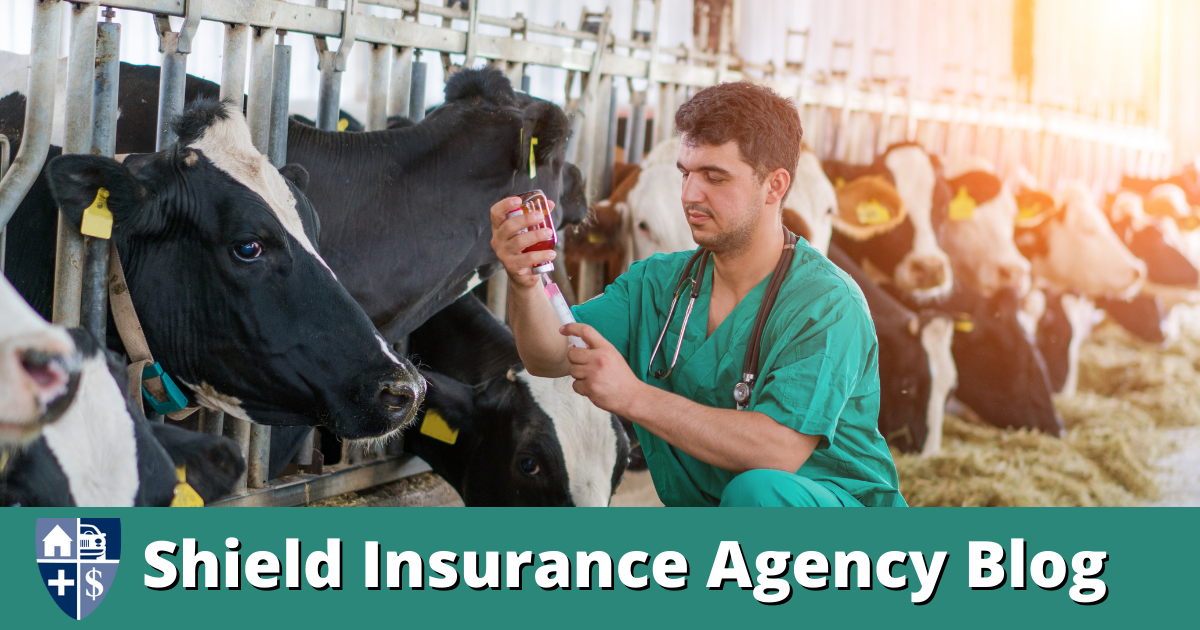
One night last spring, Andy Berry, a livestock farmer in Mississippi, was working the phone. One of his cows was experiencing a life-threatening breech birth and his regular veterinarian, 40 minutes away, was unavailable.

Berry, who is also executive vice president of the Mississippi Cattlemen’s Association, spent two hours calling around for help, finally reaching another vet, who immediately made the one-hour drive to his farm in rural Jefferson Davis County.

By the time she arrived, it was too late. “Ultimately, we ended up losing both the cow and the calf,” Berry, 48, says. “Between the time it took to get to the farm and the complications of the labor, it was too much.”

The death of the cow and calf cost him about $1,800, he says.

Experiences similar to Berry’s are becoming more common across the country. For decades, farmers have endured a shortage of rural veterinarians – the kind who specialize in care for animals like cows, pigs and sheep. But the problem is now at an all-time high – with 500 counties across 46 states reporting critical shortages this year, according to the U.S. Department of Agriculture.

Some counties have no vets to treat farm animals

“We are losing animals because we just have no one to come to the farm in time to save them,” said Sen. Cindy Hyde-Smith (R-Miss.) in a Dec. 6 hearing of the Senate Committee on Agriculture, Nutrition and Forestry. “We have counties in Mississippi that don’t even have a large animal veterinarian.”

The shortage is mirrored by a growth in the number of veterinarians that Americans are much more familiar with – those who take care of the family pet. Since at least the early 2000s, more veterinarians have chosen the better pay and more reasonable work hours that go with a practice that focuses primarily or exclusively on “companion” animals. With the COVID-19 pandemic-driven spike in pet ownership, demand – and salaries – for companion animal veterinarians have increased rapidly, according to the American Veterinary Medical Association, or AVMA.

The implications of this shortfall go beyond the farm. Some farmers and the AVMA warn that without enough vets on the front line, the food supply chain is vulnerable to diseases such as foot and mouth and swine flu.

“Food-animal veterinarians are a front-line defense in the surveillance, prevention, treatment, and control of animal diseases,” AVMA President Dr. Lori Teller wrote in an email to NPR. “Veterinarians help to protect the health and welfare of animals that produce eggs, milk, meat, wool, and other protein and fiber products,” she says.

Teller says that among veterinary school graduates, nearly half are choosing to work exclusively with companion animals, with another 8% selecting mixed practices, where they might treat a dog and cat one day and a cow the next. Fewer than 3% of recent graduates choose to work exclusively with food animals, with others deciding to pursue advanced degrees or go into specialties, such as horse care.

The burnout problem

Despite the clear need, many who start out working with food animals find that the grueling and sometimes dangerous work leads to burnout.

Dr. Remington Pettit, 37, has seen both sides of the profession. She grew up in rural Oklahoma, and attended veterinary school at Oklahoma State University. When Pettit graduated, she chose to work in mixed practices, focusing on the treatment of horses and cattle in her native state.

“I worked the sale barn,” Pettit says, referring to cattle auctions. “I did spay-neuter. I did farm calls. I did emergencies. It was all hours of the day, 365 days a year.” In the rural area she covered, a considerable amount of driving to appointments made the days even longer.

About five years ago, she hit a breaking point. Pettit, 37, was still carrying university debt, and just starting a family. For her, it was mainly exhaustion and the physical toll of working with large animals that prompted a switch to companion animals – where she says she makes double the money she did just a few years ago. But the physical demands of the job and its inherent dangers were also factors in her decision, she says.

Read more…


Click here for more great blog articles with Shield Insurance

Read More
Merry Christmas from all of us at Shield Insurance Agency

30+ Best Christmas Poems For Kids!

LoveLivesOn.com | Christmas | Shield Insurance Agency

Merry Christmas from the entire staff at Shield Insurance Agency!

We hope you enjoy these holiday poems with your family and friends.


Looking for Christmas poems for kids?

Look no further with our ultimate collection of holiday poems that have been specially curated with children in mind.  (We’ve also organized the poems by age group to make your life a little easier over this busy holiday season.

You are sure to find Christmas poems that your kids will love, whether they are using it in a craft activity, school or church performance, or simply to enjoy reading aloud with you.

Christmas Poems for Kids Aged 3 to 5

This first Christmas poem is perfect for kindergarteners and easy to memorize.

I Like to See Christmas

Author Unknown

I like to see the stockings
I like to see the gifts
I like to see the bells
I like to see the tree
And I like to see Santa
Looking at me!

~

When it comes to Christmas poems for kids, this one is a favourite!  It is also easy to incorporate into craft activities.

Peppermint Stick

Author Unknown

I took a lick
Of a peppermint stick
And oh it tasted yummy!

It used to be
On the Christmas tree
But now it’s in my tummy!

~

This is a childhood classic when it comes to holiday poetry.  The analogy in this Christmas poem is that little children are like little pine trees, waiting to grow up.

Little Pine Tree

Author Unknown

I’m a little pine tree
As you can see,
All the other pine trees
Are bigger than me.
Maybe when I grow up
Then I’ll be
A great big merry Christmas tree!

~

Does your family have a special angel that sits on the top of your Christmas tree?  If yes, then this Christmas poem written for children in kindergartener is sure to delight!

A Christmas Angel

By Denise Burke

Oh, I wish I was an angel on the tree
I’d give every girl and boy
Lots of Christmas peace and joy
Oh, I wish I was an angel on the tree

~

No collection of Christmas poems for kids would be complete without this next poem.

It would be a wonderful poem for a group of five children to recite at a Christmas concert, either at school or elsewhere.

Have the group of five kids recite lines 1, 7, 8, and 9 of the poem in unison.  Also, have each child recite one line on a solo basis (for the remaining lines – lines 2 to 6).

Five Little Reindeer

Author Unknown

Five little reindeer playing in the snow
The first one said, “Can you see my nose glow?”
The second one said, “Listen to me sing!”
The third one said, “I can hear the bells ring.”
The fourth one said, “Let’s eat the pie!”
The fifth one said, “I’m ready to fly.”
Then clomp went their hooves
And the snow fell white
As the five little reindeer flew out of sight.

~

This next Christmas poem for kids reminds us how much fun the holiday season is!

Christmas is a Day Full of Joy

Author Unknown

Christmas is a day full of joy,
Ask any girl or boy.

Santa’s reindeer fly up high,
By the twinkling stars in the sky.

Children love a snowball fight,
Although its freezing day and night.

~

Did you grow up having this next poem read to you on Christmas Eve?  Children all over the world love this Christmas poem, with its promise of reindeer, Santa, and presents.  It is a classic for a reason!

Magic Reindeer Food

Author Unknown

Be sure to take this magic food
and sprinkle it on the lawn.

On Christmas Eve, Santa’s reindeers
travel miles before the dawn.

The smell of oats and glitter
will guide them on their way.

And you’ll wake up to Santa’s gifts
on merry Christmas day!

~

Who doesn’t love Santa?  This next Christmas poem is beloved by kindergarteners and older children alike.

For more Children’s Christmas Poems, click here…


More great blogs from Shield Insurance

Read More
38 Best Christmas Ideas for a Festive Bash

38 Best Christmas Ideas for a Festive Bash

Guaranteed to keep your Christmas party rockin’ around the tree all night

CountryLiving.com | BY JULIA LUDLAM | UPDATED: DEC 1, 2022 | Shield Home Insurance

Are you planning on having a merry little Christmas with your loved ones? Invite friends and family over to celebrate the holiday season with these festive Christmas party ideas! We’ve rounded up some of our best ideas to make prepping for parties just as fun as throwing them. So, settle in for a holiday decoration derby or Christmas movie marathon. Just don’t forget your favorite winter drink recipe and a slice of fruitcake.

For those with a crafty holiday spirit, you’ll love our crafter-noon parties. From making Christmas wreaths to hosting a fun (and helpful) gift-wrapping party, we have enough ideas to last you the entire season—and then some! Relax and make ornaments with your friends (with our favorite DIY Christmas ornament ideas and tutorials to get you started, no less) or kick it old school with a salt dough crafting extravaganza. You can even throw a cookie swap party where guests are invited to bring their favorites and share Christmas cookie recipes.

If your friends aren’t the crafty type, which we can totally understand in the hustle and bustle of the holiday season, we’ve got ideas for you too. Throw a fun holiday soiree inspired by your favorite Christmas movie, go for a classic holiday dinner party, or get competitive with a Christmas gift exchange. Start the evening by serving your guests some delicious Country Living-approved Christmas appetizers. You can even throw together a hot chocolate bar if you’ve got a slow cooker to keep things warm and toasty. If you’re in the mood for something savory, fondue can feed a crowd and keep everyone entertained all evening long. All your friends will need to do is bring their Christmas cheer!

1 Ice-Skating Christmas Party

Gather your friends for some winter revelry. Embrace the cold weather and serve up some Hot Buttered Rum with Vanilla Ice Cream Balls and your favorite Christmas cookies for an ice-skating party. No snow? No problem. Throw on a scarf and make it a porch party.

2 Movie Marathon Christmas Party

Build a fire, curl up with your family and friends, and get in the spirit of Christmas with your favorite holiday classics, like The Polar ExpressHome Alone, and Miracle on 34th Street. Serve fresh popcorn with optional popcorn seasonings like parmesan black pepper, cinnamon sugar, or everything bagel for a holiday treat. Don’t forget the toasted marshmallow hot cocoa and the theatre candy brownies. To make things extra fun, ask guests to play Binge-Watch Bingo using buttons or popcorn to mark the squares.

ADVERTISEMENT – CONTINUE READING BELOW

3 Candy Cane Crafting Party

Invite friends over to craft fresh holiday decor out of peppermint sticks and candy canes. The season’s most ubiquitous treat is more versatile than you think! Besides candy canes, peppermint sticks and peppermints, hot glue gunsred cotton stringglass pillar candle holders, and festive ribbons are just a few must-haves.

4 Holiday Snack Exchange

Like a cookie exchange, invite your pals to come over with their favorite savory holiday snack like these sweet and spicy coated nuts. Turn on your favorite holiday playlist, sip on some hot cocoa, and send everyone home with a cute container of treats like these hexagon jars adorned with a cinnamon stick and striped ribbon.

Click here to read the full story…


More great blogs from Shield Insurance

Read More
How 25 Christmas Traditions Got Their Start

How 25 Christmas Traditions Got Their Start

Learn why we decorate trees, swap cookies, and hide pickles and elves, among other Christmas traditions.

History.com | by LESLEY KENNEDY | UPDATED:DEC 22, 2021 | ORIGINAL:DEC 17, 2019 | Shield Insurance

From its Puritan roots to complaints of rampant commercialism (“What is it you want?” Charlie Brown asks Lucy in A Charlie Brown Christmas. “Real Estate.”), Christmas in America has been filled with traditions, old and new. Some date back to 16th-century Germany or even ancient Greek times, while others have caught on in modern times.

Here’s a look at 25 ways Americans have celebrated the Christmas season, from singing songs and reciting poems to decorating trees and swapping cookies to drinking eggnog and wearing ugly sweaters.

Christmas Trees

Decorated trees date back to Germany in the Middle Ages, with German and other European settlers popularizing Christmas trees in America by the early 19th century. A New York woodsman named Mark Carr is credited with opening the first U.S. Christmas tree lot in 1851. A 2019 survey by the American Christmas Tree Association, predicted that 77 percent of U.S. households displayed a Christmas tree in their home. Among the trees on display, an estimated 81 percent were artificial and 19 percent were real.

The Rockettes

Since 1925, first known as the Missouri Rockets, this iconic dance troupe has been kicking up its heels, officially becoming the Radio City Music Hall Rockettes in 1934. From performing at movie openings to entertaining troops to making TV appearances, they’re perhaps best known for their annual Christmas Spectacular.

A Charlie Brown Christmas

Decades later, it may be hard to imagine that this beloved TV special inspired by Charles Schulz’s Peanuts comic strip was first rejected by CBS executives. But when it finally aired on December 9, 1965, almost half of all U.S. TV sets were tuned to the broadcast, and the show went on to win an Emmy, a Peabody, an enduring following, and even a trend of “Charlie Brown” Christmas trees. “I never thought it was such a bad little tree,” Linus says in the special. “It’s not bad at all, really. Maybe it just needs a little love.”

Christmas Pickles

If there’s a pickle among your snowman, angel, and reindeer ornaments, you’re likely taking part in the American tradition of hiding the green ornament on the tree, so that the first child to find it wins a gift, or gets to open the first present Christmas morning. The practice’s origins are a bit murky (or should that be briny?), but, it’s likely it grew from a Woolworth’s marketing gimmick from the late 1800s when the retailer received imported German ornaments shaped like a pickle and needed a sales pitch.

Elf on the Shelf

Love it or loathe it, since 2005, moms and dads have either joyously or begrudgingly been hiding a toy elf each night from Thanksgiving to Christmas. More than 13 million elves have been “adopted” since 2005 when Carol Aebersold and her daughter, Chanda Bell, published the book Elf on the Shelf: A Christmas Tradition that comes with the toy. Social media has even inspired some parents to set up elaborate scenarios for their elves—as in He TP’d the tree! She filled the sink with marshmallows!

Yule Log

Yule logs were part of ancient winter solstice celebrations, but it was Americans who turned the wood burning into must-see TV. Back in 1966, WPIX-TV in New York City aired a continuous 17-second loop of a fireplace for three hours along with holiday music. That led to eventual better production and nearly 20 years of annual viewing. Today, you can view the yule log on demand and on the web. (In fact, HISTORY offers its own yule log themed to the series Forged in Fire.)

Don’t miss the rest of the list!


More great blog articles shared by Shield Insurance Agency

Read More
Worker's Compensation

What’s Covered in Worker’s Compensation?

Worker’s Compensation | Business Insurance | Shield Self-Quoting Portal

At Shield Insurance Agency, we’re providing worker’s compensation to the people of Michigan. As a worker, this form of insurance will create a sense of financial security in the event of a workplace injury or an illness. Whether you’re dealing with medical bills or a loss of income, you have the right to file a claim at our agency.


What Policies Are Covered in Worker’s Compensation?

Your compensation plans will be based on the type of insurance that you buy. Some customers will buy full or partial packages, while others will have their insurance policies tailor-made to suit their needs. In a worker’s compensation package, you should search for whether the package contains policies for income loss, medical costs, or disabilities caused on the job.


You’ll also want to know whether your worker’s compensation insurance covers specific situations. There are medical claims, temporary disability claims, permanent disability claims, and compensation for workers undergoing vocational rehabilitation. If a worker dies as a result of a workplace incident, his or her family members may be entitled to file a worker’s compensation claim with the insurance agency. Knowing what type of file to claim will help you during your time of distress.


Purchasing Worker’s Comp Insurance in Michigan

If you’re looking for quality worker’s compensation, the Shield Insurance Agency is available for business. In addition to worker’s compensation for workplace injuries, we also offer home insurance, auto insurance, contractor’s insurance, business insurance, and more. To get in touch with one of our agents, contact Shield Insurance Agency today. We’d be happy to schedule an appointment with you right away to discuss your options.



More great blogs by Shield Insurance Agency

Read More
History of Christmas

History of Christmas

History.com | Updated: Dec. 2022 | Original: Oct 27, 2009 | Christmas | Meet the Agents of Shield

Christmas is celebrated on December 25 and is both a sacred religious holiday and a worldwide cultural and commercial phenomenon. For two millennia, people around the world have been observing it with traditions and practices that are both religious and secular in nature. Christians celebrate Christmas Day as the anniversary of the birth of Jesus of Nazareth, a spiritual leader whose teachings form the basis of their religion. Popular customs include exchanging gifts, decorating Christmas trees, attending church, sharing meals with family and friends, and, of course, waiting for Santa Claus to arrive. December 25—Christmas Day—has been a federal holiday in the United States since 1870.

How Did Christmas Start?

The middle of winter has long been a time of celebration around the world. Centuries before the arrival of the man called Jesus, early Europeans celebrated light and birth in the darkest days of winter. Many peoples rejoiced during the winter solstice when the worst of the winter was behind them and they could look forward to longer days and extended hours of sunlight.

In Scandinavia, the Norse celebrated Yule from December 21, the winter solstice, through January. In recognition of the return of the sun, fathers and sons would bring home large logs, which they would set on fire. The people would feast until the log burned out, which could take as many as 12 days. The Norse believed that each spark from the fire represented a new pig or calf that would be born during the coming year.

The end of December was a perfect time for celebration in most areas of Europe. At that time of year, most cattle were slaughtered so they would not have to be fed during the winter. For many, it was the only time of year when they had a supply of fresh meat. In addition, most wine and beer made during the year were finally fermented and ready for drinking.

In Germany, people honored the pagan god Oden during the mid-winter holiday. Germans were terrified of Oden, as they believed he made nocturnal flights through the sky to observe his people, and then decide who would prosper or perish. Because of his presence, many people chose to stay inside.

Saturnalia

In Rome, where winters were not as harsh as those in the far north, Saturnalia—a holiday in honor of Saturn, the god of agriculture—was celebrated. Beginning in the week leading up to the winter solstice and continuing for a full month, Saturnalia was a hedonistic time, when food and drink were plentiful and the normal Roman social order was turned upside down. For a month, enslaved people were given temporary freedom and treated as equals. Businesses and schools were closed so that everyone could participate in the holiday festivities.

Also around the time of the winter solstice, Romans observed Juvenalia, a feast honoring the children of Rome. In addition, members of the upper classes often celebrated the birthday of Mithra, the god of the unconquerable sun, on December 25. It was believed that Mithra, an infant god, was born of a rock. For some Romans, Mithra’s birthday was the most sacred day of the year.

Is Christmas Really the Day Jesus Was Born?

In the early years of Christianity, Easter was the main holiday; the birth of Jesus was not celebrated. In the fourth century, church officials decided to institute the birth of Jesus as a holiday. Unfortunately, the Bible does not mention the date of his birth (a fact Puritans later pointed out in order to deny the legitimacy of the celebration). Although some evidence suggests that his birth may have occurred in the spring (why would shepherds be herding in the middle of winter?), Pope Julius, I chose December 25. It is commonly believed that the church chose this date in an effort to adopt and absorb the traditions of the pagan Saturnalia festival. First called the Feast of the Nativity, the custom spread to Egypt by 432 and to England by the end of the sixth century. 

By holding Christmas at the same time as traditional winter solstice festivals, church leaders increased the chances that Christmas would be popularly embraced, but gave up the ability to dictate how it was celebrated. By the Middle Ages, Christianity had, for the most part, replaced pagan religion. On Christmas, believers attended church, then celebrated raucously in a drunken, carnival-like atmosphere similar to today’s Mardi Gras. Each year, a beggar or student would be crowned the “lord of misrule” and eager celebrants played the part of his subjects. The poor would go to the houses of the rich and demand their best food and drink. If owners failed to comply, their visitors would most likely terrorize them with mischief. Christmas became the time of year when the upper classes could repay their real or imagined “debt” to society by entertaining less fortunate citizens.

When Christmas Was Cancelled

Click here for the full story…


Check out more great articles featured by Shield Insurance Agency!

Read More