When Is it Time to Stop (or Start) Hosting the Holidays?

When Is it Time to Stop (or Start) Hosting the Holidays?

Passing the baton and changing traditions can be difficult for families

AARP | By Robin L. Flanigan | December 06, 2022| Hosting the Holidays | Home Insurance

​Hosting the holidays can be a marathon sport. There’s planning the meals, buying the groceries, cleaning the house, cooking the food. It’s a lot of work, especially for older adults who have been at the holiday helm for two — sometimes three — generations.

When is it time to call it quits and let the younger generation take over hosting the Holidays?

That’s a difficult question for all involved. It can be difficult to give up the role of host after so many years; on the other side, it can be hard to take over that role, especially after a lifetime of baking, decorating, game-playing and gift-giving traditions.

“It’s a very emotional topic,” says Andrew G. Celli Jr., a 57-year-old attorney in Manhattan.

The traditions at his mother’s house — the home where he grew up in Rochester, New York — have “a rhythm and a regularity that makes it incredibly special and specific to her and the way she does things.”

But their family is large. Celli and his two siblings each are married with multiple children, some of whom have significant others, which means gatherings draw nearly 20 people. It’s a lot of work for Dolores Celli, who lives alone and is approaching 90, to make her usual lasagna; prime rib, or chicken with lemon, garlic, and rosemary; pizzelles; and the apple pie recipe her grandmother always used in Italy.

“It means taking the house apart and putting extra tables out, but I enjoy every moment of it,” she says, adding that she also provides breakfast for guests in the mornings. “Fortunately, I’m healthy enough to do it. Every year is a blessing as far as I’m concerned, even though I’m sure one of these days one of the kids is going to say, ‘No more.’”


While Andrew Celli says neither he nor his siblings have put their foot down once and for all just yet, he will be hosting Christmas at his home this year.

His mother “is incredibly strong and somewhat stubborn, but at the end of the holiday weekend, she is pretty tired,” he says. “We want her to enjoy the traditions that we can re-create at my house, without her having to do all the work.”​

The importance of hosting the holidays & rituals

Going to the same house, eating the same food, and interacting with the same people for decades brings a sense of comfort and belonging.

“Traditions help create meaning in our lives, and help find and establish family connections,” says William C. Torrey, the Raymond Sobel professor of psychiatry and interim chair of psychiatry at Dartmouth Health and Dartmouth’s Geisel School of Medicine in New Hampshire. “Any change in how you celebrate the holidays can easily feel disruptive, but it also creates an opportunity for more conversation and expression of appreciation.”

That’s not so easy for Evey Meyer, 76, to believe. “I will be at the edge of my grave when I stop hosting,” says the former biology professor from St. Louis.

Rather than a chore, Meyer views hosting Hanukkah (“It wouldn’t be Hanukkah if I didn’t make potato pancakes”) as an act of survivorship, “something the Jewish holidays are partly about.” She points out that her generation may resist relinquishing the holiday reins in part because subsequent generations are less likely to engage in religious rituals — a worldwide phenomenon confirmed by a Pew Research Center analysis in 2018.

Meyer says that providing meals is linked to her self-image: “I’ve always been the feeder. When people think of me, I hope they think of food.”

At some point, however, the duties can become too much. It may take an older person days to recover, and younger adult guests may start to feel guilty for remaining on the receiving end. When this happens, it’s time for an honest, and possibly tough, conversation.​

Adjusting to new holiday approaches

Wanna read more? Click here!


Read more blogs featured by Shield Insurance Agency

Read More
How to Tie a Wreath Bow

How to Tie a Wreath Bow in Five Different Styles

Plus, the best ribbon to use for each wreath bow technique.

MarthaStewart.com | By Roxanna Coldiron | November 22, 2019 | Wreath Bow | Visit Shield Insurance

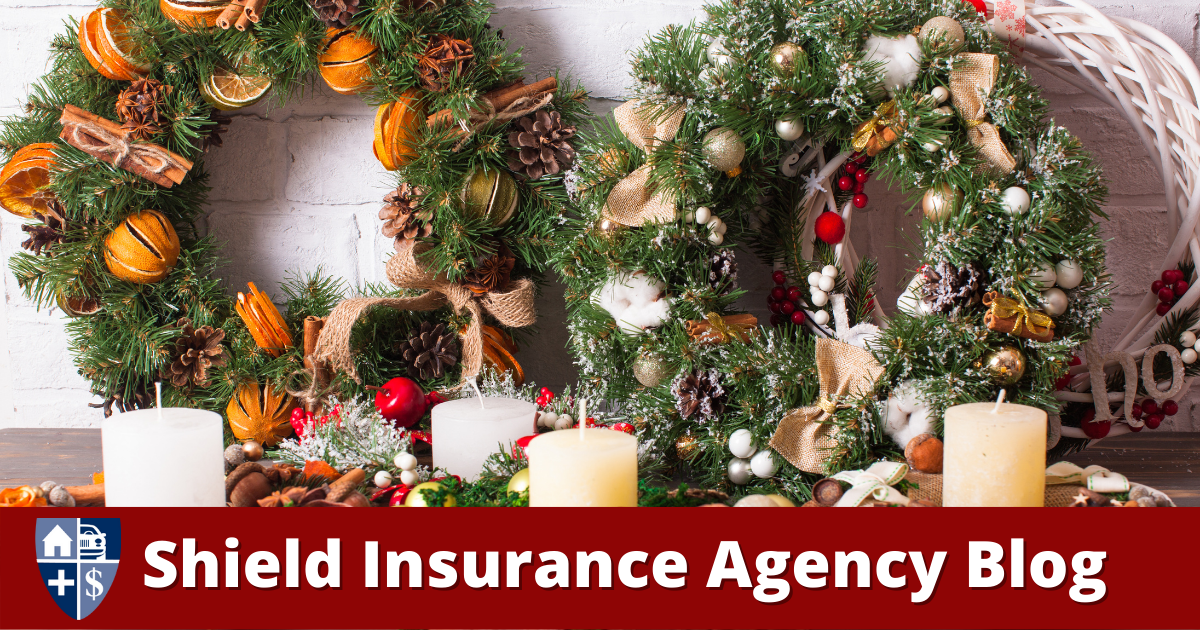
The holiday season means decorating the house with lights, ornaments, and garlands of winter evergreens. And while the Christmas tree may take center stage in your home, it’s the wreath that welcomes your guests at the front door. In most cases, this is the first thing that people see when they come calling at your door, and it’s a hint at the rest of the holiday décor that awaits them inside. “Wreaths are like small, round Christmas trees,” says Cynthia Sheen, owner and interior designer at Cinzia Interiors. “A lot of the bow styles that I do for Christmas trees can be done for wreaths as well.”

Some wreaths don’t seem complete until they are finished off with a large, lavish bow, which enhances the overall look of the wreath and can be complementary to the other décor in your home. A crisp ribbon will make the nicest bow; grosgrain, satin, taffeta, and velvet are ideal choices. You can tie different styles of bows on your wreath. We asked designers for their ideas on styling your own wreath bows.

Traditional Bow

Of course, a traditional bow on your Christmas wreath is a classic choice. Ideally, use a wide ribbon in one of these classic colors—red, green, gold, or white. Cut ribbon to the desired length. (A bow with extra-large loops or extra-long tails will require more length.) Form the ribbon into two equal loops with about 12 inches of ribbon between them. Cross the right loop over the left. Knot the loops by pushing the right loop behind the left, under, and through the hole. Pull the knot tight, adjusting loops and tails to the desired size. Lightly fold the ends and cut, creating a notch. Attach the finished bow to the wreath with a small piece of green florist’s wire.

Rosette Wreath Bow

Rosette bows are tufted with several loops, and therefore, have a lot of fullness to them. Sheen makes large rosette bows using 16 to 19 loops, but you can make fewer loops for a smaller wreathSatin ribbon is perfect for this style because it keeps its shape and does not easily fall flat. To tie a rosette, fold a length of ribbon accordion-style into a stack, with as many loops as you like. Cinch the middle of the stack with wire, and twist to secure. Cover the wire with more ribbon if desired (just glue it in back), and fluff the loops.

Curly Wreath Bow

Kade Laws-Andrews, owner and interior designer at Kade Laws Interior Design, is partial to the curly bow. For a large bow, you will need 24 to 36 inches in length for the ribbon. “Wired ribbon is best,” Laws says. “Cinch the middle with a pipe cleaner.” Then, roll up the ribbon and unroll it to make spiral curls. This style of bow is ideally placed on the top or bottom of the wreath. A bow with shorter curls looks nice on the top of a wreath, while one with longer curls looks best from the bottom.

Layered Bow

For more bows click here…


More great articles featured by Shield Insurance Agency

Read More
4 Surprising Benefits of the Flu Shot

4 Surprising Benefits of the Flu Shot

The vaccine can protect you from influenza, and it may have some other perks as well

AARP | by Beth Howard | October 3, 2022 | Flu Shot | Health Insurance with Shield Insurance

Not getting sick from the flu is reason enough to roll up your sleeve for a flu vaccine every fall. And along with preventing millions of cases of influenza each year, flu shots also reduce hospitalizations for complications of this misery-making seasonal illness.

A 2021 study from researchers at the Centers for Disease Control and Prevention (CDC) found that adults who got vaccinated were 26 percent less likely to be admitted to the intensive care unit and 31 percent less likely to die from the flu compared to those who were unvaccinated. There seems to be protection from illness even when vaccines aren’t perfectly matched to the strain of flu virus circulating (since the shot is formulated months in advance).

But evidence suggests that there are other payoffs beyond defense from fever, fatigue, chills, and aches.

“People don’t really appreciate the other potential benefits of flu shots,” says Michelle Barron, M.D., senior medical director of infection prevention and control for UCHealth in Aurora, Colorado. “It’s actually arming your immune system to fend off other problems.”

Here are four unexpected ways a flu vaccine can benefit the body and the brain.

1. A boost for the brain?

Previous research has suggested that flu vaccines may protect the brain from dementia, and a new study from the McGovern Medical School at UTHealth in Houston makes the case even stronger.

This study, published in the Journal of Alzheimer’s Disease, compared more than 47,000 people age 65 and older who were vaccinated against flu to a similar group of nearly 80,000 people who were not vaccinated. The findings: Those who got a flu shot were 40 percent less likely to develop Alzheimer’s disease over a four-year period.

“We weren’t actually expecting it to be that high,” says study coauthor Avram S. Bukhbinder, M.D., now a neurologist at Massachusetts General Hospital in Boston.

Bukhbinder has several theories for the vaccination’s potential effects on the brain. Perhaps by preventing the flu, the shot quells inflammation that can lead to harmful brain changes.

His most intriguing hypothesis is that vaccines alter the brain’s overall defenses. “There’s good evidence that when we get these vaccines, they help us make antibodies to the specific pathogen — the influenza virus,” he says. “But they may also modify the immune system in such a way that it’s better at either cleaning up amyloid and tau [the proteins responsible for the plaques and tangles that are the hallmarks of Alzheimer’s] or by preventing these proteins from building up in the first place.” 

2. The flu shot is linked to a stronger heart

A history of heart disease or a stroke can make flu more likely and more dangerous. In addition, flu can be a trigger for heart attacks and strokes in people at high risk for them. 

According to a 2018 Canadian study, people who got the flu were 6 times more likely to have a heart attack within a week of getting the diagnosis. And Columbia University researchers saw a significant jump in strokes in the month after fighting the flu, according to new research published in the American Heart Association’s journal Stroke

A flu shot can also spare you the potential heart harms. A new study led by the University of Toronto that incorporated six previous studies covering more than 9,000 patients showed that people who received a flu vaccine had a 34 percent lower risk of a major cardiovascular event in the 12 months following vaccination. Higher-risk vaccinated individuals with acute coronary syndrome — a group of conditions that abruptly stop blood flow to the heart — had a 45 percent risk reduction of a major cardiovascular event, and a 56 percent reduced risk of dying from heart disease in the year after they got the shot, according to the findings, which appear in JAMA Network Open. How the flu shot protects the heart isn’t fully known, but it may have to do with the plaques that build up on the artery walls of people with heart disease. The body’s immune response to the flu creates inflammation that is believed to disrupt these fat deposits, causing blood clots that may trigger heart attacks and strokes.

“The vaccine may interact with the body’s immune system and inflammatory processes to help stabilize plaques that might be present in blood vessels, thus preventing these plaques from rupturing and causing further problems,” says lead study author Bahar Behrouzi Homa, an M.D./Ph.D. candidate at the university. 

3. The flu shot could curb complications from other chronic conditions

Read the rest of the article here…


Wanna read more great articles featured by Shield Insurance Agency?

Read More
Can I get Health Insurance with Pre-existing Conditions?

Can I get Health Insurance with Pre-existing Conditions?

Health Insurance | Over 65? Click here

Many people wouldn’t be able to afford healthcare if they had to pay for it out of pocket. This is one of the many reasons why health insurance is a wise investment. Our team of insurance experts at Shield Insurance Agency is dedicated to helping Michigan residents understand the benefits of health insurance.     

What is Health Insurance?

In short, health insurance helps you pay for your healthcare. Your health insurance will pay for a portion of your healthcare costs or all of the costs after you pay a monthly premium.

Can I get Health Insurance with Pre-existing Conditions?

As a result of the Affordable Care Act, health insurance companies can’t deny a person coverage based on their pre-existing health condition. A pre-existing condition is a health issue that was present before you got healthcare coverage. Health insurance companies aren’t allowed to deny you coverage based on a pre-existing condition.

They’re also not allowed to charge you more as a result of any prior/ pre-existing health issues. Many health insurance companies consider many common chronic ailments as pre-existing conditions. A person with cancer, diabetes, asthma, and more, would be examples of pre-existing conditions. Even pregnancy can be considered a pre-existing condition. Health insurance companies aren’t allowed to discriminate against people who have these pre-existing conditions and more. 

Conversely…

If you enrolled in your healthcare plan prior to the Affordable Health Insurance Act, you have a grandfathered plan. This means that your insurance policy can still cancel your policy or raise your rates due to a pre-existing condition. However, our team is committed to answering your healthcare questions and getting the coverage you need.

Contact Us Today

We at Shield Insurance Agency are standing by to serve Michigan residents. If you are enrolled in a plan that started before 2010, you have a “grandfathered plan”. These plans can cancel your coverage or can charge you higher rates due to a pre-existing condition.


More great stories from the SHield Insurance Agency Blog

Read More
November is Native American Heritage Month

Native American Heritage

November 2022 | National American Heritage | Native American | Special Event Insurance

About National Native American Heritage Month

What started at the turn of the century as an effort to gain a day of recognition for the significant contributions the first Americans made to the establishment and growth of the U.S., has resulted in a whole month being designated for that purpose.

One of the very proponents of American Indian Day was Dr. Arthur C. Parker, a Seneca Indian, who was the director of the Museum of Arts and Science in Rochester, N.Y. He persuaded the Boy Scouts of America to set aside a day for the “First Americans” and for three years they adopted such a day. In 1915, the annual Congress of the American Indian Association meeting in Lawrence, Kans., formally approved a plan concerning American Indian Day. It directed its president, Rev. Sherman Coolidge, an Arapahoe, to call upon the country to observe such a day. Coolidge issued a proclamation on Sept. 28, 1915, which declared the second Saturday of each May as an American Indian Day and contained the first formal appeal for recognition of Indians as citizens.

The year before this proclamation was issued, Red Fox James, a Blackfoot Indian, rode horseback from state to state seeking approval for a day to honor Indians. On December 14, 1915, he presented the endorsements of 24 state governments at the White House. There is no record, however, of such a national day being proclaimed.

November is National American Indian Heritage Month The Library of Congress, National Archives and Records Administration, National Endowment for the Humanities, National Gallery of Art, National Park Service, Smithsonian Institution and United States Holocaust Memorial Museum join in paying tribute to the rich ancestry and traditions of Native Americans.

The first American Indian Day in a state was declared on the second Saturday in May 1916 by the governor of New York. Several states celebrate the fourth Friday in September. In Illinois, for example, legislators enacted such a day in 1919. Presently, several states have designated Columbus Day as Native American Day, but it continues to be a day we observe without any recognition as a national legal holiday.

In 1990 President George H. W. Bush approved a joint resolution designating November 1990 “National American Indian Heritage Month.” Similar proclamations, under variants on the name (including “Native American Heritage Month” and “National American Indian and Alaska Native Heritage Month”) have been issued each year since 1994.

Native American Heritage Month

Click here for more dedicated websites


Check out more great articles by Shield Insurance Agency

Read More
How To Winterize Your Car in 8 Easy Steps

How To Winterize Your Car in 8 Easy Steps

Winterize Your Car. You know freezing conditions can be dangerous. Here’s how to be well-prepared if you need to take the car out when snow and ice coat the roads.

Popular Mechanics | BY MANASEE WAGH | NOV 4, 2022 | Winterize Your Car | Shield Auto Insurance

It’s November, which means now is the perfect time to get outside and start prepping your car for the ice and snow ahead. We put together a list of eight easy ways to winterize your car and stay safe. Our first three tips concentrate on your car’s tires, since rubber meeting ice presents the greatest potential hazard. The rest are simply good practices that will help you maintain your vehicle over time and prep for the worst-case-scenario.

Even if you follow all of our instructions to the letter, remember to make smart decisions depending on the current and forecasted weather outside. Make sure you know how to drive in different winter conditions. And finally, if you plan a road trip and wake up to find a blizzard approaching, consider postponing the drive unless you must travel for an emergency.

1. Switch to Winter Tires or New All-Season Tires

Winter tires don’t harden in the cold, so they have better traction on ice, slush, and snow. If you live in an area not normally hit by heavy snow, you may decide to stick with all-season tires—but you should still give those tires a check-up.

Get out a pair of thin rubber gloves and run a hand over each of your tires. “The tires are really going to make a difference in your ability to get around in inclement weather,” EricTheCarGuy explains on his YouTube channel. He recommends checking for abnormal wear, bumps, or spots that “catch your hand,” which are all signs that you should probably check your alignment, too. If a tire is worn out, change it. If you’re not sure if your tread is worn or not, you can use a handy tool called a tire tread depth gauge. Alternatively, you can stick a penny into the treads, with Lincoln’s head facing down into the tire. If you can see the top of his head, get those tires changed right away, according to the U.S. Department of Transportation.

Also remember that tires become harder on their surface from repeated heating and cooling over the seasons and years. Cars with apparently healthy treads can have poorer traction than you think they do. So when in doubt, swap those tires out.

2. Check Your Tire Pressure to Winterize Your Car

Make sure your tire pressure is correct, as stated in your owner’s manual, the tire placard located on the driver’s side door jamb, or in your car’s digital status center. For every 10 degrees Fahrenheit that the temperature drops, you could see a gain or loss of 1 pound per square inch of pressure. That’s because air molecules pack together more closely when the temperature drops. As the air becomes denser, the pressure it exerts on the interior tire walls drops. Make sure you’re refilling your tires whenever they’re a little low to maintain good traction and durability.

3. Put Chains On Your Tires in Extreme Cases

Chains should only be used while driving on snowy or icy roads. Never use chains on bare pavement, or they could cause damage to both your car and the road; Pull over and remove them if that’s the case. Check out this handy how-to video from the Oregon Department of Transportation about installing winter tire chains and how to correctly use them.

4. Install Winter Windshield Wipers to Winterize Your Car

Check out the rest of the great article!


Visit other blogs by Shield Insurance Agency!

Read More
Vehicle-Deer Collision

Vehicle-Deer Collision

DIFS Encourages Drivers to Review Auto Insurance Policies to Understand Coverage for a Vehicle-Deer Collision

Media Contact: Laura Hall, (517) 290-3779, DIFS-press@michigan.gov  | Vehicle-Deer Collision

Consumer Hotline: 833-ASK-DIFS, AutoInsurance@michigan.gov  

FOR IMMEDIATE RELEASE: November 15, 2022

(LANSING, MICH) The Michigan Department of Insurance and Financial Services (DIFS) is reminding consumers to review their auto insurance coverage to make sure they understand what coverage may be available in the event of damage caused by a vehicle-deer collision. Though these types of crashes occur all year round, the fall deer hunting season, coupled with shorter daylight periods, often increases the number of these crashes, which can cost thousands of dollars to repair. Vehicle-Deer Collision

“Auto insurance may not be at the top of your mind as we head into the colder months, but this is a good time of year to review your policy so you are prepared for unexpected mishaps, like hitting a deer with your car,” said DIFS Director Anita Fox. “Understanding your auto coverage can make the difference between an inconvenience and a major financial problem, given that the cost of repairing damage from a vehicle-deer collision can be $5,000 or even more. In most cases, you will need to buy an optional coverage called comprehensive insurance to cover damage caused by something other than a crash with another vehicle, so it is important to consider your family’s insurance needs and budget before a potential loss.” 

According to the Michigan Office of Highway Safety Planning, each year there are approximately 50,000 reported vehicle-deer crashes in Michigan. About 80%of these crashes occur on two-lane roads between dusk and dawn, especially during the spring and during fall hunting season. A recent study conducted by AAA reported that Michiganders pay an average of $130 million each year to repair vehicle damage caused by collisions with deer.

To make sure that you are protected against this type of damage, you should discuss your current auto insurance policy with your licensed insurance agent or company. In most cases, you will need to buy an optional comprehensive coverage. Comprehensive pays if your car is stolen, or for repairs if it is damaged by a falling object, fire, flood, vandalism, or collision with an animal.

Here are a few tips on what to do after a vehicle-deer collision

  • Pull off the road, turn on your emergency flashers, and be cautious of other traffic if you exit your vehicle.
  • Report the crash to the nearest police agency and your insurance company or agent.
  • Document the incident. If it’s safe to do so, take photographs of the roadway, your surroundings, damage to your vehicle, and any injuries you or your passengers sustained. If witnesses stop, take down their account of what occurred, and ask for their contact information.
  • Do not approach the deer. Wounded animals can be dangerous, and an animal that appears to be dead may only be stunned.
  • Don’t assume your vehicle is safe to drive. Double-check that your car is drivable after colliding with a deer. Look for leaking fluid, loose parts, tire damage, broken lights, a hood that won’t latch, and other safety hazards. If your vehicle seems unsafe in any way, call for a tow.

If you have questions or concerns with your insurance policy or wish to file a complaint, contact DIFS at 833-ASK-DIFS Monday through Friday from 8 a.m. to 5 p.m. or visit Michigan.gov/DIFScomplaints.

The mission of the Michigan Department of Insurance and Financial Services is to ensure access to safe and secure insurance and financial services fundamental for the opportunity, security, and success of Michigan residents while fostering economic growth and sustainability in both industries. In addition, the Department provides consumer protection, outreach, financial literacy, and education services to Michigan residents. For more information, visit Michigan.gov/DIFS or follow the Department on FacebookTwitter, or LinkedIn.

####


More posts from Shield Insurance Agency

Read More
The Consumers Energy Foundation announced today $500,000 in grant funding

Consumers Energy Foundation gives $500,000 in grant money

Consumers Energy Foundation Announces $500,000 in Grants for Basic Needs Assistance to Food Bank Council of Michigan, Michigan Association of United Ways

NewsJournal.com | By Consumers Energy Foundation | Nov 2, 2022 | Contractors Insurance

JACKSON, Mich., Nov. 2, 2022 /PRNewswire/ — The Consumers Energy Foundation announced today $500,000 in grant funding to help two statewide organizations — the Food Bank Council of Michigan (FBCM) and the Michigan Association of United Ways (MAUW) — to provide direct assistance and necessities to Michiganders. The grant funding is part of the Consumers Energy Foundation’s commitment to investing in Michigan’s people and addressing critical and emergent needs in a meaningful way.

“As costs continue to rise in nearly every facet of our lives, we know many in our state are facing significant challenges to accessing basics like food and safe housing,” said Brandon Hofmeister, president of the Consumers Energy Foundation. “The Consumers Energy Foundation is committed to eliminating whatever barriers possible to those basics, and these grants will allow two organizations that are out in our communities every day to continue and expand the work they’re doing to connect people and families with the resources they need to thrive.”

The two $250,000 grants will allow both organizations to distribute the funding throughout the state where the need is greatest, with a focus on addressing immediate needs for residents within the Asset-Limited, Income-Constrained, Employed (ALICE) population. Specifically, the funding will provide:

  • $250,000 for FBCM to distribute to food banks for the purchase of food, which has become increasingly difficult due to increasing food prices and supply chain shortages; every $1 will support six meals, resulting in 1.5 million meals.
  • $250,000 for MAUW to distribute to local United Ways to provide direct assistance with basic needs, including housing repairs, gas and transportation assistance, rental assistance and other necessities.

Those in the ALICE population do not qualify for federal assistance yet are often one major expense — a car repair, broken water heater or unplanned medical expense — away from financial disaster.

“The Food Bank Council of Michigan is grateful, and very appreciative, for the support of the Consumers Energy Foundation to help fund the work of our food bank network to address food insecurity in Michigan,” said Food Bank Council of Michigan executive director Dr. Phil Knight. “For so many people in our state a daily meal has become an impossible choice between food and other crucial needs, such as electricity, childcare, or medicine.  Food banks across the state are seeing an uptick in the number of food insecure individuals due to inflation.  This generous donation from the Consumers Energy Foundation is very timely and impactful and will go a long way toward increasing food access for Michigan residents.”

“The Michigan Association of United Ways works together with Local United Ways across the state every day to help ALICE families thrive,” said Teresa Kmetz, Board Chair of the Michigan Association of United Ways. “With the generous and continued support of the Consumers Energy Foundation, the Michigan United Way Network is able to advance our work to help Michigan’s 1.5 million ALICE families meet their most basic needs – housing, child care, food, technology, health care, and transportation. We are grateful to have steadfast partners, like Consumers Energy Foundation, alongside us in this work.”

The Consumers Energy Foundation

Click here for the full story…


More excellent articles by Shield Insurance Agency Blog

Read More
What Are REITs and How to Invest in Them

What is a REIT and How to Invest in Them

From what a REIT is to how it invests, here’s how to make money from these real estate vehicles.

US News.com | By Paulina Likos and Coryanne Hicks | May 18, 2021, at 4:17 p.m. | REITs

The Ultimate Guide to REITs

A real estate investment trust, or REIT, is a company that owns, operates or finances income-producing real estate.

This is often done by pooling investors’ money to buy and possibly manage commercial or residential buildings. The company then collects rent from its tenants and passes that income onto investors in the form of high dividends.

“REITs are publicly traded companies that exist purely to own real estate or real estate-related assets and allow investors exposure to real estate,” says Jeff Saul, co-CEO and co-founder at Nativ based in New York City. “You can think of a REIT as analogous to an (exchange-traded fund) in the stock world – this is a basket of diversified real estate assets (could be loans or direct equity investments) that is actively managed by qualified real estate investment managers.”

As REIT shareholders, investors get exposure to real estate without the headaches of owning, operating or directly financing properties.

Types of REIT

There are two broad categories of real estate investment trusts: equity REITs and mortgage REITs, or mREITs. Most REITs are equity REITs, which own or operate income-producing real estate such as apartment buildings, offices or shopping centers.

Each advisor has been vetted by SmartAsset and is legally bound to act in your best interests. If you’re ready to be matched with local advisors that will help you achieve your financial goals, get started now.

Equity REITs typically invest in a particular type of property. For example, retail REITs invest in shopping centers, while residential REITs invest in apartment complexes, single-family homes and even student housing. There are other types of equity REITs, too, such as:

  • Lodging and resort REITs, which invest in hotels and resorts.
  • Self-storage REITs, which invest in storage facilities.
  • Data center REITs, which invest in data storage centers.
  • Infrastructure REITs, which invest in infrastructures such as pipelines and cellular towers.
  • Industrial REITs, which invest in facilities such as distribution centers and warehouses.
  • Timberland REITs, which specialize in harvesting and selling timber.

If a REIT invests in a mix of property types, it’s called a diversified REIT. If the properties it owns and manages don’t fit into any other category, it’s called a specialty REIT. Examples of specialty REITs include Lamar Advertising Co. (ticker: LAMR), an advertising real estate provider, and Gladstone Land Corp. (LAND), a REIT investing in the agricultural market, leasing land to farmers.

Mortgage REITs finance commercial and residential properties by investing in mortgages and mortgage-backed securities. These can be agency mortgages secured by Fannie Mae, Freddie Mac or Ginnie Mae, nonagency mortgages or commercial mortgages. Mortgage REITs typically specialize in either commercial or residential mortgages but some invest in both.

These REITs borrow money to buy mortgages paying a higher interest rate. The difference between the rate the REIT pays lenders and the one it receives from investments, called the interest rate spread, is how it generates income and ultimately pays dividends for investors.

How a REIT Works

Click here for the full story…


More great articles from the Shield Insurance Agency Blog

Read More
Survey highlights issues workers have with PPE

Issues workers have with PPE

Business Insurance.com | Louise Esola | October 20, 2022 | PPE | Business Insurance

A study released Thursday exploring the availability of personal protective equipment ( PPE ) in workplaces found 72% of workers who forgo protocols do so because they “just didn’t want to wear it.”

J.J. Keller Center for Market Insights, the research arm of safety supplies provider J.J. Keller and Associates Inc., surveyed 172 people from more than 10 industries, with transportation, manufacturing and construction making up 70% of respondents. The study examined such gear as vests, hard hats, and protective eyewear.

What is personal protective equipment?

Personal protective equipment, commonly referred to as “PPE”, is equipment worn to minimize exposure to hazards that cause serious workplace injuries and illnesses. These injuries and illnesses may result from contact with chemical, radiological, physical, electrical, mechanical, or other workplace hazards. Personal protective equipment may include items such as gloves, safety glasses and shoes, earplugs or muffs, hard hats, respirators, or coveralls, vests and full body suits.

PPE

A study released Thursday exploring the availability of personal protective equipment in workplaces found 72% of workers who forgo protocols do so because they “just didn’t want to wear it.”

J.J. Keller Center for Market Insights, the research arm of safety supplies provider J.J. Keller and Associates Inc., surveyed 172 people from more than 10 industries, with transportation, manufacturing and construction making up 70% of respondents. The study examined such gear as vests, hard hats, and protective eyewear.

The survey found that 50% of companies said their workers didn’t think the protective gear was necessary, another 50% said the gear “make the job more difficult,” and 21% said workers forgo safety gear because they “didn’t know it was required,” according to results that allowed respondents to provide more than one answer.

The survey also found the top three barriers to providing gear. The first issue is sizing, as 55% of workers needed larger sizes while 41% said they needed a smaller size, and 35% of companies said they struggled to find gear for female workers.

Check out the rest of the story…


Check out more blogs by Shield Insurance Company!

Read More