
Fun Valentine's Day Facts

30 Fun Valentine’s Day Facts That Will Surprise You

Including the history behind Valentine’s holiday.

Goodhousekeeping.com | BY CAMERON JENKINS | UPDATED: JAN 12, 2023 | Valentines Day | Shield

When you start to think of Valentine’s Day, you may envision gorgeous flower bouquets, heart-shaped balloons, tons of sweet treats, and sentimental cards that are sure to make you blush. But have you ever stopped to think about how this tradition of celebrating love on February 14 came to be? Look no further than our list of interesting and fun Valentine’s Day facts to inform you and your loved ones about the history behind why this special day of love is celebrated.

While some of these little-known truths about the holiday may be expected, like how much Americans spend on the perfect V-Day gift or when the very first Valentine’s message was sent, others are more unusual. In fact, some of the earlier customs associated with the holiday were not romantic at all, but instead focused on fertility and included sacrificing animals. (We know, the complete opposite of a lovey-dovey grand gesture.)

Regardless of how much or how little you already know about the most loving day of the year, these factoids are sure to come in handy as an icebreaker for your Valentine’s Day party and will definitely give you the upper hand at any Galentine’s Day trivia night.


1. St. Valentine wasn’t just one person.

You may already know that Valentine’s Day was named after its patron saint, St. Valentine — but there’s actually some confusion surrounding which St. Valentine the holiday technically honors. According to History.com, there are at least two men named Valentine that could’ve inspired the holiday, including one Valentine who was a priest in third century Rome. As the story goes, this Valentine defied Emperor Claudius II’s ban on marriage (he thought it distracted young soldiers), illegally marrying couples in the spirit of love until he was caught and sentenced to death.

Another legend suggests that Valentine was killed for attempting to help Christians escape prison in Rome, and that he actually sent the first “valentine” message himself while imprisoned, writing a letter signed “From your Valentine.”

2. Valentine’s Day has its roots in an ancient Pagan festival.

Though some historians believe that Valentine’s Day commemorates the death of St. Valentine on February 14, others believe that the holiday actually has its origins in a Pagan fertility festival called “Lupercalia,” which was celebrated on February 15 in ancient Rome. Dedicated to Faunus, the Roman god of agriculture, and Roman founders Romulus and Remus, the day was celebrated by sacrificing animals and smacking women with animal hides, a practice that was believed to encourage fertility.

3. In the 1300s, it officially became a holiday associated with love.

Read more about Valentine’s Day…


More great blogs by Shield Insurance

Read More
layoffs and hiring freezes

The tech industry’s moment of reckoning: layoffs and hiring freezes

The Verge | By VERGE STAFF | Jan 26, 2023 | layoffs and hiring freezes | Business Insurance with Shield

Over the past few months, the economy has started to turn, and tech workers are being hit hard. Meta, Twitter, and more have fired thousands, and others are slowing or freezing hiring.

Over the last year, it feels like every day, we’ve heard the news of mass layoffs and hiring freezes from big tech companies that were formerly famous for having deep pockets and near-endless amenities for workers.

Now, it’s clear that the industry as a whole is tightening its belt, leaving hundreds of thousands of employees out of work — and more wondering if they’ll have a job within the next few months or searching for jobs in an industry that no longer has a spot for them. It’s gotten to the point where one tech recruiting site created an interactive tool to track the layoffs across established companies and startups.

To open 2023, Amazon announced layoffs of mostly corporate employees will trim 18,000 workers from the roster, the biggest reduction — in raw numbers, despite Amazon’s 1.5 million-strong workforce — yet. Slightly smaller raw numbers popped up at Google, with 12,000 layoffs, and Microsoft, with 10,000.

Elizabeth Lopatto spoke to experts to try and answer the question of why so many layoffs are happening right now, despite tech companies continuing to register sizable profits. One reason is that “investors have changed how they’re evaluating companies,” even if there’s a lack of evidence that the layoffs can help solve any of the problems they may have.

Twitter’s layoffs happened because Elon Musk bought the company and took it private, and Meta’s CEO claims its 13 percent reduction in staff is a course correction after the company went on a hiring spree during the online retail boom that came out of the pandemic. Companies that rely on advertising, like Meta and Snap, have also been hit hard by privacy policy changes from Apple.

Meanwhile, the iPhone maker is blaming the economy for its own hiring slowdown, despite being one of the few companies still announcing record-breaking earnings and beating estimates.

We’ll probably see even more reasons for layoffs or freezes as other companies announce their own. Stay tuned to this page for the latest on big tech companies’ cost-cutting measures and how they affect current and former employees.

Here’s all our coverage of the recent outbreak of layoffs and hiring freezes from big tech, auto, crypto, and more:

Read more on layoffs and hiring...


More great blogs by Shield Insurance Agency

Read More
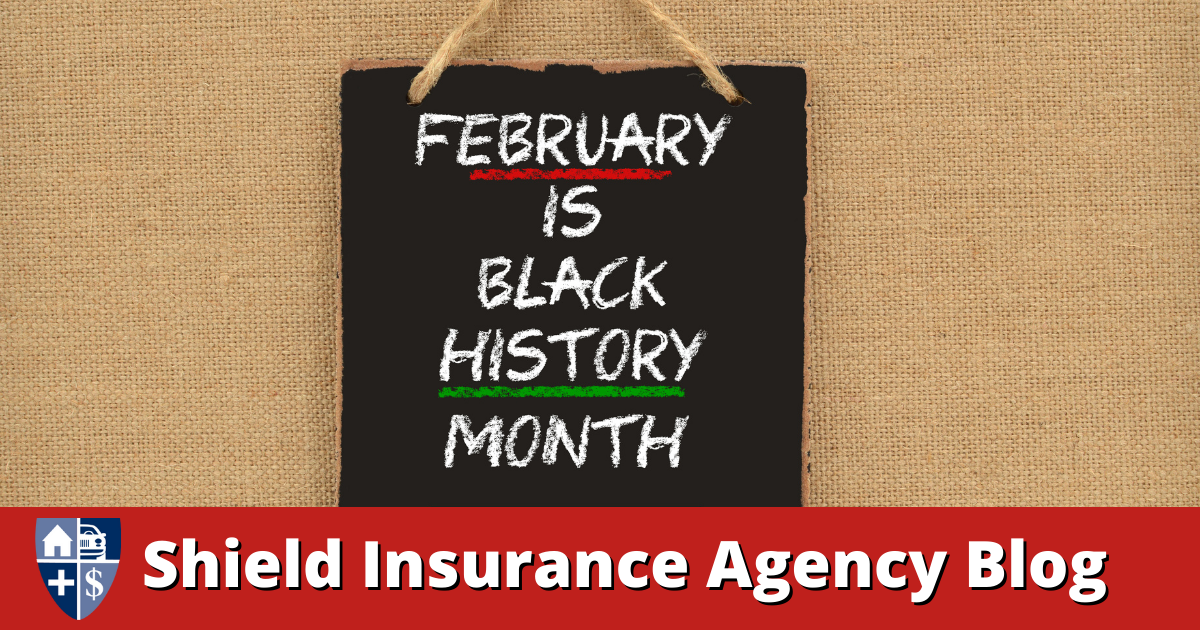
February is Black History Month

February is Black History Month

History.com | NOV 30, 2022 | Black History | Get a free quote today! | Shield Insurance

Black History Month is an annual celebration of achievements by African Americans and a time for recognizing their central role in U.S. history. Also known as African American History Month, the event grew out of “Negro History Week,” the brainchild of noted historian Carter G. Woodson and other prominent African Americans. Since 1976, every U.S. president has officially designated the month of February as Black History Month. Other countries around the world, including Canada and the United Kingdom, also devote a month to celebrating Black history.

Origins of Black History Month

The story of Black History Month begins in 1915, half a century after the Thirteenth Amendment abolished slavery in the United States.

That September, the Harvard-trained historian Carter G. Woodson, and the prominent minister Jesse E. Moorland founded the Association for the Study of Negro Life and History (ASNLH), an organization dedicated to researching and promoting achievements by Black Americans and other peoples of African descent.

Known today as the Association for the Study of African American Life and History (ASALH), the group sponsored a national Negro History week in 1926, choosing the second week of February to coincide with the birthdays of Abraham Lincoln and Frederick Douglass. The event inspired schools and communities nationwide to organize local celebrations, establish history clubs, and host performances and lectures.

Did you know? The NAACP was founded on February 12, 1909, the centennial anniversary of the birth of Abraham Lincoln.

In the decades that followed, mayors of cities across the country began issuing yearly proclamations recognizing “Negro History Week.” By the late 1960s, thanks in part to the civil rights movement and a growing awareness of Black identity, “Negro History Week” had evolved into Black History Month on many college campuses.

President Gerald Ford officially recognized Black History Month in 1976, calling upon the public to “seize the opportunity to honor the too-often neglected accomplishments of Black Americans in every area of endeavor throughout our history.” Today, Black History Month is a time to honor the contributions and legacy of African Americans across U.S. history and society—from activists and civil rights pioneers such as Harriet TubmanSojourner TruthMarcus GarveyMartin Luther King Jr.Malcolm X and Rosa Parks to leaders in industry, politics, science, culture and more. 

Black History Month 2023 Theme

Since 1976, every American president has designated February as Black History Month and endorsed a specific theme.

The Black History Month 2023 theme, “Black Resistance,” explores how “African Americans have resisted historic and ongoing oppression, in all forms, especially the racial terrorism of lynching, racial pogroms and police killings,” since the nation’s earliest days. 

Read More about Black History Month…


More great reads featured by Shield Insurance

Read More
GROUNDHOG DAY, FEBRUARY 2ND 2023

Groundhog Day

Groundhog.org | February 2023 | Groundhog Day | Shield Insurance Agency

GROUNDHOG DAY, FEBRUARY 2ND 2023

Groundhog Day is a Popular Tradition

A popular tradition in the United States, Groundhog Day is also a legend that traverses centuries, its origins clouded in the mists of time with ethnic cultures and animals awakening on specific dates. Myths such as this tie our present to the distant past when nature did, indeed, influence our lives. It is the day that the Groundhog comes out of his hole after a long winter sleep to look for his shadow.

If he sees it, he regards it as an omen of six more weeks of bad weather and returns to his hole.

If the day is cloudy and, hence, shadowless, he takes it as a sign of spring and stays above ground.

The groundhog tradition stems from similar beliefs associated with Candlemas Day and the days of early Christians in Europe, and for centuries the custom was to have the clergy bless candles and distribute them to the people. Even then, it marked a milestone in the winter and the weather that day was important.

Legend & Lore

One holiday that brings thousands of people together from all over the world to celebrate the prediction of a furry forecaster.

What would you rather be doing in the middle of the night, in the middle of the winter in western PA? How about enjoying the ambiance of the brisk night air with thousands of new friends by your side, waiting for the Seer of Seers, Punxsutawney Phil, to make his prognostication sounds like a great thing to experience! 

Whether Groundhog Day has been on your bucket list for years or it is your birthday, or if you just would like a reason to celebrate — Groundhog Day is the event for you.


The History of Groundhog Day

The Christian religious holiday of Candlemas Day has become most commonly associated with the current celebration, but it’s roots are older than that. The celebration started in Christianity as the day, (February 2nd), when Christians would take their candles to the church to have them blessed. This, they felt, would bring blessings to their household for the remaining winter.

As time rolled on the day evolved into another form. The following English folk song highlights the transition to weather prognostication.

If Candlemas be fair and bright,
Come, Winter, have another flight;
If Candlemas brings clouds and rain,
Go Winter, and come not again.

This “interpretation” of Candlemas Day became the norm for most of Europe. As you can read, there is no mention of an animal of any kind in the preceding song. It wasn’t until this traditional belief was introduced to Germany that an animal was introduced into the lore, hence another evolution of February 2nd. If, according to German lore, the hedgehog saw his shadow on Candlemas Day there would be a “Second Winter” or 6 more weeks of bad weather. As German settlers came to what is now the United States, so too came their traditions and folklore. With the absence of hedgehogs in the United States, a similar hibernating animal was chosen. This leads us to yet another evolution in the legend and to present day Punxsutawney.



The First Groundhog Day Celebration

In Punxsutawney, 1886 marked the first time that Groundhog Day appeared in the local newspaper. The following year brought the first official trek to Gobbler’s Knob. Each year since then has seen a steady increase in participation of the celebration from people all over the world.


Today’s Tradition

Today, Groundhog Day remains what it was when the tradition first came to our shores and found its way to Punxsutawney. A day to take everything a little less seriously, and break up the winter monotony… at least for a little while!

Wanna learn more?


More interesting blogs from Shield Insurance Agency

Read More
How Much Should You Donate?

How Much Should You Donate?

Charity Navigator | Donate | Compare insurance quotes here | Shield Insurance

Donating time, money, and goods are all great ways to engage with and support those in need. But how much should you be giving away? This is a highly personal decision that everyone must make for themselves. Here, we provide guidance to help you find the appropriate balance for your life and circumstance.

“Secure Your Own Oxygen Mask Before Assisting Others”

Do not give away what you cannot afford to be without. Prioritize paying your own expenses and building up an emergency fund against unexpected expenses in the future. Once that is done, you can decide how much of what remains in your budget you can donate. 

Create a Budget and a Calendar 

Consider your annual income and expenses and decide what you are comfortable setting aside for charitable giving. Remember, giving to a 501(c)(3) organization is tax-deductible. Determine when you’ll make your gifts to the organizations you choose to support. Will it be mid-year when you receive your annual bonus? Will you set up a recurring monthly contribution? This arranged frequency is preferred by charities as it allows them to have a more informed idea of how much money they will have available to budget for the projects ahead.

Similarly, decide how much time in a year can you afford to spend volunteering. Can you book a weekly slot at a food bank? Commit to donating blood every two months? This decision will be as personal as your calendar and lifestyle.

Then, take a few moments to think about your passions, values, and beliefs. What do you love? What frustrates you? If you could be remembered for changing the world in one way, what would it be?

Once you’ve identified what you’re passionate about, you can find an organization that aligns with your values and goals. Use Charity Navigator’s search tool help you find your perfect match.

Donate Money

Never feel like your gift is too small to make a difference. While major gifts are an important revenue source for most nonprofits, individual donations are also necessary. A diverse support base makes charities more sustainable.

We recommend limiting the number of charities you support. Rather than supporting 10 organizations with $10, consider supporting 2 organizations with $50. This is more beneficial to the charities and increases your investment in their work.

In-kind Donations

Read more on how much to donate…


Visit Shield Insurance Online Quoting Portal!

Read More
Best Emergency Supplies to Have at the Ready

From Fire Starters to First Aid Kits, These Are the Best Emergency Supplies to Have at the Ready

Emergencies happen — be it snow storms, wildfires, or tornados. Here are some of the best emergency supplies to make sure you’re prepared

Rolling Stones | OSCAR HARTZOG | Emergency Supplies | Shield Insurance Quoting Portal | Shield Home

NO MATTER WHERE you live, emergencies can (and do) happen. But whether it’s snow storms, tornados, wildfires, or hurricanes, the danger of serious emergencies can almost always be mitigated by investing in the best emergency supplies.

But choosing the right emergency gear — or just figuring out what types of emergency supplies you should have — can be tricky. To make things easier, we’ve created a checklist of the best emergency supplies to help your household stay safe in the worst-case scenarios.

What Are the Best Emergency Supplies?

When stocking up on the best emergency supplies, you’ll want to start by considering what needs your emergency stash has to meet. Namely, you’ll need food and water, first aid supplies, and light and heat. If you want to go beyond the basics, we also recommend adding power, shelter (like an emergency tent), and survival tools to your emergency supplies checklist.

No matter what kind of emergency supply you’re looking at — be it a multi-tool, a camping stove, or an emergency food supply — be sure it’s well-built and capable of staying in working order while shelved. The best emergency supplies can be tucked away and taken out months, if not years later, and still function properly.

Read on for a full checklist of the best emergency supplies to stock up on now.

1. Survivor Filter Pro

The most important thing to secure in most emergency situations is clean drinking water. One way to create an emergency water supply is to buy a water tank that you fill up if you know an emergency is on the horizon (i.e. if there’s a tornado warning).

But a more efficient option for securing drinking water is to get an emergency water filter, such as this Survivor Filter Pro. The compact rig uses a pump mechanism to suck up water, run it through a filter, and pump out 500 milliliters of clean drinking water per minute. It’s also very lightweight (half a pound), so you can transport it if need be.

2. Leatherman Wave+

A reliable multi-tool has always been part of our everyday carry, but they become absolutely essential when disaster strikes. Our favorite multi-tool is this Leatherman Wave+, which packs 18 tools in a small package, measuring just four inches when closed. Inside, you’ll find basics like knives, scissors, screwdrivers, and pliers, as well as some good extras like a saw and a wire stripper.

3. Judy Mover Max

Survival kits are a great way to create an emergency supplies stash with just one purchase. Good examples include the Oprah-endorsed Judy Mover Max, which has water and food, safety and warmth, and tools and first aid — all in one ultra-durable, weatherproof backpack. It has enough supplies to sustain four people for 72 hours, and you don’t have to worry about grabbing multiple items during an evacuation.

4. Mountain House Classic Bucket of Emergency Supplies

Click here for a full list of Emergency Supplies…


Visit more great blogs featured by Shield Insurance Agency

Click here to compare your current insurance rates!

Read More
How to reverse burnout at work

Balance these 6 things to reverse burnout at work, says social psychologist and author of ‘The Burnout Challenge’

CNBC.com | Renée Onque@IAMRENEEONQUE | Nov 14 2022 | Burnout | Business Insurance

Do you struggle to pinpoint why you’re burnt out at work? Is it you? Is it your job?

It may actually be a mismatch of the two, according to Christina Maslach, a social psychologist, retired professor of psychology at U.C. Berkeley and author of “The Burnout Challenge: Managing People’s Relationships with Their Jobs.” 

“You really have to look at the relationship with the job, and that means looking at both the job and the person. It’s not like one or the other,” Maslach tells CNBC Make It.

“It’s certainly not just the person who has to make the changes.”

The cure for burnout isn’t just taking time off or a starting a mindful morning routine, but it’s actually discovering how to get a better match between what your job requires of you and the tools you have to complete your duties, she says.

Maslach, and co-author of her book, Michael P. Leiter, identified six areas within your profession that should meet your standards, or else your risk of more stress and potential burnout increases.

Here are the six factors and how they may be affecting you.

Workload Burnout

It can be extremely difficult to meet high demands when you’re low on resources, says Maslach.

Lacking supportive tools like time, people, equipment or information may be affecting your ability to do your job how you’d like to.

Control

Having autonomy, discretion and an ability to make choices are necessary in the workplace in order to feel like you’re doing your job well, she notes.

“People often complain about having a lack of control, that they’re told what to do, no ifs, ands or buts about it,” she says.

Reward

The way you feel about your salary and benefits can influence your emotions toward work. But, rewards aren’t just limited to finances.

“A lot of times, it’s social recognition, that people are pleased by what you’ve done and let you know it,” Maslach says. If you’re working hard and aren’t receiving positive feedback, you’re more likely to feel unjustified.

Community Burnout

From co-workers, bosses, and people you supervise to clients, patients, or students, everyone you interact with while working can affect your feelings about your job. Without mutual respect, trust, and support within your team, even the best job can turn into a “socially toxic workplace” that you hate, says Maslach.

Fairness

“Where there’s an absence of fairness, this is where discrimination lives. This is where glass ceilings exist,” Maslach says.

Rules, policies and practices should feel equal in your work environment or it can lead to resentment, she adds. You need to believe that you have an equal chance at receiving promotions and just as many opportunities as the rest of your team.

Values

You’re a lot more likely to quit your job if it doesn’t align with your basic moral principles, says Maslach.

Working for a company or organization where there are ethical conflicts can deter you from feeling enthusiastic about what you do, she notes.

How to approach an imbalance in these areas

More on Reverse Burnout at work…


More great articles from Shield Insurance Agency

Read More
Flood Insurance 101

Flood Insurance 101: Understanding the Basics

Flood Insurance | Shield Insurance Agency | Self-Quoting Portal

Flooding is one of the most common and destructive natural disasters in the United States, and it can happen anywhere. If you live in an area that is prone to flooding, it’s important to understand the basics of flood insurance and how it can protect your home and belongings. At Shield Insurance Agency, we understand the importance of flood insurance in Michigan, which is why we have created this guide to help you understand the basics.

Flood Insurance: The Basics

First, it’s important to understand that standard homeowners insurance policies do not cover damage caused by flooding. You will need to purchase a separate flood insurance policy in order to be protected. Flood insurance is available through the National Flood Insurance Program (NFIP), and it can be purchased through Shield Insurance Agency.

Flood insurance policies are divided into two types: building coverage and content coverage. Building coverage covers the structure of your home and any permanently attached fixtures, such as built-in appliances and cabinetry. Contents coverage covers personal possessions such as furniture, clothing, and electronics. You can purchase both types of coverage, or just one depending on your needs.

When purchasing flood insurance, it’s important to understand the difference between a preferred risk policy and a standard policy. Preferred risk policies offer lower rates for properties in low-to-moderate risk areas and are generally less expensive than standard policies. However, it’s important to note that even if you live in a low-risk area, you are still at risk of flooding.

Give Us A Call

At Shield Insurance Agency, we understand that purchasing flood insurance can be overwhelming, which is why we are dedicated to helping our customers in Michigan understand the basics of flood insurance and find the right coverage to protect their homes and belongings.

Read More
International Snowmobile Safety and Awareness Week

International Snowmobile Safety and Awareness Week

NationalToday.com | January 21, 2023 | Snowmobile Safety | Snowmobile Insurance

International Snowmobile Safety and Awareness Week starts on the third Saturday of January every year. Did you know that it has been more than 70 years since the first snowmobile was made? Snowmobiles are vehicles designed and built to be used in the snow. They’re a fun way to go about in places where there is heavy snowfall and are enjoyed by millions all over the world as a winter sport. But it does not come without safety concerns. Snowmobiles can quickly become dangerous if not used with the necessary precautions. International Snowmobile Safety and Awareness Week was created to spread awareness among the people about the safety precautions one needs to ensure before using a snowmobile, to keep them and the people around them safe.

HISTORY OF INTERNATIONAL SNOWMOBILE SAFETY AND AWARENESS WEEK

Sledding has been a popular recreational activity for many centuries. However, the motorized sled was invented in 1927 by a mechanic in Valcourt Quebec named Joseph-Armand Bombardier. Bombardier made the first-ever motorized sled by using a propeller. A few years later in 1927, the motor toboggan was made. Bombardier used the wheel and track system to further improve his invention, and thus in 1935, the first snowmobile was made.

In the coming years, Bombardier would make modifications to the snowmobile, which became immensely popular. He patented the first seven-member snowmobile in 1937 and the 12-member capacity one in 1941. Bombardier’s snowmobiles turned out to be extremely useful for people, especially people working in the law enforcement, fire service, hospital emergency services, etc. Some of these vehicles were modified for military use and used by American troops in World War II.

By the 1960s, new snowmobiles with powerful engines emerged. It was popular among people around the world who lived in frigid regions where there was heavy snowfall. People enjoyed snowmobiles as a recreational activity and as a winter sport. It was also useful for going from place to place during the times heavy snowfall would block the roads.

Many incidents of accidents and mishaps involving snowmobiles were reported. Many were also concerned about fuel usage and its impact on the environment. In 1993, International Snowmobile Safety and Awareness Week was created to encourage people to use necessary safety equipment like helmets and protective gear and to use snowmobiles made by authorized companies that produce snowmobiles that undergo strict pollution checks.

Read More on Snowmobile Safety…


Check out more blogs featured by Shield Insurance Agency!

Read More
Save 20% or more on your heating costs this winter.

Slash Your Heating Costs This Winter

Zen Business.com | By Patricia Schaefer | December 1, 2022 | Heating Costs | Shield Home Insurance

Use these low-cost and no-cost ways to lower your heating bill, regardless of your heat source. Read on if you’d like to save 20% or more on your heating bills this winter.

The cost of heating your home — and your home office — could put a huge hole in your budget this winter whether you heat with oil, gas, or electric. Even if you get the best price for heating oil in your area, for instance, you might need to spend more than $5,000 to keep your home warm.

But there are steps you can take to potentially save you 20% or more on heating costs when those penetrating arctic winds start to blow. For those on limited budgets, there are many ways to lower heating bills that don’t cost a dime. There are also weatherization applications that require anywhere from a small to middling investment of cash, yet these applications will subsequently lower both energy consumption and future heating bills. Over time, these investments can be expected to more than pay for themselves.

Cost-Free Ways to Lower Heating Bills

  • Lower your thermostat. Try reducing your usual daytime temperature by at least one degree. For each lowered degree, you’ll save one to three percent off those heating bills. At night, turn down the thermostat to 60 degrees. It’s much healthier, you’ll feel better when you awaken, and you’ll save money. If you go away for a weekend or more, lower the thermostat to 55 degrees.
  • Run bathroom and kitchen exhaust fans less. Exhaust fans pull warm air out of the house and let in cooler air that will need to be heated. Use fans only when necessary.
  • If you have a service contract with a heating provider, it will usually include an annual check and tune-up of your heating system. Don’t rely on the company to contact you about scheduling this service. Be sure it’s performed annually before winter arrives; doing so can save up to 10% on heating bills.
  • Close the damper on your fireplace when not in use. If not, your chimney will draw warm air out of the room and create a draft.
  • Close off unused spaces (attic, garage, basement, spare bedrooms, storage areas, etc.) or heat only those rooms that you use. If your heating system has vents, close off heating vents in unused rooms.
  • If you have ceiling fans, reverse the switch so they blow upward toward the ceiling. The reverse air circulation promotes heating efficiency in the winter.
  • Reduce your hot water heater temperature to 115-120 degrees.
  • Keep blinds and drapes open on sun-exposed windows during the day. Close these same drapes at night to help impede the escape of heat.
  • Dust builds up on radiators and baseboard heating vents, and then reduces the amount of heat that can get into a room. Dust and vacuum these surfaces often.
  • Prune branches from trees and bushes that block the sun’s rays into your home. 
  • If possible, sign up for a budget plan with your heating provider. Although this will not reduce the actual yearly dollar amount, it will make your bill-paying more manageable when spread evenly over a 12-month period.
  • When you add energy-efficient items to your home, check for possible tax breaks or discounts on homeowner insurance policies.
  • Check with local utility companies for free energy audits. Certain energy-saving devices may also be provided and installed free of charge. Lower-income households typically qualify for these free products and services.

Lower heating costs with energy-saving devices and services

Read more…


More great blogs shared by Shield Insurance Agency

Read More