
How Does Investing Work?

How Does Investing Work?

Acorns.com | Tim Stobierski | Dec 19, 2022 | Investing | Shield Business Insurance | Start a quote today!

IN A NUTSHELL

  • Investing is when you purchase assets you expect to earn a profit from in the future.
  • Compounding (aka when the returns on your money generate their own returns) the longer your money is in the market, the longer it has to grow.
  • Investing small amounts regularly over time is a habit that will help you build wealth throughout your life called dollar-cost averaging.

You may have heard that investing is the best way to grow your money and reach your biggest financial goals. But what is investing, exactly? How does investing work? And how can you get started? Find the answers to those and other investing questions below.

What is investing?

At its simplest, investing is when you purchase assets you expect to earn a profit from in the future. That could refer to buying a home (or other property) you believe will rise in value, though it commonly refers to buying stocks and bonds.

How is it different from saving?

Saving and investing both involve setting aside money for future use, but there are a lot of differences, too. Check out this chart:

InvestingSaving
Always involves risk. Even the safest investments involve some risk that could cause you to lose money.Rarely involves risk. If your cash sits in an FDIC-insured savings account (which protects up to $250,000), you typically don’t need to worry about losing any.
Higher potential for growth. Depending on how much risk you’ll accept, it’s possible to earn a large return on your investments. With stocks, for example, the long-term average is nearly 10 percent per year.Lower potential for growth. Virtually all savings accounts will pay you interest for keeping money in your account. But it probably won’t be much and often fails to keep up with inflation (the rate at which prices are rising).
Usually best for mid or long-term goals. Generally, it’s best to only invest money you won’t need for a little while, as the stock market fluctuates and you don’t want to be forced to sell stocks that are down because you need the money.Good for short-term goals. A savings account, being essentially risk-free, is ideal for immediate purchases as well as any money that you can’t afford to lose in the short term (such as an emergency fund).
May be difficult to access quickly. Before you can spend any of the money you’ve built up through investments, you’ll have to sell them. With stocks, it could take days before the proceeds are settled in your bank account, and selling property can take months (or longer).Readily accessible. Generally speaking, you can access money in your savings account anytime.

What’s the difference between investing and trading?

Click here for the full story !


More great blogs by Shield Insurance Agency

Read More
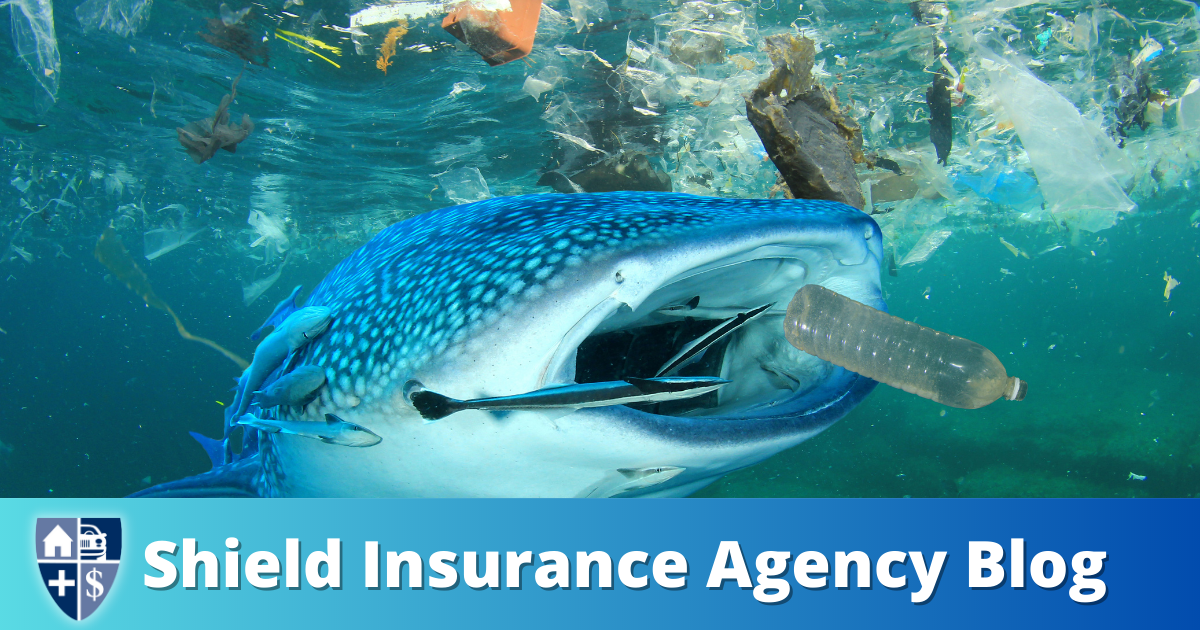
Microplastics are fragments of any type of plastic less than 5 millimeters (mm) in length and are an increasing topic of risk

Microplastics

Liberty Mutual Business | Commercial Insurance | Microplastics | Start a Quote Today!

Microplastics are fragments of any type of plastic less than 5 millimeters (mm) in
length and are an increasing topic of risk discussions due to their prevalence in
the environment and the negative impacts they potentially pose on the earth and its
inhabitants. The term microplastics was first introduced to differentiate these smaller
fragments from their larger counterparts, macroplastics, which describe larger plastic
waste, such as plastic bottles.

Two classifications of microplastics are
currently recognized

Primary Microplastics

Primary microplastics include any plastic fragments or particles that are already 5 mm (5,000 mm) in size or less before entering the environment. Primary microplastics are purposefully manufactured and can include feedstock for manufacturing plastic products, such as plastic pellets (also known as nurdles), microfibers from clothing, microbeads in personal care products, glitter, and industrial abrasives. Once in the environment, microplastics can degrade to be even smaller in size. 

Secondary Microplastics

Secondary microplastics arise from the breakdown of larger plastic products through natural weathering processes after entering the environment. Sources of secondary microplastics can include water and soda bottles, fishing nets, plastic bags, shedding of fibers from polyester/nylon clothing, and tire wear. Over time, a culmination of physical, biological, and photodegradation can reduce the structural integrity of plastic debris to a size that is eventually undetectable to the naked eye. This process of breaking down large plastic material into much smaller pieces is known as fragmentation. Microplastics can be further divided into four sub-groups based on particle size: 

  1. Large microplastics (100–5000 mm)
  2. Small microplastics (1–100 mm) 
  3. Sub-micron plastics (100–1,000 nm) (0.1– mm) 
  4. Nanoplastics (1–100 nm) (0.001–0.1 mm) Because of their smaller size, nanoplastics can present additional risks and challenges: 

They may bypass filtration methods intended for larger microplastics. 

They may be less likely to settle, have greater mobility, and may be transported further. • They may be more likely to enter and bioaccumulate in the food chain. 

Due to their higher surface area, faster leaching of plastic additives can occur. 

They may act as pollutant “vectors” because their higher surface area also allows for more adsorption of metals and other pollutants.

Microplastics can also be categorized according to type of polymer, additives used, and shape.

U.S. National Oceanic and Atmospheric Administration (NOAA) and the European Chemicals Agency (Note: 1 mm = 1,000 micrometers [mm] = 1,000,000 nanometers [nm])

Source of microplastics in the environment There are countless sources of both primary and secondary microplastics in the environment, including the following:

Cosmetics: Microplastic “scrubbers”, “microbeads”, or “micro-exfoliates” used in hand cleansers and facial scrubs have replaced traditionally used natural ingredients, including ground almond shells, oatmeal, and pumice. These products are typically composed of polyethylene, a common component of plastics, but they can also be manufactured from polypropylene, polyethylene terephthalate (PET), and nylon. The beads may be washed into the sewage system immediately after use. 

Textiles and clothing: Many synthetic fibers, such as polyester, nylon, acrylics, and spandex, can be shed from clothing and persist in the environment. The process of washing clothes causes garments to lose an average of over 100 fibers per liter of water. Each garment in a load of laundry can shed more than 1,900 fibers of microplastics, with fleeces releasing the highest percentage of fibers. 

Tires: Car and truck tires. which are composed partly of synthetic styrene-butadiene rubber, erode into tiny plastic and rubber particles as they are used. The estimated per capita emission ranges from 0.23 to 4.7 kg/year, with a global average of 0.81 kg/year. In air, 3–7% of the particulate matter (PM2.5) is estimated to consist of tire wear and tear. 

Plastics manufacturing: Plastic pellets (aka nurdles), 2.0–5.0 mm in size, which are used as a raw material to create other plastic products, can enter the environment through spills and other accidents. 

Air blasting: This process involves blasting acrylic, melamine, or polyester microplastic scrubbers at machinery, engines, and boat hulls to remove rust and paint. As these scrubbers can be used repeatedly until they diminish in size and their cutting power is lost, they may become contaminated with heavy metals such as cadmium, chromium, and lead. 

Fishing industry: Recreational and commercial fishing, marine vessels, and marine industries can be sources of macroplastics and secondary microplastics. 

Wastewater treatment plants: The size of microplastics prevents them from fully being retained by preliminary treatment screens at wastewater plants, thereby allowing some to enter rivers and oceans. Wastewater treatment plants only remove an average of 95–99.9% of microbeads. This leaves an average of 0–7 microbeads per liter being discharged. Sewage sludge that is reused as fertilizer after the wastewater treatment has also been known to contain microbeads. Persistence of microplastics in the environment Microplastics are persistent and ubiquitous in the environment, particularly in aquatic and marine ecosystems. The most significant transport pathways to surface water are presumed to be via dust and stormwater runoff. It has been estimated that there are 51 trillion individual pieces of microplastics in the world’s oceans, estimated to weigh 236,000 metric tons. Microplastics can also accumulate in the air and terrestrial ecosystems but the cycle and movement of microplastics in the environment is still not fully understood. Microplastics have also been found in deep layer ocean sediments and in the high mountains, at great distances from their source. According to the U.S. EPA: 

Of the total plastics released to oceans (4.8–12.7 million tons (Mt)/year), 15%–1% originate as microplastics from homes and industrial products. 

About half of the total (3.2 Mt/year) microplastics released, or about 1.5 Mt/year, ends up in oceans. The following are the estimated sources of microplastics to oceans:

  • Washing synthetic textiles (35%) 
  • Tire wear (28%) • City dust (24%) 
  • Road Markings (7%) • Marine Coatings (3.7%) 
  • Microbeads (2%) 
  • Plastic pellets (0.3%) It has been estimated that 80% of microplastic pollution comes from textiles, tires, and city dust

here for the full story…

More fascinating blogs with Shield Insurance Agency

Read More
Scooter safety tips

Scooter safety tips

Foremost | Scooter Safety | Shield Insurance | Start a quote today!

With increasing gas prices it’s hard not to notice the spiking trend of people choosing scooters as alternate transportation. Whatever make or model you choose to fit your style, you can’t deny the money-saving and environmental effects riding a scooter has over driving a 2-ton motor vehicle that only gets 20 miles to the gallon.

A growing problem with having more people on scooters is how to safely share the road. State legislation varies on scooters; some states equate scooters with bicycles, in-line skates, and skateboards, while other states put scooters in the same category as motorcycles, requiring helmets and regulating where scooters can be ridden. Check your state’s DMV Web site for the appropriate laws and licensing rules for your state.

Regardless of where you live, scooters are most likely sharing the road with vehicles that significantly outweigh them and can easily overtake them. By using common sense and some very simple safety tactics, scooter riders can effectively, and safely, share the road with other vehicles.

Scooter safety tip: Wear a helmet

Even if your state does not require you to, studies show helmets significantly minimize head injuries if an accident occurs.

Scooter safety tip: Use your lights

Always turn on your headlight when you’re riding your scooter even during the day, especially if it’s raining, and of course always in the evening. Make sure you can be seen by other cars.

Scooter safety tip: use turn signals

Just like in a car, you need to let people know where you are going. In addition to a signal light, it’s also a good idea to use hand turn signals that motorcyclists and bicyclists use when they are sharing the road with cars. Based on U.S. standards, for a left turn, extend your left arm straight out in the direction of the turn, parallel to the road. For a right turn, extend your right arm straight out in the direction of the turn, parallel to the road.

Obey speed limits and road markings

Obey all posted limits and follow lane markings. Don’t attempt to make a right turn by coming up next to a vehicle on the shoulder, unless there is a lane. You could easily be in a car’s blind spot and be hit if they turn right as well and can’t see you.


Scooters are a fresh alternative to getting around town while saving money and the environment. Riding scooters present challenges that any motorist faces when sharing the road with vehicles of all sizes and speeds. Keep your head about you and make sure you put safety first when taking your new scooter out for a spin.

Looking for Scooter Insurance?

Foremost offers scooter insurance on all scooter makes and models and offers coverages such as:

  • Physical Damage and Liability
  • Total Loss Replacement Coverage
  • Towing and Roadside Assistance
  • Safety Apparel and Optional Equipment when Physical Damage coverage is purchased.

More blogs by Shield Insurance Agency

Read More
Top Five Uses for a Trailer Hitch

Top Five Uses for a Trailer Hitch

Foremost | by Rachel Neva | Trailer Hitch | Auto Insurance | Click here to start a quote today!

A trailer hitch just might be the most inventive way to add more cargo space, value, and extra opportunities for fun to your vehicle. While some vehicles like trucks and SUVs may come with a factory-installed hitch or tow package, it’s very common for drivers to install a hitch or tow package to their vehicle as an after-market accessory.

Wondering what the difference between a hitch and a tow package is? Depending on what you plan to tow, you may need more than a standard hitch with a trailer ball attached to your vehicle. In addition to the tow hitch itself, a tow package (especially if it’s factory-installed) may include things like a wiring harness and circuitry to power the lights and accessories on a trailer, heavy-duty suspension and brakes to handle the extra weight, an enhanced engine and transmission cooling system, larger battery and alternator to help power your vehicle and what you’re towing with ease, and additional driver-assistance systems that can help with overall spatial awareness while towing.

Depending on what you’re towing and where you’re going, this article provides some helpful information if you’re deciding between a factory-installed tow package or an aftermarket tow package for your vehicle.

If you’re thinking about adding a hitch to your vehicle … here are our top five uses for a trailer hitch:

  • Hitch-mounted bike rack — If you like to hit the mountain bike trails, go on scenic family bike rides in your area, or take bikes along on family vacations, a hitch-mounted bike rack is an easy way to transport bicycles of all kinds. While this type of bike rack extends the overall length of your vehicle (something to be aware of when parking), loading and unloading bikes can be much easier than bike racks that are mounted on a vehicle’s roof.
  • Utility trailer — A small utility trailer can be ideal for many towing tasks such as hauling plants and supplies for a garden or landscape project (and any debris resulting) or moving large items that won’t fit in your vehicle, like furniture or appliances.
  • Travel trailer — From pop-up camper trailers to luxury, fifth-wheel travel trailers, there’s a camping travel trailer to fit almost every kind of person who enjoys camping and exploring the great outdoors.
  • Boat trailer — If you don’t live on a lake or body of water but want to take nearly any kind of boat — a small fishing boat, a ski or wake boat, a pontoon or sailboat – out on the water, you’ll need a trailer that’s specific to the boat. Unless you have a boat slip at a marina that offers haul-out and storage service, you’ll likely need a trailer for your boat at some point.
  • Off-road vehicle trailer — There are many types of off-road vehicle trailers from simple, utility-type trailers for things like ORVs and off-road motorcycles to enclosed cargo-type trailers for ORVs and snowmobiles. If you like to explore new trails on your ORV or snowmobile, you may want to invest in a trailer to haul them with you wherever you go.

If you add a trailer hitch to your vehicle and have questions about insuring the things that you’ll tow, give Shield Insurance A call to shop for coverages that can help you protect the things you tow.


More great articles by Shield Insurance Agency

Read More
Four things you might not realize about boat insurance

Four things you might not realize about boat insurance

Boat Insurance | Start a quote Today!

Purchasing boat insurance is important for boat owners in Michigan. Shield Insurance Agency provides boat insurance policies that can cover your watercraft.

Before you buy boat insurance, it’s a good idea to spend some time researching how boat insurance works and what the different coverage options are.

The following are four things you might not realize about boat insurance.  

A boat insurance policy typically offers some coverage for belongings in your boat.

If you keep valuable items in your boat, these items can be covered up to a certain amount by your boat insurance policy.

Boat insurance is frequently required by marinas.

You aren’t required by law to have boat insurance in Michigan. However, boat owners often need coverage because it is a requirement of the marina they use to store their boats. 

Boat insurance policies specify a certain geographic area. 

Boat owners need to realize that they won’t be covered if they travel in their boat outside of the coverage region that’s specified by their policy. That’s why it’s important for boat owners to let their boat insurance provider know where they’ll be traveling with their boat when they buy their policy. 

A number of boat insurance policy add-ons are available.

When you buy a boat insurance policy, you may want to take advantage of various policy add-ons. Add-ons available for boat insurance policies include coverage for dock contract liabilities, ice and freezing issues, towing, boat trailers, and equipment like fishing tackle. 

Reach Out To Us

Do you have questions about boat insurance coverage in Michigan? Get in touch with us at Shield Insurance Agency to learn more about boat insurance coverage. Contact us today for a policy quote!


More blog articles by Shield Insurance Agency

Read More

Helping turtle friends cross the road

Foremost | by Niki King-Todd | Turtle | Start a Quote with Shield Insurance | Auto Insurance

Did you know that May 23 is World Turtle Day? It’s all about raising awareness for turtles and encouraging people to help them survive. Participating can be as simple as helping a turtle cross the road.

Most turtles begin to move as the weather warms. This may be for mating, nesting or many other reasons. Of course, turtles move much slower than cars (and don’t understand human traffic laws), which makes crossing the road incredibly dangerous. To celebrate and protect all of the turtles out there, here are some tips for safely helping them reach their destination!

Turtle Safety First

If you see a turtle on the road, remember to use the correct signals when pulling over. Keep your flashers on to warn oncoming vehicles and always check your surroundings.

Moving the Turtle

If the turtle is moving at a decent pace, you may be able to stand nearby and watch it cross. If the turtle is stagnant (or if you are uncomfortable touching the turtle), you may use a blunt object to help push it. Make sure the object isn’t sharp, and be gentle! This will be your best option for moving a snapping turtle, they may bite if you use your hands.

Picking up the Turtle

Most turtles will hide in their shells if they are frightened, which makes it easier for you to pick them up. Place both of your hands behind the front legs and towards the back legs. The turtle may try to kick, so don’t hold it up high – you don’t want to drop it! Also, it’s very important to never pick up a turtle by the tail, as this can severely injure them.

Car Mat

Another option for moving the turtles is using a car mat. This works best for larger turtles that you may not be able to lift. You can allow the turtle to walk onto the mat, or help gently push it onto the mat. Be sure to carry the mat low to the ground in case the turtle falls off.

Going in the Same Direction

Be sure to move the turtle in the same direction it was trying to go. If you place it back where it was coming from, it will most likely turn around and return to the road.

Do Not Take it with You

Turtles and other wildlife are meant to stay in the wild. No matter how cute turtles can be, resist the temptation to bring them home. When taken out of their home areas, they will most likely try to go back. They are not pets so they need to be in their natural environment.

Injured Turtles

An injured turtle may look dead, so if you are unsure as to whether or not the turtle is injured, there are a few tricks you can try. Try gently touching the back of their foot, or touch the corner of its eye to test for a reaction. The turtle may try and kick, or move its head or eyes. If a turtle has a crack in its shell, it might drown if it returns to the water. If the turtle you find has a damaged shell, or seems seriously injured, contact a professional. Many veterinarians, animal shelters and wildlife rehabilitation centers will treat them for free.


More great articles by Shield Insurance Blog

Read More
7 Surprising Facts About St. Patrick's Day

7 Surprising Facts About St. Patrick’s Day

History Channel | Feb 22, 2023 | St. Patrick’s Day | Shield WebSite | Start a quote

Who was the real St. Patrick? Was that legend about the snakes true? And why did so many St. Patrick’s Day traditions start in America?

While St. Patrick’s Day is now associated with wearing green, parades (when they’re not canceled) and beer, the holiday is grounded in history that dates back more than 1,500 years. The earliest known celebrations were held in the 17th century on March 17, marking the anniversary of the death of St. Patrick in the 5th century. Learn more about the holiday’s history and how it evolved into the event it is today.

The Real St. Patrick Was Born in Britain

Much of what is known about St. Patrick’s life has been interwoven with folklore and legend. Historians generally believe that St. Patrick, the patron saint of Ireland, was born in Britain (not Ireland) near the end of the 4th century. At age 16 he was kidnapped by Irish raiders and sold as a slave to a Celtic priest in Northern Ireland. After toiling for six years as a shepherd, he escaped back to Britain. He eventually returned to Ireland as a Christian missionary.

There Were No Snakes Around for St. Patrick to Banish from Ireland

Among the legends associated with St. Patrick is that he stood atop an Irish hillside and banished snakes from Ireland—prompting all serpents to slither away into the sea. In fact, research suggests snakes never occupied the Emerald Isle in the first place. There are no signs of snakes in the country’s fossil record. And water has surrounded Ireland since the last glacial period. Before that, the region was covered in ice and would have been too cold for the reptiles.

St. Patrick’s Day is Likely Based on Celtic Fairies

The red-haired, green-clothed Leprechaun is commonly associated with St. Patrick’s Day. The original Irish name for these figures of folklore is “lobaircin,” meaning “small-bodied fellow.” Belief in leprechauns likely stems from Celtic belief in fairies— tiny men and women who could use their magical powers to serve good or evil. In Celtic folktales, leprechauns were cranky souls, responsible for mending the shoes of the other fairies.

St. Patrick’s Day Shamrock Was Considered a Sacred Plant

The shamrock, a three-leaf clover, has been associated with Ireland for centuries. It was called the “seamroy” by the Celts and was considered a sacred plant that symbolized the arrival of spring. According to legend, St. Patrick used the plant as a visual guide when explaining the Holy Trinity. By the 17th century, the shamrock had become a symbol of emerging Irish nationalism.

The First St. Patrick’s Day Parade Was Held in America

While people in Ireland had celebrated St. Patrick since the 1600s, the tradition of a St. Patrick’s Day parade began in America and actually predates the founding of the United States. 

Records show that a St. Patrick’s Day parade was held on March 17, 1601 in a Spanish colony in what is now St. Augustine, Florida. The parade, and a St. Patrick’s Day celebration a year earlier were organized by the Spanish Colony’s Irish vicar Ricardo Artur. More than a century later, homesick Irish soldiers serving in the English military marched in Boston in 1737 and in New York City on March 17. Enthusiasm for the St. Patrick’s Day parades in New York City, Boston and other early American cities only grew from there. In 2020 and 2021, parades throughout the country, including in New York City and Boston, were canceled or postponed for the first time in decades due to the outbreak of the COVID-19 virus. They returned in 2022. 

The Irish Were Once Scorned in America

While Irish Americans are now proud to showcase their heritage, the Irish were not always celebrated by fellow Americans. Beginning in 1845, a devastating potato blight caused widespread hunger throughout Ireland. While approximately 1 million perished, another 2 million abandoned their land in the largest-single population movement of the 19th century. Most of the exiles—nearly a quarter of the Irish nation—came to the shores of the United States. Once they arrived, the Irish refugees were looked down upon as disease-ridden, unskilled, and a drain on welfare budgets.

Corned Beef and Cabbage Was an American Innovation

The meal that became a St. Patrick’s Day staple across the country—corned beef and cabbage—was an American innovation. While ham and cabbage were eaten in Ireland, corned beef offered a cheaper substitute for impoverished immigrants. Irish-Americans living in the slums of lower Manhattan in the late 19th century and early 20th, purchased leftover corned beef from ships returning from the tea trade in China. The Irish would boil the beef three times—the last time with cabbage—to remove some of the brine.

Click here for more fun facts about St Patricks Day!


More great articles by Shield Insurance Agency

Read More
Pet Safety Tips

Pet Safety Tips for the Summer

Foremost Insurance | by Jenean McLoskey | Pet Safety Tips | Pet Insurance | Shield Insurance

Pet Safety Tips

Summertime means spending long days in hot, sunny weather with your furry loved ones by your side. It’s the perfect time for you and your pet to be more active. However, having a fur coat can pose some risks for your pets if they are in the sun for too long. Since they don’t sweat like humans, they can overheat a lot faster than we can. But don’t worry! There are plenty of precautions you can take to ensure they’ll be safe and content in the summer heat. Here are five pet safety tips to keep in mind while playing outside this summer:

Have plenty of water on hand.

Your pet will be thirstier than normal during the summer and can get dehydrated very quickly. Always provide plenty of fresh, cold water as needed. If you’re going on a long walk, have a few water bottles on hand for water breaks, and keep them in the shade as much as possible.

Never leave your pet in a car unattended.

This is extremely important! Leaving animals in a parked vehicle is incredibly dangerous. Even if the windows are down, they’re still at risk of fatal heat stroke.

Keep their paws protected.

Walking on hot cement or asphalt for long periods of time can cause your pet to overheat a lot quicker, and can burn their sensitive paws. Always feel the pavement before taking a walk to see how hot it is, and walk them in the early morning or evening when it’s not the hottest time of the day.

Never use fireworks around your pets.

Celebrating with fireworks during the summer is fun and exciting for most humans, but it can be traumatizing for your dog or cat. Loud noises can scare and disorient them, and lit fireworks could cause accidental severe burns. Always keep them away from the noise in a safe, sheltered area.

Know the symptoms of overheating.

Dogs and cats are at high risk of overheating during the summer. If you notice any heavy panting, thick drool, or vomiting, move them to a cool place and give them water immediately. You may get a damp towel and wrap it around them, but experts advise to never put them in cold water because it can cause shock. If symptoms don’t improve, take them to your local vet right away.

If you practice these safety tips, you should feel confident to enjoy the summer with your furry friends. Have fun and be safe!

Need Pet Insurance to go along with the Pet Safety Tips?


More great articles are at the Shield Insurance Agency Blog!

Read More
How to Hitch a Trailer

How to Hitch a Trailer

Foremost Insurance | by Marrio Roberts Jr. | Hitch a Trailer | Auto Insurance | Request a Comparison Quote

Hooking up a trailer to a vehicle requires patience and attention to detail. If you don’t know what you’re doing, the process can be frustrating, and way harder than it should be. Luckily, Foremost® prepared this guide to help you feel more confident and move forward with a plan.

First of all, remember that ball hitches are not one-size-fits-all. Before you start towing anything, research to make sure you have the right ball hitch for the situation.

Once you know you have the right ball hitch, you can get started. According to driving-tests.org, the first thing you should do is use the trailer jack to position the coupler a few inches higher than the ball hitch. Then, you should align the ball hitch with the coupler on your trailer, and back the vehicle up so that the coupler is directly above the hitch.

Once aligned, you should be able to lower the coupler onto the hitch. Then, you can latch the coupler and lock it in place. After that’s complete, you can remove the jack.

Next, you should attach the safety chains from the trailer to the vehicle in a crisscross pattern. So, attach the left chain to the right side, and attach the right chain to the left side. This pattern is recommended so that the chains can catch the trailer if it detaches.

When all that is done, you can plug in the electrical wires from the trailer to the vehicle. Be sure to check all lights to ensure they’re working properly. If they are, you’ll be all hitched up and ready to go!

Shield Insurance Agency has insurance policies for cars, trucks, trailers, boats, and many other things you could be towing. If you’re looking for insurance, you can get a quote with us today!


More great articles featured by Shield Insurance Agency

Read More
9 Affordable Ways to Heat Your Home This Winter

9 Affordable Ways to Heat Your Home This Winter

The HOMEiA Team | Oct 01, 2020 | Heat Your Home | Home Insurance | Easy Quote

9 Affordable Ways to Heat Your Home This Winter

As temperatures fall outside, thoughts of fans and air conditioners are replaced by a need to warm our homes again.

If your heating bill was frightening last year, if you’re building a residence or vacation home, or if your old system is starting to fail, it is time to look at your options when it comes to heating your home.

Heating systems come in a number of varieties, each with its benefits and detriments. Here we’ll explore some cost-effective ways to keep your space comfortable this winter.

Here are 9 most affordable ways to heat your home this winter:

Table of Contents:

  1. The classic central furnace
  2. A Hot Water/Steam System
  3. Heat Pumps
  4. A Ductless Furnace
  5. A Fuel-Burning Stove
  6. A Portable Heater
  7. Fireplaces
  8. Upgrade with a programmable or smart thermostat
  9. Improve your Efficiency
  10. The classic central furnace

The classic central furnace, heat your home with a central furnace

The most common means of heating a home in North America is through a warm-air furnace.

A furnace is a large appliance inside the building that is powered by electricity or by fuel (natural gas or fuel oil). Gas and oil furnaces mix air and fuel to power a flame, which heats a metal exchanger and heats the air. From there a fan pushes the warm air through the home’s ducts.

How hard the furnace works is determined by the thermostat. When the temperature falls below the thermostat’s set level, the heating system’s components turn on; when it measures warm enough, the system turns off.

Some furnaces are more efficient than others. In the United States, the AFUE (Annual Fuel Utilization Efficiency) is the common way to measure efficiency, as averaged across the seasons and varying loads. To get more heat for the furnace’s work, look for a high AFUE.

One of the pros of a central furnace is that you can set the thermostat to control the temperature for you, allowing the system to turn off once the home has reached an appropriate temperature. On the other hand, central air handling means you can’t control the temperature in individual rooms.

A Hot Water/Steam System

A Hot Water/Steam System, heat your home with a hot water system
There’s a reason steam is used so often for fast cooking: it is low in density, has no temperature limit, works quickly, and can be controlled easily.

Even more efficient, though, are hot water (boiler) systems. Today many existing steam systems are being converted to hot water systems, partly because of a deficit in expertise among maintenance personnel.

Heat Pumps

Heat Pumps, heat your home with heat pumps. Heat pumps move heat energy from its source in an already cold area to a warmer destination referred to as a “heat sink.” The heat energy moves heat from a place that is already cold, making it even colder, and pushes it toward a destination that is warming.

Since the heat energy moves in the opposite direction that it would move on its own, an external power source is necessary. The result is essentially a refrigerator or air conditioner used in reverse.

Where does the heat come from? Typically, it comes from the external air or from underground (where temperatures remain fairly constant throughout the year).

A Ductless Furnace to heat your home

A Ductless Furnace, heat your home with a ductless furnace Whereas a central furnace moves air throughout the house via a system of ducts, a ductless furnace distributes heat through another pathway.

A floor furnace, which is installed below the floor, heats the room right above it and nearby. A wall furnace heats air to the rooms on either side of the wall. And a pipeless furnace distributes heat through a register on the floor.

In a ductless mini-split system, one unit is installed on an exterior wall and another is mounted on the wall of the room.

The lack of ducts can reduce the amount of dust that builds up, and these units can often be controlled individually so the heat can be adjusted in the room where it’s needed.

A Fuel-Burning Stove

A Fuel-Burning Stove, heat your home with a wood-burning stove. Popular in isolated and low-cost dwellings such as cabins, fuel-burning stoves can be effective in smaller spaces.

The stove is typically made of a metal fire chamber with a fire brick for a base. Its ventilated pipes connect it to a chimney or flue. As the fuel burns, the combustion gases move up the chimney while the air around the stove gets warmer.

A number of different fuels may be used, from natural gas to wood or pellets.

A Portable Heater

A Portable Heater, heat your home with a space heater. Especially useful for supplementary heating in a bedroom or chilly basement, space heaters come in a wide variety of styles, at a wide variety of price points.

Portable heaters generally work via convention; the warm air around the appliance rises, and cold air sinks to the floor to be heated again.

Other space heaters use infrared heating. Infrared light (which humans cannot see) is emitted and heats people and objects as it hits them, just like sunlight. These heaters are useful and efficient when you’re in a room with a line of sight to the heater.

While space heaters can work well as supplementary heat sources for the room you’re in, they are not efficient for heating a whole building.

Years ago, portable heaters got a bad reputation as fire hazards; today’s models are much safer, as long as they’re used appropriately (cords in good shape, on a flat surface, no clutter nearby).

Fireplaces

An energy-efficient fireplace (minimizing heat lost through the chimney) can produce enough heat to offset a lower central thermostat setting—in some cases substantially reducing heating costs.

An old, drafty masonry fireplace can be replaced with an energy-efficient insert to improve its heat generation capabilities.

Beware this major pitfall: if you’re not using your fireplace, make sure the damper is closed—otherwise, you’ll lose as much heat as you would by leaving a window open.

Upgrade with a programmable or smart thermostat

Click here for more ways to heat your home…


More Interesting Blog Articles by Shield Insurance Agency

Read More