Auto Insurance Rebates

Shield Insurance Agency Blog | Insurance Rebates | Auto Insurance | Start A Quote Today

Governor, Department of Insurance mandate Auto Insurance Rebates

Michigan Governor Gretchen Whitmer and the state’s Department of Insurance and Financial Services (DIFS) have ordered all auto insurers operating in the state to either issue Auto Insurance Rebates or premium waivers to consumers.

The premium relief measures are being mandated to account for the reduction in driving activity during the COVID-19 pandemic.

“Michiganders have been staying safe and staying home and they should see the benefit in reduced auto insurance rates during the COVID-19 pandemic,” Whitmer said in a statement. “Every family is feeling added financial pressure due to this virus, and this order will provide some much-needed relief to drivers.”

According to the DIFS Order No. 2020-10-M, insurers have until June 10, 2020, to submit filings that detail the refund or premium waiver amount, information on how that amount was determined, and how consumers will receive the premium relief measures.

The order also requires insurers to properly communicate to customers about the refund, as well as additional options for those with long-term changes in their driving habits.

WWJ 950 reported that the order does not stipulate a minimum amount that insurers are required to refund their customers.

“This order will ensure all insurers are issuing appropriate refunds or premium waivers to their customers,” commented DIFS director Anita Fox. “Consumers may realize additional savings by modifying their policies to reflect their current driving habits. Drivers should contact their agent to discuss garaging a car or making other changes to save on their premiums.”


More Blogs by Shield Insurance Agency

Read More

16 Car Insurance Discounts

16 car insurance discounts to ask your agent about

You don’t have to skimp on quality to get the kind of car insurance that fits your unique needs and your budget. In fact, car insurance discounts can help you get the best of both.

Shield Agency is a knowledgeable resource that can help you become aware of and take advantage of any car insurance discounts that are available to you. The next time you speak with your insurance agent, use this list to get the conversation started. Consider asking about these 16 car insurance discounts to see if you qualify.

Common car insurance discounts

These discounts are available through most car insurance companies

  1. Safe driver discount – Haven’t been at fault in an accident or received a ticket in a long time? Having a good driving record can save you money on your car insurance.
  2. Good student discount – If you have a student on your policy with no chargeable accidents, excessive speed violations or major violations, you could qualify for this discount.
  3. Multiple policy discount – When you purchase multiple policies with the same insurer (home, auto, life, etc.), you may be able to “bundle” your policies and receive this discount.
  4. Multi-vehicle discount – If you have multiple vehicles you’re adding to your auto policy, you could receive this discount.
  5. Paid in full discount – For policyholders who pay in full before their due date, you could receive this discount.
  6. Electronic payment discount – Paying your bill online or setting up automatic payments can help reduce your car insurance costs with this discount.
  7. Student away discount – You can receive this discount while your college student is away at school and not using a vehicle.
  8. Homeowner discount – Own your home, townhouse or condominium? You’ll qualify and be able to save on your auto insurance with this discount.
  9. Legacy loyalty discount – Your child will receive this discount when they move off your policy and onto their own policy with the same insurance carrier.
  10. Advance quote discount – A new customer whose auto policy starts at least one day after receiving their quote will receive a discount.

Less common car insurance discounts

Some car insurance carriers offer unique discounts to help you save on your auto insurance.

  1. Education discount – You’ll receive a discount if you or your spouse has completed post high school education. This discount is based on the highest level of education achieved.
  2. New beginning discount – This discount is available for customers who are recently divorced or separated.
  3. Full coverage discount – For those who purchase Collision Coverage on all vehicles on their policy, you can receive this discount.
  4. Occupation discount – You’ll receive a discount based on the occupation level of you or your spouse.
  5. Violation free discount – You’ll receive this discount if you’ve had no chargeable violations for three or more years.
  6. Young operator renewal – New drivers will receive a discount based on the length of the current customer’s policy with Grange.

Contact our office and let us find the best policy for your best coverage!

Read More

Michigan PIP Reform Explained

What is it? What should you expect?

Michigan’s Auto Insurance Reform, it’s finally coming around the corner on July 2, 2020. As many of you know, Michigan passed a bill that will hopefully save many drivers money each year on their auto insurance. This is partially due to the PIP Reform coverage on your auto insurance policies.  There are other parts to this, but this blog focuses on just the PIP portion of it.

WHAT DOES PIP STAND FOR?

Personal Injury Protection

WHAT DOES PIP COVER?

PIP is the coverage on your auto insurance policy that pays for the medical costs for auto-related injuries. This will cover not only the medical bills but for any long-term care, wage loss, and replacement services.

WHO DOES PIP COVER?

PIP will cover the named insured of the policy, also known as the policyholder and their resident relatives. Being a listed driver on the auto policy is NOT the same as being a named insured or a resident relative.

WHO IS A RESIDENT RELATIVE?

The definition of a resident relative can be difficult to define as not everyone’s family and living situations are the same. The generalized response would be anyone who is legally a relative of the named insured that permanently resides in the same home as the named insured. This would include the named insured’s children and spouse. Please have a conversation with your insurance agent if your family/living situation does not fall into the “traditional” circumstances.

WHAT ARE THE PIP OPTIONS?

Drivers will now have different options to choose from other than the unlimited PIP coverage. Currently, anyone with an auto policy in Michigan has an unlimited amount of PIP so there is no cap on how much an insurance company will pay out on a PIP claim. As of July 2, there will be options available, but it is important to know that not all options are available for everyone.

The options are:

  • Unlimited
  • $500,000
  • $250,000
  • $250,000 (with opt-out options for those listed on the policy with Qualified Health Coverage)
  • $50,000 (only for named insureds enrolled in medicaid AND any spouse and all resident relatives have either Qualified Health Coverage, medicaid enrolled or covered under another auto policy with PIP coverage)
  • $0 – Opt Out (only allowed if named insured has Medicare A and B AND if everyone else in the household has Qualified Health Coverage.)

The first 3 options have no stipulations so anyone could choose them. The last three options have certain requirements. It is important to discuss your health insurance circumstances with both your health insurance carrier and your auto insurance agent to know which options are available for you. Such as, does your health insurance fall under the “Qualified Health Coverage” under this new law?

WHAT IS QUALIFIED HEALTH COVERAGE?

As defined under the new law, Qualified Health Coverage is: health and accident coverage that does NOT exclude or limit coverage for injuries related to auto accidents/injuries and has an annual individual deductible of $6,000 or less per person. Medicare recipients with BOTH parts A & B would also qualify.

Medicaid and health care sharing ministries are examples of coverages that are NOT considered Qualified Health Coverage.

WHO DO YOU CONTACT ABOUT QUALIFIED HEALTH COVERAGE?

Call your health insurance company using the number on the back of your ID card. If your current health insurance is through your employer, you may be able to also contact your HR department. You may have to provide proof to your auto insurance company that you have the right kind of health insurance.

WHO DO YOU CONTACT ABOUT YOUR PIP COVERAGE CHOICE?

Call your auto insurance agent to discuss what options are available for you.

WHEN SHOULD YOU MAKE YOUR CHOICE / TAKE ACTION?

The beginning of June will be an ideal time to reach out to both your health insurance company to verify your coverage and your auto insurance agent. By this time, all auto insurance companies will have the rates available for the different PIP options. It is ideal to contact your health insurance carrier and get that answer, and then your auto insurance agent.

HOW WILL MY AUTO INSURANCE COMPANY OFFER THESE CHANGES?

Two options that most auto insurance companies are offering if you wish to change your PIP coverage to anything other than unlimited are: 1)You will be able to just make an endorsement (change) to your policy the same as if you were to swap a vehicle on your policy. 2) Some companies are requiring that your policy be rewritten so you would have a new policy vs just making the changes on the current one.

WHAT IS SHIELD INSURANCE AGENCY’S PLAN OF ACTION?

Shield has a plan in place starting in May to try and make this change go as smoothly as possible. We will be emailing all our clients we have email addresses for a quick 2 question survey for how they would like to address their auto policy regarding the new law. There are options to select if you already know your decision or you can select to have someone call or email you to discuss. For those who do not have an email address on file or who don’t respond to the emailed survey, we will be reaching out to you by phone prior to July 2.

To learn more, please feel free to email us at contactus@shieldagency.com or call or text us at 616-896-4600.

You can also visit https://www.michigan.gov/autoinsurance for more information.


Submitted by Agent Melissa Hunt

Read More

Auto No-Fault Legislation signed by Gov. Whitmer

Shield Insurance Blog | Auto No-Fault Legislation | Start a Quote Today!

FOR IMMEDIATE RELEASE   

May 30, 2019  

Gov. Whitmer Signs Historic Bipartisan Auto No-Fault Legislation  

MACKINAC ISLAND, Mich. — Today Governor Gretchen Whitmer signed Senate Bill 1, auto-no-fault-legislation, which passed with overwhelming Senate Bill 1, to reform Michigan’s auto insurance system to guarantee lower rates for every Michigan driver, protect insurance coverage options, and strengthen consumer protections.  

“By signing this legislation, we are providing relief to millions of drivers across the state and guaranteeing a better auto insurance system for everyone,” Whitmer said. “This historic deal shows that, when we put party aside, we can find common ground on our state’s toughest issues to provide realistic and affordable coverage options for drivers across Michigan.” 

Senate Bill 1 reforms a broken auto insurance system and offers historic protections for drivers across our state. The bill, negotiated by Governor Whitmer with legislative leaders, will save drivers money by: 

  • Guaranteeing lower rates for drivers for eight years;   
  • Protecting people’s choice to pick their own Personal Injury Protection (PIP) options with coinciding PIP rate reductions, offering unlimited coverage (10% PIP reduction), $500K coverage (20% PIP reduction), $250K coverage (35% PIP reduction), $50K coverage for Medicaid eligible recipients (45% PIP reduction), or a complete opt out for seniors or anyone with sufficient private insurance (100% PIP reduction). 
  • Increasing consumer protections by banning companies from using non-driving factors, such as ZIP code, FICO score, gender, marital status, occupation, education attainment, and homeownership, to set rates. 

  • Setting fee schedules for hospitals and providers to prevent overcharging for auto-related injuries.  

“I am proud to have worked alongside Senate Majority Leader Shirkey, Senate Democratic Leader Ananich, Speaker of the House Chatfield, House Democratic Leader Greig, and all members of the legislature to solve a problem that has been hurting Michigan families for far too long. We still have more important work ahead of us, and I have no doubt that we can seize on this momentum to pass a strong, bipartisan budget that fixes the damn roads.”  

Senate Bill 1, auto-no-fault-legislation, sponsored by Senator Aric Nesbitt (SD-26), will be filed next week with the Office of the Great Seal and take effect at that time. 

### 

Read More

Insurance Reforms: Resources to Help

Shield Insurance Blogs | Insurance Reforms | Contact us for more info

Insurance Reforms: Resources to Help

Insurance Reforms: The Department of Insurance and Financial Services (DIFS) has developed educational resources to help Michigan drivers navigate the state’s new auto insurance law. DIFS has launched a new website, www.michigan.gov/autoinsurance, created consumer guides, and now has a dedicated hotline, 833-ASK-DIFS (275-3437), and email address, autoinsurance@michigan.gov, where drivers can ask questions and file complaints related to auto insurance in Michigan.

In addition to creating these new educational resources, DIFS is also working to implement the legislation to ensure consumer protection and industry compliance.

In May 2019, Gov. Whitmer signed historic bipartisan auto no-fault legislation to lower costs for Michigan drivers, maintain the highest coverage options in the country, and strengthen consumer protections. These changes apply to auto insurance policies issued or renewed after July 1, 2020.

“Last year we worked closely with leaders from both political parties to preserve no-fault and create a better auto insurance system for Michigan drivers. Protecting policyholders and providing them access to affordable coverage is fundamental to the prosperity of our entire state,” said Whitmer. “Drivers are now encouraged to use these educational resources before making the important decision of choosing their auto insurance policy.”

The new site details changes in the law, new coverage options, shopping tips, and provides many other resources that help explain the new reforms and how they will affect auto policies in Michigan.

“DIFS is here to help Michigan drivers understand the new auto insurance law so they can decide on a policy that best fits their family’s needs and budget,” said DIFS Director Anita Fox. “We are focused on educating policyholders and implementing these reforms to ensure that consumers are protected and that companies are in compliance with the law.”

Following the signing of no-fault reform, DIFS began taking important steps to implement the new law. These measures include:

  • Fraud Investigation Unit: DIFS has established a new unit to investigate criminal and fraudulent activity related to the insurance and financial markets and work with Michigan Attorney General Nessel and law enforcement to prosecute these crimes.
  • New Consumer Forms on Coverages: DIFS developed new forms for insurance companies, agencies and agents to provide to drivers when choosing new coverage options.
  • Independent Actuaries: In anticipation of an increase in auto insurance company rate filings, DIFS’ rate review staff is working closely with independent actuaries to ensure the filings are thoroughly reviewed and actuarily sound.
  • Industry Bulletins: DIFS has issued more than 10 bulletins to the insurance industry regarding compliance in the areas of rate filing, reimbursement rates, and other enforcement issues.

Key Aspects of Michigan’s New Auto Insurance Law:

Lowers Costs, Maintains Highest Benefits

  • Personal Injury Protection (PIP) Choice: Drivers will be able to choose a coverage level that is right for their family. The new limits equal or exceed the highest benefits in the country and Michigan is the only state where unlimited PIP medical coverage continues to be an option. PIP medical pays for medical care if policyholders are in an auto accident.
  • Premium Reduction: Each insurance company will be required to reduce statewide average PIP medical premiums for eight years. Drivers’ overall premiums will depend on their individual circumstances and the coverage they select.
  • Fee Schedule: The new law establishes a fee schedule designed to control the costs that medical providers may charge auto insurers for their services. This is similar to cost control provisions used by other types of insurance, such as health insurance. This fee schedule will make PIP medical coverage premiums more affordable for policyholders, but will not affect the services to which existing and future accident victims are entitled.
  • Michigan Catastrophic Claims Association (MCCA) Assessment: The MCCA has already announced that as a direct result of the new law, it is lowering its per vehicle assessment starting July 2, 2020, which will save Michigan drivers at least $120 per car.

Increases Consumer Protections:

  • Elimination of Certain Non-Driving Factors: The new law prohibits auto insurance companies from using sex, marital status, home ownership, credit score, educational level, occupation, and zip codes in setting auto insurance rates.
  • Prior Approval: Auto insurance rates must now be filed with and approved by DIFS prior to being offered to consumers.
  • Fines and Penalties: The new law allows for increased fines on insurance companies, agencies, and agents for certain violations of the law.
Read More

Which Car Brands Make the Best Vehicles?

Shield Insurance Blogs | Car Brands | Auto Insurance | Start A Quote Today!

Consumer Reports’ exclusive testing and member survey data reveal the best and worst automotive brands overall

By Consumer Reports Last updated: February 20, 2020

Porsche pulls into the top spot this year, leapfrogging third-place Subaru, whose score remains unchanged. Genesis holds steady in second place.

Those are CR’s findings, based on our exclusive testing and member surveys. The leaders benefit from outstanding results in our road test and reliability and owner satisfaction surveys, which are factored into each model’s Overall Score. The best brands on this list tend to have more vehicles in their product lineups that consistently performed well.

CR recommends all the PorscheGenesis, and Mazda (another top brand) models we’ve tested. Subaru falls just short of that distinction because of the below-average predicted reliability of its WRX sedan. Tesla was the biggest gainer, climbing eight positions because of the improved reliability of the Model 3 and Model S sedans.

The bottom brands are also an unchanged club, with Fiat, Mitsubishi, Jeep, Land Rover, Cadillac, Jaguar, Alfa Romeo, and GMC again falling short. We tested a total of 36 models from those brands, and we recommend only one, the Jeep Grand Cherokee.

Brands that move slightly up or down in our ranking tend to have new or redesigned model offerings, such as Audi with the A6 and A8, or changes in predicted reliability. Shoppers should remember that models from all brands can vary in reliability performance.

How We Rank the Car Brands

Brand report cards are built on an average of the Overall Score for each model tested. A brand must have at least two models tested to be included. The Overall Score is based on four key factors: road test, reliability, owner satisfaction, and safety.

• The road-test scores are for vehicles purchased by CR and run through more than 50 tests.
• Reliability predictions are based on problems reported by CR members in 17 trouble areas.
• Owner satisfaction from surveyed CR members reflects whether drivers would purchase the same car if they had it to do again.
• Safety includes crash-test results and extra points awarded for proven advanced safety features that come standard for the model.

Learn more about how Consumer Reports tests cars.


Editor’s Note: This article also appeared in the April 2020 issue of Consumer Reports magazine.

Read More

Avoid Deadly Distractions Behind The Wheel

Avoid Deadly Distractions Behind The Wheel

Not texting is a start, but there’s more to safe driving.

Here’s the bad news: Distracted driving causes thousands of accidents every year, many of them fatal. The good news? If you’re driving, it’s 100% preventable.

You’ve seen them around your city or town. You may know a few of them.

And you might even be one yourself.

Distracted drivers come in all shapes and sizes, all makes and models. And even if you’re not one today, you could become one at any moment—in the time it takes you to answer your phone, or check the kids in the back seat.

But before you say, “I can talk on my phone and drive just fine,” think about this: According to the National Highway Traffic Safety Administration and U.S. Department of Transportation, in 2016 nearly 400,000 people were injured in crashes caused by distracted drivers—and in 2015, more than 3,400 were killed.

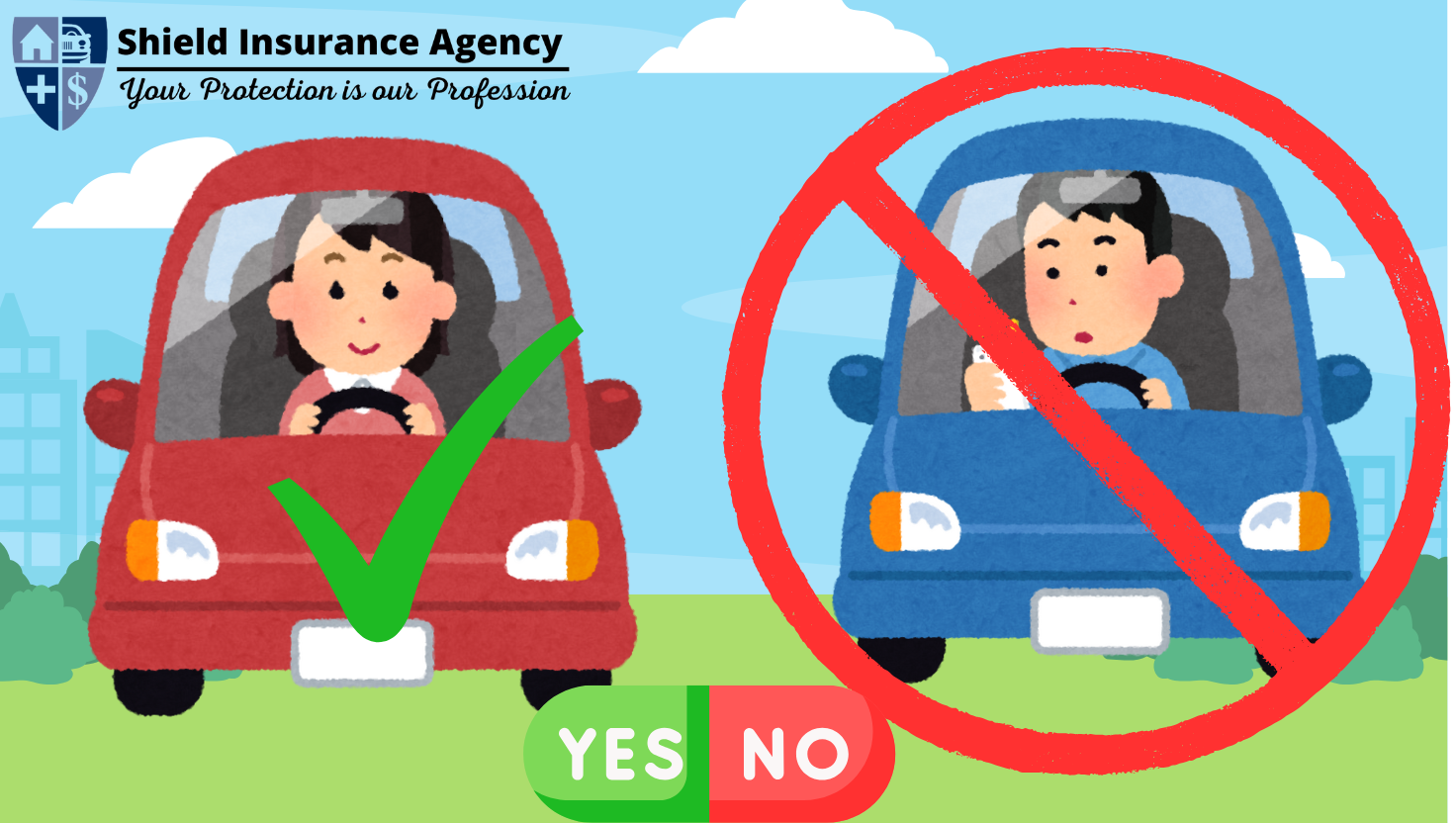
It’s not just about texting, either. Although that is perhaps the most dangerous distraction, there are many others that can impact how you drive, whether you realize it or not. And they can be just as deadly.

Here are just a few of the things that can distract drivers on the road:

  • Talking on the phone, even with a hands-free device
  • Eating or drinking
  • Talking to passengers
  • Grooming (yes, there really are people who apply makeup or shave on their way to work)
  • Reading, including maps
  • Adjusting the stereo

Younger drivers are the most distracted of all—according to the NHTSA, teens were the largest age group reported as distracted at the time of fatal crashes.

With distractions more prevalent than ever—nearly 800 billion text messages are sent in the U.S. every month, for example—how can you, and those you love, be safer behind the wheel?

Here are a few tips:

  • Don’t use the phone: This includes texting as well as talking, unless it’s an emergency. Even hands-free conversations can take your attention off the road.
  • Eat before you leave, or after you get there: Scarfing down that burger with one hand on the wheel means your focus is divided—and you probably don’t have as much control over your car as you should. Bonus benefit: Keeping your meals and your driving separate means you’re much less likely to get ketchup on your pants.
  • Know where you’re going: Nobody likes to be lost. But messing around with your car’s GPS (or the maps app on your smartphone) while you’re moving can lead to something you’ll hate even more—an accident.
  • Talk to your family about safe driving: Having a conversation with your spouse as they’re driving home? That’s a perfect opportunity to say, “I’ll let you focus on the road; we can talk when you get here.” And if you have young drivers in the household, be sure to have a conversation about their phones and other potential issues, such as their passengers—a key distraction for teens.
  • Watch for other distracted drivers: Just because you aren’t distracted doesn’t mean that other drivers are focused on safe driving. Stay in control and be vigilant—you’ll be ready to react when someone else makes the wrong move.

Distracted driving isn’t just “one of those things” that happens, like a tire blowout or mechanical failure that isn’t anyone’s fault. It’s 100% preventable—and by committing to avoiding distractions while you drive, you’ll help make the road safer for everyone.

Read More

Safety Items To Keep In Your Car – Winter Edition

You keep your home stocked with emergency supplies. (Right?)

What about your car?

During winter, extreme weather and road conditions can lead to all kinds of trouble when you’re commuting or traveling – crashes, being stranded, getting lost, or stuck. And cold temperatures make those situations more dangerous than usual.

So keep a stockpile of emergency items in your car, just like you do in your house. In the best-case scenarios, you’ll never have to use them or they’ll help keep you comfortable for an hour or so while you wait for a tow truck to arrive. But, if you’re ever caught in a truly sticky situation, they just might be key to your survival.

The folks at the Michigan Emergency Management Program as you can imagine, are quite familiar with the perils of winter travel. So don’t just take our word for it.

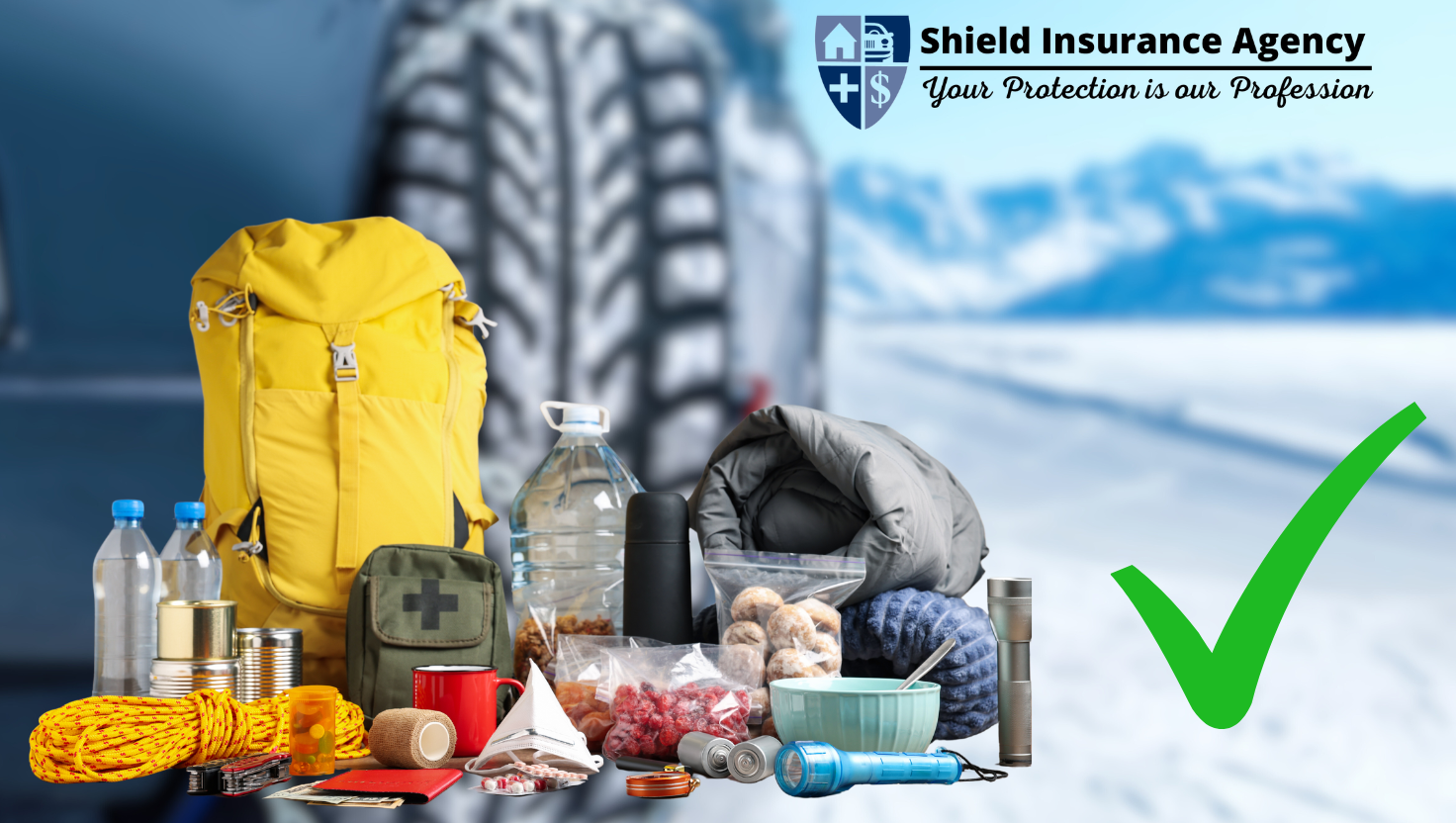
Here are some safety item recommendations for what to keep in your car to help keep you safe in the snow and ice:

  • A shovel, tire chains, tow rope and sand or cat litter: All of these can help you get your car unstuck. And jumper cables are always good to have in your car, too.
  • A windshield scraper: Preferably one with a brush attached.
  • Blankets, sleeping bags, gloves and extra clothing: Staying warm is crucial while you wait for help – especially if you don’t know how long you’ll be waiting.
  • Bottled water and snack food, such as energy bars, peanut butter and raisins: It could be hours before you get moving again, so you need to stay hydrated and nourished.
  • A first-aid kit: Keep one in your car no matter the time of year.
  • A battery-powered or hand-crank radio: Listen to weather updates, information on emergency response efforts, etc. while conserving your car’s battery.
  • Emergency flares, reflectors and a battery-powered or hand-crank flashlight: All of these will help you attract attention and help other drivers avoid you.

Your kit doesn’t have to be limited to the above, of course. Feel free to add items that suit your individual needs. But, most importantly, keep the kit in your car at all times.

Keep these additional safety tips in mind:

  • Keep your vehicle well maintained (and gassed up).
  • Create a trip plan and share it with friends or family.
  • Stay in your car if you get stuck. Walking to find help is an easy way to get lost and separated from others in your party.
  • To reduce battery drain, only use your emergency flashers if you hear vehicles approaching. You can keep your dome light on to remain visible.
  • Contact Shield Agency and add roadside assistance to your car insurance policy for help in an emergency.

Remember, it doesn’t take much time or money to prepare an emergency kit. It’s the potential cost of not having one that is enormous.

Read More
Insurance Terms Important to Know - Shield Insurance Agency Blog

Common Insurance Terms Made Easy

Insurance can be confusing…we get it! But we’re here to help provide you with a better insurance experience. Learn more about what these common insurance terms mean so you can be prepared when looking for a policy.

For customer information or to get a quote, please visit our website at www.ShieldAgency.com .

Read More

7 Things to Know About Rental Car Coverage

Rental Car Coverage | Shield Insurance Blog | Auto Insurance |

After a car accident, you have enough things to worry about. Getting to work the next day shouldn’t be one of them.

We’ve all been there—and arranging alternate transportation while your vehicle is in a repair shop can be a hassle. But rental reimbursement coverage can help alleviate some stress after an accident while also saving you money.

Here are seven things you should know about before buying rental car reimbursement coverage:

1. Rental car insurance is optional.
Rental car reimbursement coverage does not automatically apply after an accident. As an optional coverage, it must be purchased separately. A common misconception is that auto insurance automatically covers the cost of a replacement rental car. In reality, you often have to select this coverage and apply it to the policy.

2. There is a limit.
You’ll likely have a per day and per occurrence limit. For example, if you have a 25/750 limit, your insurance company will pay up to $25 per day but no more than $750 per claim for the rental vehicle. Most insurance companies will offer several different options, allowing you to choose the limit that is right for you.

3. Your vehicle must be in the shop due to a covered loss.
Rental car reimbursement coverage can be used while your vehicle is being repaired after an accident or another covered loss, not for routine maintenance or leisure. So, if your car is at the body shop after an accident, a rental car is covered up to your limit. But if your car is undergoing routine maintenance that will keep it in the shop overnight or you are renting a vehicle for a family road trip, then rental reimbursement coverage would not apply.

4. You can use it right away.
After reporting a claim, if your vehicle isn’t drivable, you can be authorized for a rental car right away. Otherwise, you will be relying on the at-fault driver’s insurance company, and you may have to wait a little while before they can assess the claim and agree to pay for a rental car. With rental reimbursement coverage, there’s no waiting.

5. No need to worry about additional insurance.
For the most part, when you have collision and comprehensive coverages in your auto insurance policy, it will transfer to the rental vehicle, eliminating the need to purchase additional coverage from the car rental agency. Check with your Shield agent, who will be able to tell you when this applies.

6. You may not need it at all.
If you have access to another vehicle, rideshare service, or public transportation in the event your vehicle isn’t drivable, you may not need rental reimbursement coverage. But if you prefer the safety net of having a rental available if you need it, you may want to opt-in to this coverage.

7. Rental car insurance costs less than you might expect.
One year of rental car reimbursement coverage will typically cost less than one day of out-of-pocket rental car expenses. Want to learn more? Talk to your local independent Shield agent for complete details on rental reimbursement coverage.

Reference
– Insurance Information Institute

Read More