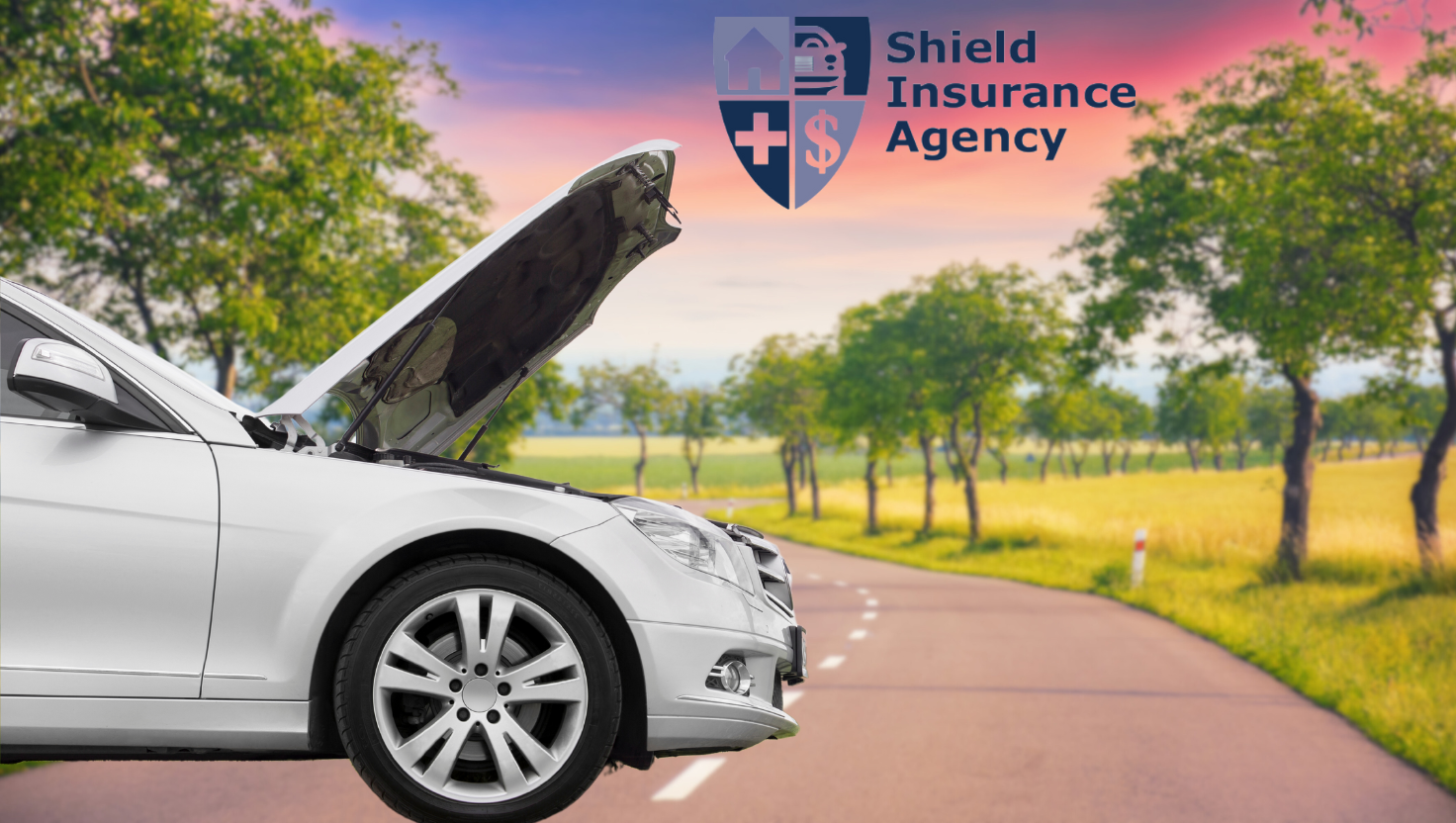
Call Roadside Assistance When the Car Doesn’t Start

Shield Insurance Blog | Roadside Assistance | Auto Insurance | Start a Quote Today!

You’ve grabbed your coffee, found your car keys, and herded your children out the door. Everyone’s buckled up and ready to go – on time. (A small miracle!) But when you go to turn on your car . . . nothing.

Here’s what to do when your car won’t start:

1. Cover the basics of Roadside Assistance.

  • Make sure your car is in Park (P) or Neutral (N) when you try to start it. Also, try pushing the brake pedal.
  • Look at your fuel gauge. Do you have fuel in the tank?
  • What’s the temperature today? Engines are a little harder to start when it’s cold outside, especially when the temperature drops to negative degrees.

2. Check your battery.

  • If the lights won’t turn on or they are noticeably dim, that’s a good indication that the issue is your car battery.
  • If you have a multimeter, you can use it to verify your battery is at or above 12.4 volts.
  • Make sure battery cables are solidly connected after recent engine maintenance.
  • Look for corrosion on the battery cables. It looks like fluffy green-white deposits, or even glassy.

  • Try jumping your car and see if that fixes the issue.

3. Call for roadside assistance.

  • When you’re still at a loss, it’s time to call an expert so you can get back on the road.
  • Wait for roadside assistance in a safe location. In extreme temperatures, take shelter inside your home or a nearby public building, like a gas station. If you leave your vehicle, lock it and put a note on your windshield with your phone number.
  • When the technician arrives, explain what you SEE and HEAR when you try to start your car to help him or her diagnose the problem faster.

If you have roadside assistance, you can call them using the phone number on the back of your insurance card. If you haven’t already, consider adding Roadside Assistance coverage to your car insurance policy to help cover the costs of unexpected roadside maintenance.

This article is for informational and suggestion purposes only. If the policy coverage descriptions in this article conflict with the language in the policy, the language in the policy apply. Shield Insurance Agency offers Roadside Assistance coverage in select markets that can be accessed during a roadside emergency through a Mobile app or a toll-free phone number. Talk to your local independent agent to learn more about Grange’s auto insurance and Roadside Assistance coverage.

Reference:
– Advanced Auto Parts


More blog articles by Shield Insurance Agency

Read More

Comprehensive Coverage: In case a fish smashes your windshield…

Comprehensive Coverage | Shield Insurance Agency Blog |

FISH SMASHES WINDSHIELD; WILL INSURANCE COVER IT?

Sometimes the blog posts just write themselves.

ABC News in North Carolina reports that a driver in the state looked up and saw a bird carrying a huge fish.

“It was one of those slow-motion moments in life. I saw the fish and I saw him drop it,” said Rhesa Walston of Beaufort, North Carolina.

The catfish smashed straight into her windshield.

It happened so quickly she didn’t have time to react.

“There was glass all over my front seat…glass on my lap,” Walston told ABC News.

After making sure her daughter in the back seat was safe, Walston contacted her family and her insurance company. Family members tracked down the fish (apparently, catfish dropped from high altitudes bounce) and took pictures to corroborate her catch.

Walston told ABC News she will have to pay the $250 deductible on her comprehensive auto policy — not a huge price for a story the family will be telling for years to come.  Animal damage is covered if you have optional comprehensive coverage. If you only have collision coverage, then you’re not covered.

The eagle could not be reached for comment…

Comprehensive Coverage

Read More

New Year: Foresight in 2020

They say, “Hindsight is 20/20.” 

As we approach the new year, the National Insurance Crime Bureau (NICB) is encouraging you to exercise “Foresight in 2020.”   

While it’s easy to look back on where and how we failed to protect our assets, it is exponentially more beneficial to look forward and try to predict where we can best insulate ourselves from insurance crime and theft. By studying where we are vulnerable, we can identify weaknesses and adapt improvements that protect us, our families, and our property. From small precautions, like making sure we don’t leave valuables in our vehicles, to more extensive protections, like installing home security systems, we can exercise foresight in 2020 and stop crime before it happens. Law enforcement agencies across the country now engage in the practice of intelligence-based policing.

This methodology uses past data to identify and predict the patterns and behavior of criminals. NICB and our members follow suit, by identifying known threats and patterns in order to properly educate our consumers. You too can be an advocate in this preemptive strike against crime. Educate yourself, take precautions, and be vigilant. By using foresight in 2020, we can win the battle against crime.  

The best deterrent continues to be vigilance.

If there is a vacant home or business in your area, and you see suspicious or unusual activity around the property, call your local law enforcement. If any vehicles are involved, jot down their descriptions and license plates. Also, note the clothing and physical appearance of any person(s). All of this is very helpful to investigators. 

NICB reminds consumers to make sure your vehicle is locked when unattended. Don’t leave spare keys or fobs inside. Take a moment and be sure to hide your valuables from view. Even an empty bag or extra change in view looks appealing to a thief from the outside. 

Do things to protect your home, by locking your doors and investing in a home security system.  

Anyone with information concerning insurance fraud or vehicle theft can report it anonymously by calling toll-free 800.TEL.NICB (800.835.6422) or submitting a form on our website.

About the National Insurance Crime Bureau:

Headquartered in Des Plaines, Ill., the NICB is the nation’s leading not-for-profit organization exclusively dedicated to preventing, detecting, and defeating insurance fraud and vehicle theft through data analytics, investigations, learning and development, government affairs, and public affairs. The NICB is supported by more than 1,300 property and casualty insurance companies and self-insured organizations. NICB member companies wrote over $496 billion in insurance premiums in 2018 or more than 81% of the nation’s property-casualty insurance. That includes more than 92% ($254 billion) of the nation’s personal auto insurance. To learn more visit www.nicb.org.

Read More

Car Seat Safety for Snow

Car Seat Safety For Snow

Apparently, I fell off the face of the planet when it comes to car seat safety. Despite reading all the NHTSA tips for car seats, doing the safety checks, and experiencing Michigan winters my whole life, I have never, ever heard of winter car seat safety. If have a bundled-up little one, this is a must-read and must-share on your Facebook page to educate other parents.

The rule to remember: No bulky coats on children in car seats.

First, let me divulge a few of the (brutally honest) thoughts that came to mind when I heard this:

  1. This article must be written by a person from a mild weather state. There’s no way in zero degree weather I’d let my kids go without a coat!
  2. But I wear a coat with my seatbelt and I’m fine…
  3. So I’m supposed to get my kids out of the car and bundle them up in the…parking lot?? This sounds like such a hassle to me.

A child may be buckled in tightly with their winter coat on, but in an accident, the impact of pressure would compact the bulk of the coat making the harness too loose to keep the child safe.

While I quickly thought of every reason why this was a bad idea, I landed on the one reason why this was a good idea: safety always comes first. The fact is, a child may be buckled in tightly with their winter coat on, but in an accident, the impact of pressure would compact the bulk of the coat making the harness too loose to keep the child safe. So, I called my local fire department and got these important tips that are pretty simple and much more do-able than I imagined.

Here’s a simple way to test the bulk of your child’s coat:

  1. Put the coat on your child and buckle them up, tightening the straps until you can’t pinch the harness with your fingers.
  2. Undo the straps without loosening them and remove your child from the seat.
  3. Take your child’s coat off, put them back in the seat and fasten the harness.
  4. If you can pinch the straps, then the coat is too bulky to wear in the car seat.

The winter coat rule applies to children in car seats and for children in boosters if the seat belt system in the car does not automatically lock when the brakes are applied.

Keep them warm, and safe.

If you find your child’s coat is too bulky to buckle them in safely, here are some alternate options to keep your child warm:

  • Put their coat on backward, like a blanket.
  • Use an actual blanket.
  • Use a thinner coat for car rides. Or if your child has layers in their coat, use the thinner layer for car rides and add the other layer when you go outdoors.
  • Heat your car up ahead of time and let them ride comfortably without a coat.

For all the other snow-state mommies and daddies like me who didn’t know this…now you do! So, test the bulk of your child’s coat and keep them safe in their car seat this winter. Foremost encourages all parents to be safe while driving, especially with a child passenger.

Read More

Don’t Hit the Deer in the Headlights

Deer in the Headlights

Just picture it — you’re driving on a winding road blasting some music, enjoying your time with family and friends, when something pops out in front of you. Do you brake? Do you try to swerve around the thing? Animals seem to have other things on their mind near the roads, and can often jump out at us while we drive, which can cause major safety issues. These moments need a quick response but it can be challenging to think through what to do and then do it on the fly. That’s why we’re providing some guidelines to help prevent a collision between your car and an animal during this season!

  • Fasten your seatbelt. While this will not help you avoid hitting an animal, it is the best way to help ensure safety for you and the passengers in your car. Buckle up during every auto trip!
  • Pay attention to animal-crossing signs. These yellow, diamond-shaped signs on the side of the road with an animal picture on them (deer, moose, bear) warn you about areas where the pictured animal is known to cross the road.
  • Use your high beams whenever possible (as long as there is not oncoming traffic) during this time of the year. The extra light does a great job of revealing your surroundings, and is especially good at lighting up animal eyes along the side of the road, where deer and other wildlife are most likely to congregate.
  • Honk your horn in short bursts (for deer)If you are in an environment with a high likelihood for deer crossings, honk your horn in short spurts throughout the drive to scare away any deer that may have been near the road. However, honking your horn too much may confuse the deer and lead them closer to the road, so make sure you are rationing out those honks throughout the trip.
  • Be especially alert at dawn and dusk. Animals are most likely to be roaming at dawn and dusk, so stay especially alert during these times to avoid collision.

If a Deer in the Headlights appears on the road…

  • Never swerve! Don’t do it. The instinctual action of swerving can actually cause more harm than good because you may swerve into the other lane with oncoming traffic, a tree, a fence, or road sign, which can increase your chance of injury.
  • Drive towards where the animal came from. Roaming wildlife are most likely to either stand where they are discovered in fear or will run onward in the continual direction from whence they came. If you feel you can safely maneuver your car, your best option to miss the animal is to drive towards the direction where the animal came from (this will not work for deer).
  • Brake firmly. Unless there is a car directly behind you, brake firmly and safely slow your vehicle. If there is a car close by, slow down, but make sure to honk your horn to signal to the other driver that there is a problem ahead. By the way, Mythbusters busted the myth that speeding up will decrease your chances of injury — so don’t do that!
  • Lean towards a door pillar. In the event of an unavoidable crash, leaning towards a door pillar will give an extra layer of protection between you and the approaching impact. In most instances of a severe collision between man and animal, the center of the car is crushed, so lean towards the door pillar to benefit from the added protection of the pillar.

Under every circumstance, you should also always make sure you are driving at a safe speed — those speed limits are more than a suggestion! Following the posted speed for a specific stretch of road gives you the benefit of being under control regardless of twists and turns and unexpected visitors!

Recent Shield Agency Blog Posts

Read More

From Accident to Reimbursement in 3 Hours!

Accident to Reimbursement | Shield Insurance Agency Blog | Start A Quote Today!

QUICK CARE SAVES THE DAY: Accident to Reimbursement

The morning commute is never fun, and being rear-ended by another car can quickly take you to the worst-day-ever level.

But recently, for a State Auto customer, a day that began with a fender-bender on the way to work ended with their claim being filed, processed, and paid within 3.5 hours!

How is this possible? When our customer’s car was hit, their State Auto Safety 360® telematics device notified State Auto and initiated our Quick CARE process.

Their claim was set up at 1:04 p.m. EST. We secured photos of the damage and our Auto Physical Damage team wrote a virtual estimate by 4:30 p.m. EST. The electronic payment was then issued to our customer — all in record time.

This is just one example of how we combine technology, great customer service, and urgency to handle our claims!

What You Need to Know

State Auto Safety 360 Connect customers — who have activated their telematics device — automatically receive the Quick CARE benefit.*


If your customer is in an accident — and it registers on their telematics device — it will alert our Claims and Risk Engineering (CARE) team.**​​


When we receive the accident alert into our claims system, we quickly review the crash information (i.e. severity, location, vehicle, insured, etc.) and then call the customer. If the customer is in need of a car rental or tow truck, we can help arrange those for them, if towing service is included in their auto policy.


A claim will only be filed once the customer requests to do so. If they would simply like advice on what to do or if they’re going through the other driver’s carrier, we note it and let them know to contact us if they need anything.

*State Auto Safety 360 is available for new auto policies written on our Connect platform. It is not available for legacy policyholders. Availability and discounts vary by state.

**Accident notifications won’t transmit to our CARE team unless registered by the telematics device. The inability to register an event can be caused by a low GPS signal, a minor impact, the vehicle was turned off when hit, or your vehicle was sideswiped.

Read More

Rental vehicle coverage. Do you have it? Do you need it?

posted by Melissa Hunt | Shield Agency Blog | Start A Quote Today! | Rental vehicle coverage

I am currently a mother of 3 little ones so I typically need more than a compact sedan to get around. Now, imagine I get t-boned in an intersection…. I have auto insurance, I make a claim, I have collision coverage BUT I didn’t include rental vehicle coverage on my auto policy. 

Now what? I have to hope and pray that one of my family members, friends, or co-workers have a vehicle I can use otherwise I pay out of pocket for a rental. The tiniest, cheapest car would still cost me around $250/ week and a van can run upwards of $550 per week!!! The average family can not afford this extra expense, especially if there is already a deductible that will be owed from the claim.

This coverage that I was missing out on, can be as little as $5 a month depending on the insurance company and the amount of coverage you select. That is pennies compared to what it would take to keep me in a rental vehicle for up to a month! 

So, if you determine that you would need this coverage, how much do you think you would need? Depending on the insurance company, you could get anywhere from $20/day to $75/day for up to 30 days. I should have had at least $40/day if not more to be able to get a decent size vehicle for my family and me. The added perk of having this coverage is that a lot of rental vehicle companies will try to work with the coverage that you have so you will have to pay very little to nothing out of pocket.

Nowadays, there are fewer and fewer repair shops willing to provide loaner cars while your vehicle is in the shop. Those that do tend to still charge you for that loaner if they determine that your car is a total loss. They won’t get any money from you or the insurance company for the repairs to your car so they charge you for using the loaner car for those 2-3 days that it took to look over your car. The safest bet is to have the coverage on your auto policy. You can always quote out what the additional coverage would be with your agent.

Read More

7 Things to Know About Rental Car Coverage

Do you have Rental Car Coverage? After a car accident, you have enough things to worry about. Getting to work the next day shouldn’t be one of them.

We’ve all been there—and arranging alternate transportation while your vehicle is in a repair shop can be a hassle. But rental reimbursement coverage can help alleviate some stress after an accident while also saving you money.

Here are seven things you should know about before buying rental car reimbursement coverage:

1. It’s optional.
Rental reimbursement coverage does not automatically apply after an accident. As an optional coverage, it must be purchased separately. A common misconception is that auto insurance automatically covers the cost of a replacement rental car. In reality, you often have to select this coverage and apply it to the policy.

2. There is a limit.
You’ll likely have a per day and per occurrence limit. For example, if you have a 25/750 limit, your insurance company will pay up to $25 per day but no more than $750 per claim for the rental vehicle. Most insurance companies will offer several different options, allowing you to choose the limit that is right for you.

3. Your vehicle must be in the shop due to a covered loss.
Rental reimbursement coverage can be used while your vehicle is being repaired after an accident or another covered loss, not for routine maintenance or leisure. So, if your car is at the body shop after an accident, a rental car is covered up to your limit. But if your car is undergoing routine maintenance that will keep it in the shop overnight or you are renting a vehicle for a family road trip, then rental reimbursement coverage would not apply.

4. You can use it right away.
After reporting a claim, if your vehicle isn’t drivable, you can be authorized for a rental car right away. Otherwise, you will be relying on the at-fault driver’s insurance company, and you may have to wait a little while before they can assess the claim and agree to pay for a rental car. With rental reimbursement coverage, there’s no waiting.

5. No need to worry about additional insurance.
For the most part, when you have collision and comprehensive coverages in your auto insurance policy, it will transfer to the rental vehicle, eliminating the need to purchase additional coverage from the car rental agency. Check with a Shield agent, who will be able to tell you when this applies.

6. You may not need it at all.
If you have access to another vehicle, rideshare service or public transportation in the event your vehicle isn’t drivable, you may not need rental reimbursement coverage. But if you prefer the safety net of having a rental available if you need it, you may want to opt-in to this coverage.

7. It costs less than you might expect.
One year of rental reimbursement coverage will typically cost less than one day of out-of-pocket rental car expenses.

Read More

What To Expect During a Car Insurance Claim

Shield Insurance Blog | Car Insurance Claim |

When you’re involved in an auto accident, working through a claim can be stressful. But knowing what to expect can ease you through the process and help you have a pleasant experience working with your claims professional.

Although the car insurance claim process can vary, most of the basics are the same.

If you’re in an auto accident, here’s what to do:

  1. Stay at the scene.
  2. Contact the police immediately.
  3. Exchange contact information, the name of your insurance company and your auto insurance policy number with the other parties involved in the accident.
  4. If applicable, be sure to gather contact information from any witnesses.
  5. Avoid discussions of insurance policy coverage, limits or fault.
  6. Report the claim once you and your car are safe.

So, what comes next?

1. Let’s chat.
You’ll get a call from your claim representative, who will ask you about the details of your loss and explain your policy coverage and the claims process, including options for obtaining an estimate for the damage to your vehicle.

With many insurance companies, you’re able to access your account online or via a mobile app to quickly and easily check the status of your claim at any time. For example, if you’re a Grange Insurance policyholder, you can do this by logging into or creating a MyGrange account or by adding the Grange Mobile app on your smartphone

2. Get back on the road with a rental car.
If your car is no longer drivable and you have Rental Reimbursement coverage, you should be covered for the daily rate of your rental vehicle. The amount covered by your auto insurance is based on your policy’s rental reimbursement limits. Not sure if you’re covered for a rental vehicle? Your claim representative will provide direction. But, before you’re even involved in an auto accident, you should talk to your independent agent about rental reimbursement coverage and see if it makes sense to add it to your policy.

3. Sometimes claims require an investigation.
In claims with multiple vehicles, the adjuster will need to talk to all parties involved to determine things like liability, getting estimates, repair shop options, and other important factors.

4. Repair your vehicle.
While you always have the right to take your vehicle to any repair shop you like, most insurance companies can provide you with a recommended body shop that could come with extra perks, such as a lifetime guarantee on repairs while you own your vehicle, convenient scheduling, and priority service.

After you select a repair shop, your claim representative will guide you through each step of the repair process and work with you to resolve your claim fairly and effortlessly.

5. Tell your insurance company how the claim process went.
After your claim is resolved, you may receive a survey regarding your experience. Your feedback is important to your insurance provider and essential to the growth and development of their products, services, and people. If asked, be sure to provide your two cents, which will help improve the car insurance claims process for others. And lastly, consider giving kudos to an adjuster or claim representative who helped you have a great experience with your claim.

Read More

5 Tips to Safely Handle a Roadside Emergency

Shield Insurance Blog | Roadside Emergency | Start A Quote Today!

A roadside emergency can happen at any moment, but knowing how to safely respond can help you feel more prepared. Whether your tire goes flat, car battery dies or you forget to check your gas light before it hits “E”, here are five tips to help you prepare and stay safe when a roadside emergency happens to you.

1. Have the proper tools on hand.
One of the easiest ways to prepare ahead of time for a roadside emergency is having an emergency kit in your vehicle. Pre-made kits are available to buy online and in-store, or you can put together your own roadside emergency kit. Tailor your kit to the weather in your area, including items that suit you and your family, and have multiple kits or backup kits.

Some potential items to include in your emergency kit:

  • First Aid kit
  • Flashlight
  • Multipurpose tool
  • Jumper cables
  • Road flares
  • Bottled water and nonperishable snacks
  • Blanket
  • Clean, empty, refillable gas jug
  • Pencil and notepad

2. Get off the road.
If your vehicle is able to move, drive it over to the shoulder or as far out of traffic as possible. If you need to leave your vehicle and it isn’t safe to get out on your driver’s side for any reason, exit through the passenger door. If you leave, make sure to lock your vehicle and leave a note on the windshield with a phone number in case roadside assistance or a police officer stops by.

3. Make your vehicle visible to others.
Using your hazard lights is an easy way to alert other drivers to your vehicle. If included in your emergency kit, use flares, warning lights, or a hazard triangle to better alert other drivers that your vehicle is having problems.

4. Exercise caution.
Keep the doors locked if you stay in your vehicle, and when accepting help from strangers, always exercise good judgment. Keep your seatbelt fastened when sitting in your vehicle. If you exit your vehicle, stay far away from moving traffic.

5. Call for assistance.
You can’t always solve a roadside emergency by yourself, which is why it’s important to call in help when you need it. Having access to a roadside assistance service can make an emergency less frightening, especially when you’re somewhere unfamiliar when it’s dark outside or during inclement weather.

Roadside assistance services can help with a variety of car problems, and it’s good to know someone has your back if something goes wrong. Check with your auto insurance carrier or car manufacturer to see if they offer on-demand roadside assistance.

Remember to call 911 if it’s an emergency.

Read More