
Shield Insurance Blog How Long You May Need To Walk Outside To See A Boost In Your Mental Health

See A Boost In Your Mental Health

A new study underscores just how important it is for your mental health to spend time in nature or green spaces.

HuffPost.com | By Jillian Wilson | Sep 14, 2022, 05:45 AM EDT | Updated Sep 15, 2022

Mental Health

There’s a reason why the sounds of nature — chirping birds, flowing streams, falling rain — are often sound options for white noise machines and meditation apps: They’re calming.

new small study published in Molecular Psychiatry further underscores this. The study found that a one-hour nature walk reduces mental health stress when compared to a one-hour walk in a bustling city environment.

The study followed 63 people who were randomly assigned a nature walk or an urban walk. The nature walk took place in a forest in Berlin and the urban walk took place on a busy street in the city.

Participants were instructed not to check their phones or stop in stores while on their walk. They were given a bagged lunch and a phone with a 30-minute timer that instructed them to turn around.

Before the walk, participants filled out a questionnaire and then underwent an fMRI scan that measured two tasks.

The first task measured brain activity during a “fearful faces task,” in which participants were shown 15 female and 15 male faces that either had a neutral or scared expression. The second task measured was brain activity during an “Montreal Imaging Stress Task,” which is designed to create a level of stress in participants. During the task, participants had a set amount of time to solve challenging arithmetic problems.

After the walk, participants filled out another questionnaire and underwent another fMRI scan that measured the same tasks they conducted before their walk.

The results showed that nature significantly improved people’s mental health.

The study found that those who took part in the 60-minute nature walk experienced lower stress levels following their time outside.

“The results of our study show that after only [a] one-hour walk in nature, activity in brain regions involved in stress processing decreases,” Sonja Sudimac, the lead author of the study, told Medical News Today.

Particularly, the researchers found the brain’s amygdala activity (which is responsible for our stress and fear response) decreased in those who were in the nature walk group.

This decrease was not seen in people who completed the city walk. According to the study, urban environments can negatively impact one’s mental health, leading to increased rates of anxiety, depression and mood disorders. (Just think about the stress that comes with frequently honking horns, running to catch a bus or dealing with long lines just to get some groceries.)

Click here for the rest of the story…

Check out more blogs from Shield Insurance Agency!

Read More
Shield Insurance Blog You Can Store Medical Records on Your Phone. Is That Healthy

You Can Store Medical Records on Your Phone. Is That Healthy?

Hunting down medical records is enough to give anyone a migraine.

By Edward C. Baig | AARP | September 14, 2022

Encrypted electronic medical records option for iPhones, Androids weren’t possible a decade ago

You likely see a primary care physician, and as you get older, perhaps one or more specialists. But these doctors may not all be part of the same health care system.

Meanwhile, a separate laboratory or clinic may handle your bloodwork. Your last surgical procedure took place in a hospital. You’ve gone elsewhere for immunizations and to fill prescriptions.

Worse, office workers at your health care providers are overstretched, and at times you must navigate a bureaucratic maze to reach someone who can help. While you might be able to chase down your records online, each doctor group may have a separate web-based patient portal.

Still, you can probably find many of your medical records more easily than you could a decade ago, when almost two-thirds of physicians were using fax machines to share information. That’s because of a 2009 federal law, the American Recovery and Reinvestment Act, that dispensed incentives to providers for digitizing health records and then, seven years later, penalized large hospitals that hadn’t adapted.

In 2016, the 21st Century Cures Act continued to smooth the way for electronic health information sharing, and consumers are just now seeing the results of that law. Yet even today, your electronic medical records are all over the place.

Apple prescribes a new, personalized path for medial reords

Apple set out to address the epidemic of scattered health records in 2018 by letting people with an iPhone download those records into the Health app on their phone. Nowadays, the health records feature on the iPhone is available to patients at more than 800 institutions with more than 12,000 locations in the United States, Canada and the United Kingdom, the company says.

How it works: A direct, encrypted connection is created between participating providers and a patient’s iPhone so people can get a centralized view of their allergies, clinical vitals, conditions, immunizations, lab results, medication records and procedures in one place.

The feature is based on something called Fast Healthcare Interoperability Resources (FHIR), a standard for the sharing of electronic medical records among different computer systems. Apple says its Health app data is never shared with any third party without the user’s explicit permission.

Android has alternatives in others’ apps

Click here for the rest of the story…

Read More
Nordic Walking Can Improve Your Heart Function. Here's How It Works. - Shield Insurance Agency Blog

Nordic Walking Can Improve Your Heart Function.

A recent study found people with coronary artery disease saw improved health outcomes after committing to the nordic walking workout for 12 weeks.

HuffPost | By Jillian Wilson | Sep 8, 2022, 05:45 AM EDT | Updated Sep 8, 2022

It’s widely known that walking is great for you. Research shows that walking can cut your risk of heart disease, reduce joint pain and naturally relieve stress.

A study published in the Canadian Journal of Cardiology in June also found that a specific kind of walking can be beneficial for people with coronary artery disease: Nordic walking. According to the Centers for Disease Control and Prevention, coronary artery disease “is the most common type of heart disease in the United States.” The study results suggest that people with the disease saw improved heart function after committing to Nordic walking for three months.

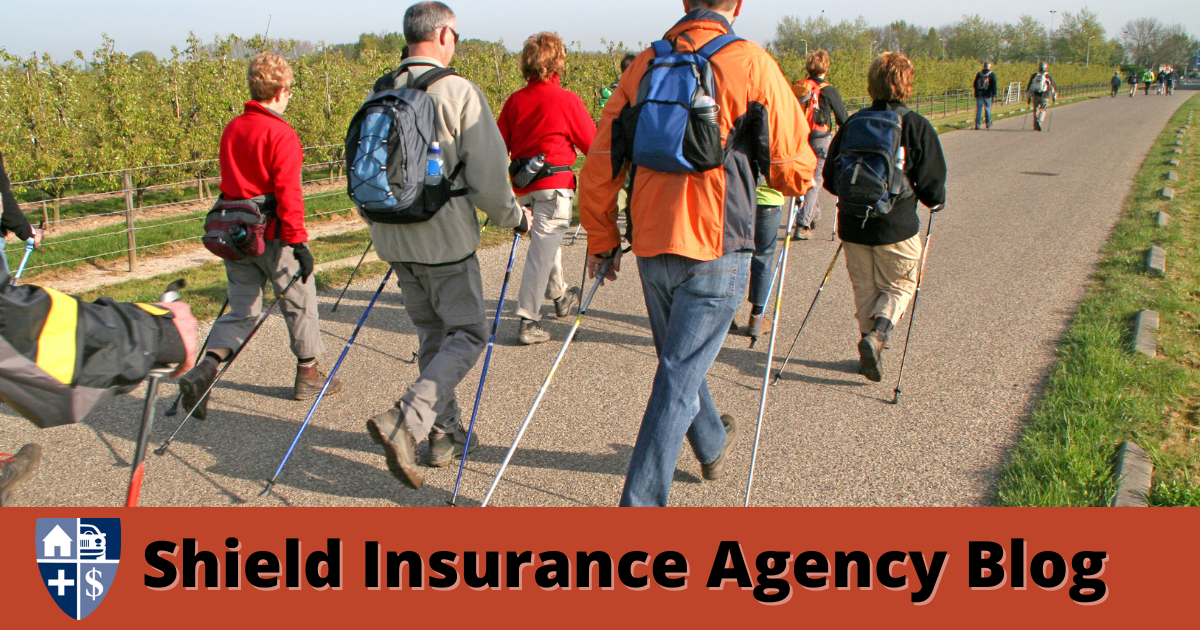
Nordic walking involves using poles similar to ski poles as you move. Unlike a regular walk, this kind of walking incorporates your upper body muscles in addition to your lower body muscles. According to the International Nordic Walking Federation, Nordic walking began as an off-season workout for skiers and has been around since the mid-1900s.

For the study, 130 people with coronary artery disease were randomly split into one of three groups. The first group followed a 12-week high-intensity interval training program; the second group followed a 12-week moderate-to-vigorous intensity training program; the third group followed a 12-week Nordic walking program.

After the workout program, participants were observed for 14 weeks, and their functional capacity ― or their ability to exercise or perform daily activities that require physical effort ― was tested by measuring how far they walked in six minutes.

Additionally, the researchers had participants fill out a heart disease-specific questionnaire and a 36-question health survey. Depression levels were also measured using the Beck Depression Inventory-II, which is commonly used to measure depression after heart attacks. Participants were tested at the beginning, the middle and the end of the study.

Nordic walking yielded the best results.

While all participants saw favorable health outcomes, those in the Nordic walking group experienced the largest increase in functional capacity compared to their baseline level at the start of the study.

In other words, those who committed to the 12-week Nordic walking program were most able to show increased exercise capacity during the six-minute walk test. And one’s functional capacity is “an important predictor of future cardiovascular events in patients with [coronary artery disease],” the study stated.

Click here for the full story…


Visit more blog articles from Shield Insurance Agency

Read More
Lower Prescription Drug Costs - Shield Insurance Blog

Drug Costs Lowered By States

The sweeping federal bill aimed at cutting prescription drug costs follows years of action at the state level

AARP | by Emily Paulin, AARP, August 18, 2022 | Drug Costs | Health Insurance |

En español

Congress’ passage of a sweeping bill that will help millions of Medicare enrollees better afford life-sustaining medications was fueled by a blizzard of recent legislation to make prescription drugs more affordable at the state level. State lawmakers have introduced hundreds of bills aimed at lowering prescription drug costs in the past five years, with more than 230 measures enacted across all 50 states.

The Inflation Reduction Act of 2022 will allow Medicare to negotiate prices of some high-cost drugs for the first time, put an annual limit on Medicare Part D beneficiaries’ out-of-pocket costs, and impose tax penalties on drugmakers that increase prices more than the rate of inflation, among other things.

The move follows decades of advocacy for drug affordability by AARP and others, which until recently yielded progress mostly at the state level. “States are the laboratories of democracy,” says Jonathan Bartholomew, a government affairs director at AARP. “They’ve come up with really creative ideas to dissect, legislate and regulate this complicated and confusing marketplace, and I think that progress has really helped build federal momentum around this issue.”

AARP CEO Lauds Activists for Fighting for Rx Bill

Though states are restricted by federal law in how far they can go in directly reducing drug prices, they’ve worked to improve transparency around drug pricing, cap costs for consumers, bolster their drug-purchasing power and more. And collectively, they’ve spotlighted drug affordability as a national issue that calls for federal solutions.

Here are some key state initiatives that advanced prescription drug affordability in recent years.

Increasing price transparency

For states to pinpoint what’s driving price hikes in prescription drugs, it helps to have access to pricing data across a drug’s often long and convoluted supply chain. It’s why 14 states have passed drug price transparency laws that order manufacturers, wholesalers, pharmacy benefit managers (PBMs), insurers and others to share cost information.

What pharmaceutical companies must report about their products differs between states, but common requirements include advance notice and justification of the initial price of a drug and when prices increase above certain thresholds; summaries of the state’s most prescribed and costly drugs; and rebate and reimbursement amounts for PBMs, which health insurers use to manage their prescription drug benefits.

Most of the data collected is made public, which can help doctors, consumers and other health care stakeholders. Advance notice of price hikes gives doctors and patients time to analyze patient care plans and adjust as necessary. Summaries of the most prescribed and costly drugs can show state officials where to focus reforms.

Click here for the full story…


Read More
Shield Insurance Agency Blog | 16 Easy Exercises That Can Improve Your Posture

16 Easy Exercises That Can Improve Your Posture

16 Easy Exercises That Can Improve Your Posture: working from home or staring at your phone has you slouching, these moves are here to save your back, shoulders and neck.

Huffpost | Nicole Pajer | Aug 12, 2022, 05:45 AM EDT

Have you been slacking in the posture department?

Thanks to our smartphones, iPads and more, many of us spend our days with our necks craning down to stare at our devices. Working from home has also created complications, affectionately referred to by experts as “pandemic posture.”

Fixing your posture can not only relieve back or neck pain, “it can also have a significant impact on all things related to our respiratory function, core and pelvic health,” explained ­­­­Trista Zinn, a trainer and founder of Coreset Fitness.

Taking tiny steps toward improving your posture is the best way to go. Here are 16 exercises to try to help get you standing and sitting straighter.

Easy Exercises

Seated Row

“This exercise works all the muscles of the back, and helps counterbalance the weight of the chest and support the spine,” explained Sebastien Lagree, a trainer and founder of Lagree Fitness.

Sit cross-legged or straddle a bench with cables or bands wrapped around a doorknob or floor mount in front of you. Next, pull the handles back toward your rib cage.

“As you continue to pull the handles toward you, focus on lifting the spine or sitting taller,” Lagree said. “Each time you pull the handles in, aim to sit higher.”

Bent-Over Rows

If you don’t have a cable system at home, or access to a gym, grab some free weights and perform bent-over rows.

“Strengthening the muscles that retract the scapula leads to better posture,” said Dr. Alejandro Badia, an orthopedic surgeon in Miami. “This also helps avoid shoulder pain, which often occurs when we slouch or work in a slumped position.”

Bend your knees and lean your upper body forward, keeping a straight spine. Start with your arms straight down in front of you with your palms facing your body, then pull the weights back, squeezing your shoulder blades together at the top. Try not to over-extend the movement: Stop right when you get to where your pockets would be on your pants ― i.e., near your hips. Lower your weights and repeat the movement.

Cat-Cow

Click here for the rest of the story…
Check our more great articles with Shield Insurance!


Read More
Take a Trip for Brain Health - Researchers suggest travel therapy may benefit adults living with dementia

Travel therapy may benefit adults living with dementia

Researchers suggest travel therapy may benefit adults living with dementia

By Peter Urban, AARP

EN ESPAÑOL

Not that anyone needs an excuse to take a holiday, but researchers in Australia suggest that a break from the daily routine has mental and physical health benefits, including for adults living with dementia.

“Medical experts can recommend dementia treatments such as music therapy, exercise, cognitive stimulation, reminiscence therapy, sensory stimulation and adaptations to a patient’s mealtimes and environment. These are all also often found when on holidays,” lead researcher Jun Wen, a lecturer in tourism and hospitality management in the School of Business and Law at Edith Cowan University, said in a statement.

Wen and fellow researchers suggest in a paper published in Tourism Management that travel therapy, like music and art therapy, should be available to adults living with dementia. “This research is among the first to conceptually discuss how these tourism experiences could potentially work as dementia interventions,” he said.

Although some research has shown tourism’s health benefits for people in general, additional research is needed to demonstrate how it can enhance the lives of people living with diseases like dementia and depression, Wen said.

“Tourism is generally considered a form of leisure that liberates people from the everyday. The emotional states, thoughts, and unique memories evoked by tourism have the potential to positively influence the well-being of individuals with dementia,” the researchers wrote.

Here are some ways, according to the researchers, that a vacation could serve as therapy for adults living with mild to moderate dementia.

• Sightseeing provides an opportunity to get the brain working by stimulating thinking, concentration and memory — especially when interacting with caregivers or other tourists.

• Travel brings people to novel environments where adults living with dementia may “experience new emotions, moods and other reactions, thereby stimulating brain functions that enable them to process such feelings.”

Click here for the rest of the story…


More Blog Articles from Shield Insurance

Read More

Mental Health Care Services Are Covered by Most Health Insurance Plans

Mental Health | Health Insurance | Start A Quote Today!

DIFS: Mental Health Care Services Are Covered by Most Health Insurance Plans

Media Contact: Laura Hall, (517) 290-3779, DIFS-press@michigan.gov
Consumer Hotline: 877-999-6442, Michigan.gov/DIFScomplaints

FOR IMMEDIATE RELEASE: May 31, 2022

(LANSING, MICH) As Mental Health Awareness Month comes to a close, the Michigan Department of Insurance and Financial Services (DIFS) is reminding consumers that mental health care services are covered by many health insurance plans, enabling Michiganders to get the help, support, and care they need.

“Mental health care is health care. It is just as important as physical health and should not be neglected. Yet, we know that approximately 40% of Michiganders experiencing mental illness do not seek treatment for these concerns,” said DIFS Director Anita Fox. “Mental health services are covered by many health insurance plans, including all Affordable Care Act (ACA) plans purchased through HealthCare.gov. Review your policy documents to determine if you have this coverage, which will cover the costs of office or virtual visits with a licensed mental health professional, substance abuse disorder treatment, or medications.”

Michiganders are encouraged to check with their health insurer to confirm their coverage for mental health services and to make sure they understand their out-of-pocket expenses before seeking the mental health care they need. Mental health and substance use disorder coverage offered by a health plan must be similar to the coverage provided for medical surgical services. Out-of-Pocket expenses, such as copays, and prior authorization requirements must also be similar to those for medical surgical services.

DIFS stands ready to help Michiganders get the most out of their health insurance and reduce barriers that may discourage them from seeking mental health care. If consumers have concerns about mental health-related insurance claims that cannot be resolved directly with the insurer, contact DIFS by calling 877-999-6442 Monday through Friday 8 a.m. to 5 p.m., or by filing a complaint at Michigan.gov/DIFScomplaints.

DIFS can help consumers with health insurance questions and complaints and can provide information about the Special Enrollment Period that is currently open for households with incomes lower than 150% of the federal poverty level. Contact DIFS Monday through Friday from 8 a.m. to 5 p.m. at 877-999-6442 or Michigan.gov/HealthInsurance.

The mission of the Michigan Department of Insurance and Financial Services is to ensure access to safe and secure insurance and financial services fundamental for the opportunity, security, and success of Michigan residents while fostering economic growth and sustainability in both industries. In addition, the Department provides consumer protection, outreach, financial literacy, and education services to Michigan residents. For more information, visit Michigan.gov/DIFS or follow the Department on FacebookTwitter, or LinkedIn.

You can also call Shield Insurance for additional details on Mental Health Care Coverage at 616.896.4600


More great articles by Shield Insurance Agency

Read More

DIFS – Make Sure Your Health and Auto Insurance Policies Work Together to Protect Yourself and Your Family

Shield Insurance Blog | DIFS | Auto Insurance | Start A Quote Today!

DIFS Drivers who rely on health insurance to pay for auto injuries may be responsible for their own medical bills if they lose or change their health insurance

Media Contact: Laura Hall, 517-290-3779, DIFS-press@michigan.gov
Consumer Hotline: 833-ASK-DIFS, AutoInsurance@michigan.gov

From: DIFS Michigan Department of Insurance and Financial Services

FOR IMMEDIATE RELEASE: April 20, 2022

(LANSING, MICH) The Michigan Department of Insurance and Financial Services (DIFS) is reminding Michiganders that if someone in their household does not have Personal Injury Protection (PIP) medical coverage, a change in their health insurance can also affect their auto insurance coverage. Under Michigan’s auto insurance law that went into effect in 2020, eligible Michiganders may now choose to opt out of or exclude themselves or family members from PIP medical, but they must take quick action after a change in health insurance or they risk not having medical coverage in the event of an auto accident.

“Your auto insurance may not be the first thing that comes to mind if you lose your health insurance, but Michiganders may now rely on their health insurance coverage for auto accident injuries and they must take quick action to protect themselves and their families after a change,” said DIFS Director Anita Fox. “There can be serious financial consequences if someone in your household does not have PIP medical coverage, loses their qualified health coverage, and is then injured in an auto accident without taking the appropriate action.”

Michigan’s auto insurance law now gives Michigan drivers the chance to choose from six different PIP medical coverage levels when they buy or renew their auto insurance. PIP covers medical bills and other expenses for those who are injured in an auto accident.

For people who have Qualified Health Coverage (QHC), two options allow them to remove PIP medical coverage for themselves and/or eligible household members. To count as QHC, the driver’s health insurance policy must not exclude or limit coverage for auto accident injuries and must have an individual deductible of $6,000 or less. Medicare Parts A and B or Medicare Advantage also count as QHC, but VA Health Benefits do not.

If a person who has been excluded from PIP has a change in their health coverage, they may have no medical coverage in the event of an auto accident. To prevent this from happening, DIFS is urging Michiganders who have a health insurance change in their household to A.C.T.:

  • A – Ask your auto insurance company or agent about your PIP medical coverage choice and find out if you need QHC to maintain your current selection.
  • C – Contact your health insurer to determine if your new policy counts as QHC and to get an updated QHC letter.
  • T -Tell your auto insurance company immediately if you lose your QHC. You have 30 days to obtain replacement health insurance or make a different PIP medical selection, or you risk not having medical coverage for yourself and your family in the event of a crash.

Drivers who do not secure replacement PIP medical coverage or QHC will not be entitled to any PIP medical benefits after 30 days, potentially making them personally responsible for their own medical bills in the event of an auto accident.

The mission of the Michigan Department of Insurance and Financial Services is to ensure access to safe and secure insurance and financial services fundamental for the opportunity, security, and success of Michigan residents, while fostering economic growth and sustainability in both industries. In addition, the Department provides consumer protection, outreach, and financial literacy and education services to Michigan residents. For more information, visit Michigan.gov/DIFS or follow the Department on FacebookTwitter, or LinkedIn.

Consumers with questions about auto insurance can contact DIFS Monday through Friday from 8 a.m. to 5 p.m. at 833-ASK-DIFS (833-275-3437) or visit Michigan.gov/AutoInsurance.

####


More great articles!

Read More

Marketplace Circle of Champions: Carlos Garcia Awarded Elite level of 2022

Shield Insurance Blog | Marketplace Circle of Champions | Contact Carlos!

DEPARTMENT OF HEALTH & HUMAN SERVICES
Centers for Medicare & Medicaid Services
Center for Consumer Information & Insurance Oversight
200 Independence Avenue SW
Washington, DC 20201

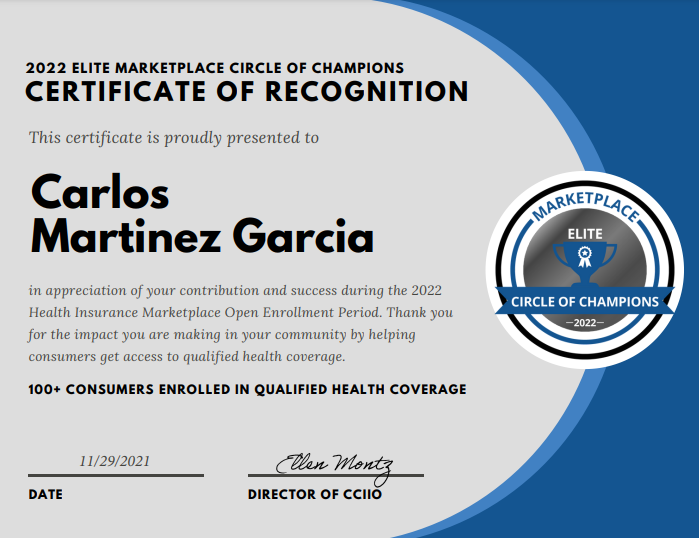
Shield Insurance Agent Carlos Martinez Garcia reached the Elite level of the 2022 Marketplace Circle of Champions by helping more than 100 consumers actively apply for and enroll in coverage!

The year-round efforts of agents and brokers play an important role in helping Americans access coverage and we are continually impressed by the dedication and commitment Carlos shows to consumers during the busy Open Enrollment Period.

This is an outstanding achievement! We thank Carlos for the trusted advice, support, and assistance you provide throughout the year to Shield Insurance Agency clients.

Marketplace Circle of Champions: Shield Agent Carlos Garcia Awarded Elite level of the 2022

Read More
U.S. saw its 4th-warmest year on record, fueled by a record-warm December - Shield Insurance Agency Blog

U.S. saw its 4th-warmest year on record, fueled by a record-warm December

Nation struck with 20 separate billion-dollar disasters in 2021

NOAA.gov | January 10, 2022 | Warmest year on record | Shield Insurance | Start a quote today!

On September 4, 2021, the Joint Base Lewis-McChord Soldiers and the Bureau of Land Management-California’s Folsom Lake Veterans Hand Crew constructed a handline, cleared brush, and dealt with hot spots north of Lake Davis and Portola during the largest wildfire of 2021–California’s Dixie Fire. The western wildfires of 2021 were one of 20 separate billion-dollar disasters that struck the United States last year. (Joe Bradshaw/Bureau of Land Management)

The year 2021 was marked by extremes across the U.S., including exceptional warmth, devastating severe weather and the second-highest number of billion-dollar weather and climate disasters on record.  

The nation also saw an active wildfire year across the West as the north Atlantic Basin stayed busy with its third most-active Atlantic hurricane season on record, according to scientists from NOAA’s National Centers for Environmental Information.

Here’s a recap of the climate and extreme weather events across the U.S. in 2021:

Climate by the numbers

December 2021 | Full year 2021 | 4th-warmest year on record

The December contiguous U.S. temperature was 39.3 degrees F, 6.7 degrees above average, making it the warmest December on record and exceeding the previous warmest December in 2015.

Ten states — Alabama, Arkansas, Kansas, Louisiana, Mississippi, Missouri, Nebraska, New Mexico, Oklahoma and Texas — also had their warmest Decembers on record.

For 2021, the average contiguous U.S. temperature was 54.5 degrees F, 2.5 degrees above the 20th-century average and ranked as the fourth-warmest year in the 127-year period of record. The six warmest years on record have all occurred since 2012.

Maine and New Hampshire had their second-warmest year on record with 19 additional states across the Northeast, Great Lakes, Plains and West experiencing a top-five warmest year. Meanwhile, Alaska’s average annual temperature was 26.4 degrees F, 0.4 of a degree above the long-term average and the coldest year since 2012.

Precipitation across the contiguous U.S. totaled 30.48 inches (0.54 of an inch above average), which placed 2021 in the middle third of the climate record. Massachusetts had its ninth-wettest year on record, while Montana ranked ninth driest on record for 2021.

According to the U.S. Drought Monitor, drought coverage remained fairly significant and steady throughout much of 2021, with a minimum extent of 43.4% occurring on May 25 and maximum coverage of 55.5% on December 7.

Click here for the rest of the story…


More Great articles featured at the Shield Insurance Agency Blog

Read More