7 Things to Know About Rental Car Coverage

Rental Car Coverage | Shield Insurance Blog | Auto Insurance |

After a car accident, you have enough things to worry about. Getting to work the next day shouldn’t be one of them.

We’ve all been there—and arranging alternate transportation while your vehicle is in a repair shop can be a hassle. But rental reimbursement coverage can help alleviate some stress after an accident while also saving you money.

Here are seven things you should know about before buying rental car reimbursement coverage:

1. Rental car insurance is optional.
Rental car reimbursement coverage does not automatically apply after an accident. As an optional coverage, it must be purchased separately. A common misconception is that auto insurance automatically covers the cost of a replacement rental car. In reality, you often have to select this coverage and apply it to the policy.

2. There is a limit.
You’ll likely have a per day and per occurrence limit. For example, if you have a 25/750 limit, your insurance company will pay up to $25 per day but no more than $750 per claim for the rental vehicle. Most insurance companies will offer several different options, allowing you to choose the limit that is right for you.

3. Your vehicle must be in the shop due to a covered loss.
Rental car reimbursement coverage can be used while your vehicle is being repaired after an accident or another covered loss, not for routine maintenance or leisure. So, if your car is at the body shop after an accident, a rental car is covered up to your limit. But if your car is undergoing routine maintenance that will keep it in the shop overnight or you are renting a vehicle for a family road trip, then rental reimbursement coverage would not apply.

4. You can use it right away.
After reporting a claim, if your vehicle isn’t drivable, you can be authorized for a rental car right away. Otherwise, you will be relying on the at-fault driver’s insurance company, and you may have to wait a little while before they can assess the claim and agree to pay for a rental car. With rental reimbursement coverage, there’s no waiting.

5. No need to worry about additional insurance.
For the most part, when you have collision and comprehensive coverages in your auto insurance policy, it will transfer to the rental vehicle, eliminating the need to purchase additional coverage from the car rental agency. Check with your Shield agent, who will be able to tell you when this applies.

6. You may not need it at all.
If you have access to another vehicle, rideshare service, or public transportation in the event your vehicle isn’t drivable, you may not need rental reimbursement coverage. But if you prefer the safety net of having a rental available if you need it, you may want to opt-in to this coverage.

7. Rental car insurance costs less than you might expect.
One year of rental car reimbursement coverage will typically cost less than one day of out-of-pocket rental car expenses. Want to learn more? Talk to your local independent Shield agent for complete details on rental reimbursement coverage.

Reference
– Insurance Information Institute
Read More

Call Roadside Assistance When the Car Doesn’t Start

Shield Insurance Blog | Roadside Assistance | Auto Insurance | Start a Quote Today!
You’ve grabbed your coffee, found your car keys, and herded your children out the door. Everyone’s buckled up and ready to go – on time. (A small miracle!) But when you go to turn on your car . . . nothing.

Here’s what to do when your car won’t start:

1. Cover the basics of Roadside Assistance.

  • Make sure your car is in Park (P) or Neutral (N) when you try to start it. Also, try pushing the brake pedal.
  • Look at your fuel gauge. Do you have fuel in the tank?
  • What’s the temperature today? Engines are a little harder to start when it’s cold outside, especially when the temperature drops to negative degrees.

2. Check your battery.

  • If the lights won’t turn on or they are noticeably dim, that’s a good indication that the issue is your car battery.
  • If you have a multimeter, you can use it to verify your battery is at or above 12.4 volts.
  • Make sure battery cables are solidly connected after recent engine maintenance.
  • Look for corrosion on the battery cables. It looks like fluffy green-white deposits, or even glassy.
  • Try jumping your car and see if that fixes the issue.

3. Call for roadside assistance.

  • When you’re still at a loss, it’s time to call an expert so you can get back on the road.
  • Wait for roadside assistance in a safe location. In extreme temperatures, take shelter inside your home or a nearby public building, like a gas station. If you leave your vehicle, lock it and put a note on your windshield with your phone number.
  • When the technician arrives, explain what you SEE and HEAR when you try to start your car to help him or her diagnose the problem faster.

If you have roadside assistance, you can call them using the phone number on the back of your insurance card. If you haven’t already, consider adding Roadside Assistance coverage to your car insurance policy to help cover the costs of unexpected roadside maintenance.

This article is for informational and suggestion purposes only. If the policy coverage descriptions in this article conflict with the language in the policy, the language in the policy apply. Shield Insurance Agency offers Roadside Assistance coverage in select markets that can be accessed during a roadside emergency through a Mobile app or a toll-free phone number. Talk to your local independent agent to learn more about Grange’s auto insurance and Roadside Assistance coverage.

Reference:
– Advanced Auto Parts


More blog articles by Shield Insurance Agency

Read More

New Year: Foresight in 2020

They say, “Hindsight is 20/20.” 

As we approach the new year, the National Insurance Crime Bureau (NICB) is encouraging you to exercise “Foresight in 2020.”   

While it’s easy to look back on where and how we failed to protect our assets, it is exponentially more beneficial to look forward and try to predict where we can best insulate ourselves from insurance crime and theft. By studying where we are vulnerable, we can identify weaknesses and adapt improvements that protect us, our families, and our property. From small precautions, like making sure we don’t leave valuables in our vehicles, to more extensive protections, like installing home security systems, we can exercise foresight in 2020 and stop crime before it happens. Law enforcement agencies across the country now engage in the practice of intelligence-based policing.

This methodology uses past data to identify and predict the patterns and behavior of criminals. NICB and our members follow suit, by identifying known threats and patterns in order to properly educate our consumers. You too can be an advocate in this preemptive strike against crime. Educate yourself, take precautions, and be vigilant. By using foresight in 2020, we can win the battle against crime.  

The best deterrent continues to be vigilance.

If there is a vacant home or business in your area, and you see suspicious or unusual activity around the property, call your local law enforcement. If any vehicles are involved, jot down their descriptions and license plates. Also, note the clothing and physical appearance of any person(s). All of this is very helpful to investigators. 

NICB reminds consumers to make sure your vehicle is locked when unattended. Don’t leave spare keys or fobs inside. Take a moment and be sure to hide your valuables from view. Even an empty bag or extra change in view looks appealing to a thief from the outside. 

Do things to protect your home, by locking your doors and investing in a home security system.  

Anyone with information concerning insurance fraud or vehicle theft can report it anonymously by calling toll-free 800.TEL.NICB (800.835.6422) or submitting a form on our website.

About the National Insurance Crime Bureau:

Headquartered in Des Plaines, Ill., the NICB is the nation’s leading not-for-profit organization exclusively dedicated to preventing, detecting, and defeating insurance fraud and vehicle theft through data analytics, investigations, learning and development, government affairs, and public affairs. The NICB is supported by more than 1,300 property and casualty insurance companies and self-insured organizations. NICB member companies wrote over $496 billion in insurance premiums in 2018 or more than 81% of the nation’s property-casualty insurance. That includes more than 92% ($254 billion) of the nation’s personal auto insurance. To learn more visit www.nicb.org.

Read More

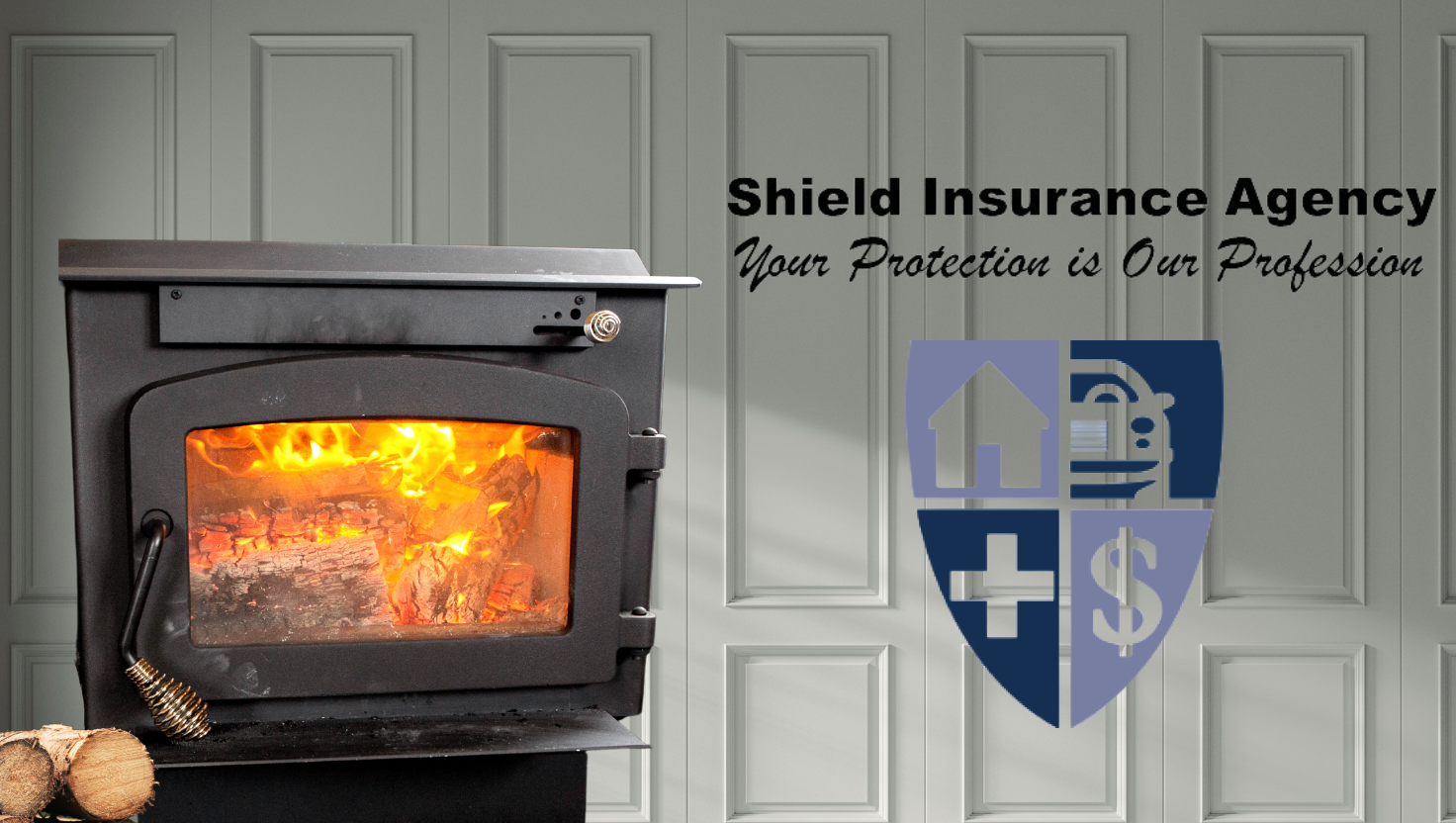
Wood Burning Stove Family Safety

Wood Burning Stove Family Safety

Shield Insurance Blog | Wood Burning Stove | Home Insurance | Start A Quote Today!

We can replace your property, but we can’t replace you or your family.

Wood-burning stoves are great for ambiance and pocketbooks. There is also a greater risk of a home fire.

Use these handy reminders to stay on top of maintenance and safety items for wood-burning stoves.

  • Frequently check the unit and chimney flues.
  • Inspect the chimney from the roof, using a flashlight to look for obstructions or damage.
  • Check stovepipes for creosote build-up; have the chimney and stove professionally cleaned as needed.
  • Burn only seasoned wood, preferably at least 2 years old.
  • Keep children away from the stove to prevent burns or risk of clothing ignition.
  • Keep combustible materials away to avoid risk of ignition.
  • Maintain a multi-purpose fire extinguisher near the stove; check the date on the extinguisher and keep it up to date.
  • Check and maintain smoke detectors.

For more information on home insurance, contact our Shield Agents to see if you are on the right track for being insured.


More Blogs by Shield Insurance Agency

Read More

Thanksgiving Fires, Turkey Fryers and Safety

Thanksgiving Fires, Turkey Fryers and Safety

I am feverishly preparing for what I consider to be a rite of passage: I’m hosting Thanksgiving for the first time. While I love to cook and host my family from time to time, there’s something extra intimidating about preparing the quintessential meal of the year. How do I manage to prepare a turkey, stuffing, potatoes, and vegetables at the same time? In one oven? Without a Thanksgiving Fire!? At this point, I have a spreadsheet listing what I need to do on Tuesday, Wednesday, and Thursday and the baking times and temperatures broken down in chronological order. (Thank goodness my mom is bringing the pumpkin pie.)

While I was researching ways to prevent the turkey from drying out, I stumbled upon this fact. According to the National Fire Protection Agency (NFPA), Thanksgiving is the peak day for cooking-related home fires. Add another thing to worry about to the list.

It’s pretty clear to see why 69% of all home fires on Thanksgiving are cooking fires. People are stressed and busy, which can lead to carelessness and inattention in the kitchen. Let me join the chorus and reiterate the NFPA’s tips regarding cooking safety:

  • Make sure your stovetop is clear of anything that could catch fire, like oven mitts, towels, hot pads, wooden utensils and food packaging.
  • If you are frying, grilling, or broiling, stay in the kitchen. If you have to leave the kitchen, even for a short period of time, turn off the stove.
  • If you are simmering, baking, roasting, or boiling, check on your food regularly and remain in your home. Use a timer help remind you that you are cooking.
  • Only cook when you are alert. If you are sleepy or have consumed alcohol, don’t use the stove.

Then there’s the use of turkey fryers, which the NFPA actually discourages. So does Underwriters Laboratory (UL), which will not certify any turkey fryers with their UL Mark. This video explains why UL finds those appliances dangerous.

Recent Posts

Read More

Preventing Wildfires

Preventing Wildfires and Staying Safe from the Risk

According to the National Interagency Fire Center, 63,546 human-caused wildfires burned nearly 5 million acres in 2017. To put this into perspective, consider the size of New York City. At 92,781 acres, New York City could have burned 54 times over with that amount of acreage!

That’s 5 million acres that didn’t have to burn if the ‘you’ part of the wildfire equation had followed proper burning protocol.

Warm weather increases the wildfire threat to many parts of the country. That warmth and dryness entice many people to clean up their yards and burn the debris. If not properly controlled, these fires will grow to become uncontrollable. Fortunately, most human-caused fires are preventable when proper precautions are taken. Here are just a few things you can do to avoid starting a wildfire:

Staying Safe from the Risk

  • Follow the law. The community you live in may have burning regulations, like requiring permits, restrictions on the times and places for open burning, and restrictions on the items that can be burned. Check with your local officials before burning anything.
  • Watch the weather. Don’t attempt to burn on windy days or during periods of drought. Check with your local fire official to make sure the weather conditions are safe for burning.
  • Choose the right site. The burn site should be surrounded by gravel or dirt for at least ten feet in all directions and kept wet to prevent the fire from spreading.
  • Never leave a fire unattended. Sparks could blow into leaves or grass and spread quickly.
  • Keep water nearby. Keep a garden hose or bucket of water close to help control the fire in an emergency.
  • Extinguish the fire properly. Use water to extinguish the fire completely by dousing the site and stirring until everything is drowned and not emitting any heat whatsoever. Any remaining coals should also be scooped up with a shovel and dunked into cold water. When you are done, everything in the fire pit should be cold to the touch.
  • Consider alternatives to burning. Yard waste can be made into mulch or composted, while newspapers and many other items can be recycled.

Every year, many families lose their homes and possessions to wildfires caused by humans. Don’t be a part of the statistics. Show your commitment to wildfire prevention, because your safety is number one to us!

To help educate your children on preventing wildfires, check out Smokey the Bear, he’s a pretty smart fellow.

Read More

9 Steps to Winterizing Your Collector Vehicle

Shield Insurance Agency Blog | Winterizing Your Collector Vehicle | Start A Quote Today!

Winterizing Your Collector Vehicle?

In most of the country, cold weather is here to stay, so it’s likely time to prepare your ride for hibernation. And because collector cars don’t live the same life as a vehicle that’s driven every day, it’s important to follow a winterization process thoroughly, to ensure your car survives the cold months.

9 steps to Winterizing Your Collector Vehicle

  1. Fuel stabilizer is the engine’s best friend. As fuel sits, it degrades and coats the inside of the tank and engine parts. Stabilizer in the tank prevents that. Run the engine a little to get the treatment into the carburetor or injectors.
  2. Top off the fuel. This prevents condensation build-up in the tank.
  3. Top off the oil. Make sure the oil level is full. Once spring comes around, you will want to start the car, warm the engine up to operating temperature to burn out the moisture, and then change the oil so you are ready for show season.
  4. Test and top off anti-freeze. Testing the antifreeze is extremely important to preventing freeze damage to the inside of the engine block. Antifreeze testers are available at most auto parts stores.
  5. Clean the car before storage. Cleaning and waxing the exterior before putting a breathable car cover on, will help maintain the quality of the paint, and prevent moisture, that can cause corrosion and mildew.
  6. Tires. Inflate tires properly, and treat them with a good tire gel, both inside and outside walls.  You can also put the car on jack stands to get the weight off of the tires.  This will help prevent flat spots.
  7. Reduce moisture.The interior and exterior of the car need to be protected from moisture.   A damp garage will corrode all bare metals, damage paint, and cause mildew and mold in the interior. A small fan or a shop light with a candescent light bulb under the car will help eliminate moisture. For the interior, DampRid or some sort of moisture absorbing material will keep things clean and dry.
  8. Battery. Use a battery tender that monitors the battery and charges it when needed.
  9. Insurance. Last but not least, check your car’s insurance policy or talk with your insurance agent. Even if you’re storing your ride indoors, it’s still at risk of theft, vandalism, or physical damage.

For informational purposes only and may not be applicable to all situations.

Coverage is subject to policy terms, conditions, limitations, exclusions, underwriting review, and approval, and may not be available for all risks or in all states. Rates and discounts vary, are determined by many factors, and are subject to change. Policies are written by one of the licensed insurers of American Modern Insurance Group, Inc., including American Modern Home Insurance Company d/b/a in CA American Modern Insurance Company (Lic. No 2222-8).

More Blogs from Shield Insurance Agency

Read More

Who Can I Add to My Auto Insurance Policy?

Can I add my parents to my auto insurance policy even if they are aged?

Can I keep the kids on my auto insurance even tho they have moved out?

The short answer is NO. 

Who pays the MEDICAL BILLS? Covered by PIP BeforeCovered by PIP Now
Named InsuredYESYES
Spouse of named insuredYESYES
Household relatives of named insuredYESYES
Household drivers who are not related to Named InsuredYESNO
Non-Household relatives of named insured listed as driversYESNO
Other passengers or pedestriansNONO

Recent Blogs

Read More

What to Know About Buying a Vacant Home

Why buy a vacant home? One of the biggest perks is being able to make the home whatever you want it to be. You can make it your new home, create a vacation home, rent it out, or fix it up and sell it to someone else. In some cases, the seller may be willing to sell a vacant home cheaper than an occupied home. This is good news for you because you can save some money, but it could also mean something might be wrong with the house. It may need a little love, attention, and renovation. Before you purchase a vacant home, here are a few things to do and watch out for:

Professional Inspection

Ask for an inspection from a professional and take notes on what they discover. You’ll want to know what’s broken, what needs to be fixed, and what could possibly go wrong. (Note: Be prepared to pay for the home’s electricity to be on for the duration of the inspection).

Critters

Since vacant homes can sit for quite some time, critters may come in and make themselves at home. Although they are usually small animals such as mice or bats, they can cause damage to a vacant house. Those unwanted critters can eat at the floors, carpets, walls, and wiring. Be aware that you may need to hire a pest control service, and this could be costly based on the number of animals and the amount of damage.

Plumbing

There may be plumbing issues that have caused dried and cracked seals, slow faucets, leaks, and other issues. If the heat hasn’t been on and the temperatures dropped, the pipes could be at risk to freeze or burst (if they haven’t already).

Appliances

The previous owner may not have unplugged their indoor appliances, such as refrigerators and freezers, or let them dry out. There may be mold inside from the moisture being trapped. Having appliances plugged in with no one there could result in a fire (if the electricity was on). Appliances in the house may become unusable due to long periods of sitting with no use, which means you will need new ones.

Molds

Remember, molds can grow on more than just appliances! Check for mold in the walls, floors, pipes…everywhere! Some molds may cause health issues, so if mold is found during your inspection, you may want to rethink purchasing the home. Talk with your inspector about the extremity and presence of mold, and evaluate the safety risks.

Unanticipated Repairs

There are other potential sources of damage. For example, break-ins are more likely when a home appears empty, and windows, doors, and other items could be damaged by the intruder. Storms are another danger. Debris could hit the home and cause damage that may have gone undetected. Always thoroughly inspect the home before buying!

There are a lot of things to do and watch out for before purchasing a vacant home, but the possibilities of what the home could be are endless. If you are looking to buy a vacant home but haven’t found one yet, there are a few ways to move forward. Look online, talk to neighbors, get a realtor or simply drive around. There are more vacant homes than you think…happy hunting!

Read More

Grilling Safety Tips for Your Cookout

Grilling Safety Tips

If you are planning a cookout at your house, it’s important to be extremely cautious and alert at all times! According to the National Fire Protection Association (NFPA), July is the peak month for grill fires. To avoid fires or unwanted burns, review the tips below to have a happy and safe holiday.

  • If you are using a propane grill, make sure the lid is open before lighting it. If you’re using a charcoal grill, remember to use the correct starter fluid.
  • Place the grill at least 10 feet away from your home, deck railings and overhanging branches.
  • If you are using a charcoal grill and the fire is low, revive it with some kindling and more charcoal. Avoid using liquid fuel as this can cause a flash fire.
  • Keep children and pets away from the grill area. If that is unavoidable, make sure they are at least 3 feet from the grill.
  • Never leave your grill unattended.
  • Keep your grill away from windy areas.
  • If you smell gas while grilling, step away from grill immediately and call your fire department.
  • When you’re done grilling, scrape off any grease or fat buildup that’s left over and in the trays below the grill. If you’re using a charcoal grill, make sure the coals are completely cool before disposing in a metal container.

Once you clean off your grill, it will be good as new and ready for your next cookout. From all of us at Foremost: Have fun and be safe!


Latest Posts

Read More