
Jet setting over Pet sitting

Jet setting over Pet sitting

AmericanSeniors.org | Pet sitting | Special Event Insurance | Pet Insurance

Say goodbye to pet sitting and hello to jet-setting with your furry bestie! Options abound for your pet to join your vacation, whether you are flying, cruising, or driving to your destination.  Here’s what to keep in mind for traveling safely with your best friend – and how to find the best pet-friendly destinations.

Flying with Fido and Fluffy

Some airlines still have restrictions on pets traveling in their cabin, while others have returned to pre-COVID allowances.  Currently, Alaska Air, American Airlines, Delta, JetBlue, Southwest, and United Airlines allow pets in-cabin, as well as some overseas airlines like Air France.  For all airlines, pets need to fit comfortably inside a carrier that can tuck completely under the seat in front of you.  Your pet needs to be able to stand up and turn around in the carrier.  Make sure you double-check with your airline what their specific requirements are since they all vary. 

Allow your pet plenty of time to acclimate to the carrier long before your flight.  Set the carrier out in the house, with treats placed inside.  This positive association will encourage your pet to spend a longer time inside the carrier.  You can also take your pet for a drive inside the carrier to help acclimate to movement as well.  

Label the carrier with your name and phone number, and inside, you can place a potty pad to soak up any accidents.  Your pet’s favorite toy would be a comforting addition too.  

Five hours before the flight, stop feeding your pet, though water should still be made available.  Allow your furry best friend as much exercise as possible until boarding.  It is generally not advised to give your pet a sedative unless it’s specifically recommended by your vet. 

Cruising: Only with Cunard

If you dream of sailing the seas with your furry best friend, there is one cruiser that will welcome humans and pets alike.  Cunard’s Queen Mary 2 is actually the only cruiser that allows a limited number of dogs and cats to set sail.  However, they aren’t allowed to stay with you in your cabin.  Cats and dogs must stay in The Kennels for the entire duration of the cruise.  You are allowed to visit during specific hours, but they won’t be able to join you for walks around the deck.  There is a very long waiting list, as there are only 24 kennels aboard the ship.  Costs range from $800-$2000, depending on the size of your pet. 

It is a beautiful trip, which perhaps is another reason why the waiting list for The Kennels is quite long.  Queen Mary 2 sails transatlantically from NY to Hamburg, Germany.  En route, it comes into port in charming Southampton, the British waterfront city that’s home to history abounding, including the Titanic Trail and 950-year-old St Michael the Archangel Church.  Stonehenge is just a stone’s throw away. 

Road Tripping Together 

Of course, the most flexible way to travel with your pet is to enjoy a road trip together.  The most important consideration here is keeping Fido or Fluffy safe.  A strappable crate or appropriately fitted seat belt attachment will make sure your beloved pet stays safe in an accident (and prevents them from distracting you while driving).  The safest place is the back seat for pets, far away from the front airbags that can be fatal for their small stature.  Practice driving shorter distances to help your pets acclimate to the restraint.  Remember the treats! 

Currently, in beta, Go Pet Friendly has a road trip planner that is helpful for planning the best drive for both species.  You can ask for recommendations for pit stops for all of your legs to stretch and play. 

Friendly Tails Pet Sitting

Bring Fido is an excellent resource for trip planning with your furry best friend.   Browse pet-friendly hotels, restaurants, activities, and even events.  

Pet-friendly accommodations are on the rise, with many chains welcoming your pet to stay for free.  Red Roof Inn allows for one free pet per room, as do many Four Seasons properties.  Other chains like the Ritz Carlton and Westin welcome dogs, but have varying fees and restrictions.  The AKC has a full listing of dog-friendly hotel chains and specifics. 

The Pet Sitting Checklist

Click here for the full checklist…


More great blog articles by Shield Insurance Agency

Read More
5 Business Predictions for 2023 Following the Downward Spiral in Tech

5 Business Predictions for 2023 Following the Downward Spiral in Tech

The most prominent tech titans announced tens of thousands of layoffs this year. With markets down over 30%, what are the business predictions and what’s next in 2023, and how do we prepare for the recession?

Entrepreneur.com | By Mario Peshev | December 28, 2022 | Business Predictions | Business Insurance

At the beginning of the quarter, one share of Meta Platforms Inc, the parent company of Facebook, Instagram, and WhatsApp, was traded at $378. Less than two months in, the technological juggernaut collapsed to under $89 a share — reaching the trading levels of 2015.

But Meta is not alone. The Nasdaq 100 took a 38% hit from its peak.

Layoffs have followed suit across the titans of technology — with tens of thousands of employees losing jobs across Meta, Amazon, Microsoft, and Twitter alone.

Heading into 2023, the future is tumultuous. What geoeconomic changes are about to resurface in the new year?

1. Reassessment of the “Hockey Stick.”

A favorite trend of venture capital funds and investors is the promise of the “hockey stick” growth curve. This translates to a predictable and scalable influx of new users (or revenue) subject to doubling down on sales or paid acquisition channels.

The premise is straightforward — market penetration or even domination. Obtaining unicorn status and acquiring users at all costs. The model works in theory, but in the land of funding, this usually comes at the expense of piles of debt and no profit whatsoever.

It’s easy to scale a business with a freemium model that gets funded by investors. But infrastructure, staff, warehouses, and vendors are entitled to their own funding. And unless this model converts at the same pace as a standard business cost plus a profit margin, companies will face severe consequences.

Prioritizing profitability again will become a reality check of 2023.

2. More Business Predictions: Layoffs

Over 910 tech companies laid off over 143,000 employees in 2022 alone. The tracker relies on public data that doesn’t account for medium and large businesses outside the public purview (whereas the numbers are likely to exceed 200,000 or even 250,000 at the time).

Financial scrutiny, combined with unfavored financing tools thanks to the aggressive interest rate hikes by the Federal Reserve, is limiting access to funding to combat the effects of hyperinflation.

With unlimited resources, it’s easy to get sidetracked and keep pouring more people, money, and servers into a problem. This anecdotally conflicts with Brooks’s law (a known adagio in project and product management), where adding workforce to a software project that’s running late is dragging it even further.

Here is the full story…


More great blogs by Shield Insurance

Read More
General Information about Blood and Blood Donation

January is Blood Donation Month

AmericasBlood.org | May 2022 | Blood Donation | Medical Insurance

U.S. Blood Donation Statistics and Public Messaging Guide

Over 40 verified statistics from published research.

blood donation statistics

Designed for blood centers, media, and anyone who is generally interested in the current state of blood donations and utilization, this guide is the first of its kind designed to provide the latest look at America’s blood supply and its donors. It uses data curated from published research, credible public sources, and input from industry experts. We encourage readers to use the editable social media graphics contained in this guide that highlight the 13 of the most widely used statistics.

This Guide will be updated annually to reflect the latest statistics.  

General Information about Blood and Blood Donation

Q1.1:  do blood donations help patients in need?

■ Every donation can help save a life.

■ Each donation can help save or deeply impact more than one life.

Q1.2: How many patients can each blood donation help?

■ One donation can help two or more patients in need. Each donation can be separated into more than one blood product including but not limited to red blood cells, plasma, and platelets.

■ Some donations result in two or three of the same type of product, just more doses for patients (e.g., double red blood cells, plasma from automation, or platelets from automation). 

■ Each traditional whole blood donation can be separated into different blood product components in the lab (red blood cells and plasma) and depending on the amount of  time from donation to the lab, additional products can be made such as platelets and cryoprecipitate which are used in cancer treatment and heart surgeries.

Q1.3: How many blood centers are there in the U.S.? How much do they collect?

According to the United States (U.S.) Food and Drug Administration’s (FDA’s) Blood Establishment Registration database1, there are 53 community blood centers and 90 hospitalbased blood centers in the U.S. Independent, community blood centers collect approximately 60

percent of the nation’s blood supply and the American Red Cross collects approximately 40 percent.

Q1.4: How often can individuals donate blood in the U.S.?

Individuals can donate whole blood no more than once in eight weeks.

Individuals can donate platelets (apheresis donation) as much as twice in a seven-day period — or up to 24 times in a rolling 12 months.

Individual blood centers may apply additional policies.

Q1.5: How many pints of blood do people have in their body?

An average adult has about 10.5 pints of blood in their body.

Q1.6: What is the prevalence of each blood type among the U.S. population?

The approximate distribution of blood types in the blood donor population is as follows.

Distribution may be different for specific racial and ethnic groups and in different parts of the country.

TABLE: PREVALENCE OF BLOOD TYPE 7 BLOOD TYPE PREVALENCE HOW COMMON IS YOUR BLOOD?

O Rh-positive 39% 1 in 2.5
O Rh-negative 7% 1 in 11
A Rh-positive 32% 1 in 3
A Rh-negative 6% 1 in 17
B Rh-positive 11% 1 in 11
B Rh-negative 2% 1 person in 50
AB Rh-positive 4% 1 person in 25
AB Rh-negative 1% 1 person in 100

Click here to visit the full report on U.S. blood donation…


More interesting reads by Shield Insurance Agency

Read More
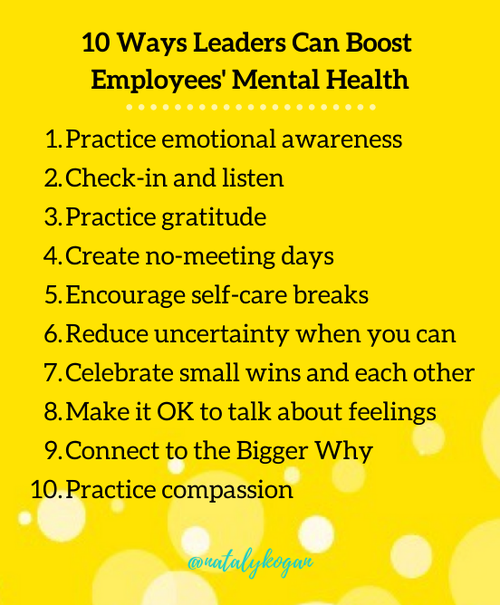
10 Practical Science-Backed Ways Leaders Can Support Their Employees’ Mental Health During Challenges

10 Practical Science-Backed Ways Leaders Can Support Their Employees’ Mental Health During Challenges

Happier.com | BY NATALY KOGAN | Mental Health | Health Insurance

As a leader, your job is not to manage people or projects — it’s to manage mental health, including your own.

During this really challenging time (understatement of the year!) that can be really intense and since we don’t learn about emotional fitness skills in MBA or leadership development programs, you don’t always know what to do.

The first thing you can do is make your and your team’s emotional and mental health your number one priority. You can’t give what you don’t have and your team members can’t give what they don’t have. If everyone is depleted and overwhelmed, it doesn’t matter how many motivating talks you give. As mountains of research show, we can’t do great work unless we fuel our well-being first.

Since the pandemic broke out, I’ve done 100+ virtual sessions on emotional fitness skills for teams and leaders and have led 3 virtual leadership development groups, to help leaders bring their full capacity to the challenges they are facing right now — and help people they lead do the same. 

Here are my 10 favorite science-backed tips to help you strengthen the emotional and mental health of people you lead — starting with your own.

10 Practical Science-Backed Ways Leaders Can Support Their Employees’ Mental Health During Challenges

1. Practice emotional awareness and openness

Whether you like it or not, as a leader, your emotions have an amplified effect on everyone else. So begin by practicing emotional awareness: Check in with yourself by asking “How am I feeling? What is my energy like?” (Do this first thing in the morning and before meetings.)

When your emotions vary from the norm (upset, stressed, more tense than usual) acknowledge them openly by telling people a little bit about why you feel that way. You don’t need to write a novel about your feelings — just share enough so the other person knows what’s up. This reduces stress and wasted energy for people trying to guess why you’re acting differently and gives them permission to share their emotions more openly.

2. Check-in and listen


Be intentional about checking in with your colleagues one on one to ask them how they are doing. This practice has 2 steps: (1) Ask them how they are and then (2) listen, giving them your full attention, without multi-tasking or trying to fix or give advice. During this challenging time when everyone feels more isolated, checking in with others is a powerful way to create moments of genuine human connection. (And no, you don’t always need to do it on Zoom — scheduling a quick check-in call works great!)

3. Practice Gratitude


During challenges and difficulties, the human brain’s natural negativity bias — being more sensitive to what’s wrong or negative — is in overdrive, making it easy to become overwhelmed with negative thoughts and even hopelessness. Practicing gratitude openly is the best way to counter the negativity spiral. 

Add Gratitude Bookends to your meetings: Begin a meeting by sharing something specific you’re grateful for or expressing your gratitude for someone else and at the end of the meeting, ask someone to do the same. This simple practice elevates the importance of gratitude for your team, encourages people to practice it on their own, and makes meetings more productive and collaborative.

4. Create no-meeting days

More on this topic…


Read More
100 Best Self Help & Personal Development Blogs and Websites

100 Best Self Help & Personal Development Blogs and Websites

Blog.Feedspot.com | Dec 27, 2022 | Personal Development Blogs | Shield Insurance Agency

The best Personal Development blogs from thousands of blogs on the web and ranked by traffic, social media followers, domain authority & freshness.

Personal Development Blogs

Here are 100 Best Personal Development Blogs you should follow in 2023

1. Zen Habits

San Diego, California, US
Zen Habits is about finding simplicity and mindfulness in the daily chaos of our lives. It’s about clearing the clutter so we can focus on what’s important, create something amazing, and find happiness. Leo Babauta is the Creator of Zen Habits living in San Diego, California.

2. Tiny Buddha Blog

 Los Angeles, California, US
Tiny Buddha is about reflecting on simple wisdom and learning new ways to apply it to our complex lives – complete with responsibilities, struggles, dreams, and relationships. Founded in 2009, Tiny Buddha has emerged as a leading resource for peace and happiness. The site features stories, tips, and insights from readers of all ages, from all over the globe.

3. Mark Manson Personal Development Blogs

New York, England, UK
Mark Manson’s personal development advice is nothing like the ordinary – forget clichéd or unrealistic tips. Mark’s goal with his site is to provide a reality-based form of self-help, and he most certainly achieves this goal with his articles.

4. Positivity Blog

Sweden
It’s a resource on how to live a happier life, increase your self-esteem and confidence, become more productive, simplify, and improve relationships and social skills.

5. Live Bold and Bloom

Asheville, North Carolina, US
Barrie Davenport blogs at her leading self-improvement blog, Live Bold and Bloom. Barrie is a personal growth seeker, published author, and certified coach. On live Bold and Bloom, Barrie helps people shift their thinking, create positive new habits, and build lifetime confidence.

6. Tim Ferriss Blog

US
Follow the Tim Ferris blog for tips and advice on success, motivation and more! Tim Ferriss has been listed as one of Fast Company’s ‘Most Innovative Business People’ and one of Fortune’s ’40 under 40.’ He is an early-stage technology investor/advisor and the author of five #1 New York Times and Wall Street Journal bestsellers.

7. Becoming Minimalist

Phoenix, Arizona, US
Becoming Minimalist inspires others to journey toward simple living. Own less, live more. We are dedicated to rational minimalism and discovering what that uniquely means for us. And the more who are introduced to this life-changing message, the better! Because we’re all just trying to make the most of this journey called life.

8. Gretchen Rubin

 New York City, New York, US
Gretchen Rubin is an author of several best selling books, including ‘The Happiness Project’ where she tests different happiness and personal development methods for one year. She writes about creating positive habits and finding happiness in the everyday life.

9. Marc and Angel Personal Development Blogsl

 Florida, US
Articles on happiness, productivity, emotional intelligence, relationships, health, aspiration, life, money, general self-improvement and more. Marc and Angel Chernoff are New York Times bestselling authors, professional coaches, full-time students of life, admirers of the human spirit, and have been recognized by Forbes as having ‘one of the most popular personal development blogs.’ They share inspirational advice and practical tips for life.

10. MindBodyGreen

Brooklyn, NY
MindBodyGreen is a lifestyle media brand dedicated to inspiring you to live your best life – mentally, physically, spiritually, emotionally and environmentally. Blog posts contains articles from nutrition, exercise and happiness to meditation and relationships.

Click here for more Personal Development Blogs…


Visit some of our recent blog articles from Shield Insurance!

Read More
10 Things You Need to Know About Social Security

10 Things You Need to Know About Social Security

Answers to frequently asked questions about your retirement benefits

AARP | Andy Markowitz | Updated June 21, 2022 | Social Security | Life Insurance

Social Security provides benefits to more than 65 million people, and those monthly payments have an enormous impact on older Americans’ financial health. According to Census Bureau data:

  • Social Security accounts for at least 50 percent of income for more than half of households headed by someone 65 or older.
  • It provides nearly 80 percent of income for 1 in 5 such households.
  • It keeps more than 26.5 million people from falling below the poverty line.

An institution that looms so large in American life is bound to generate questions about what it does and how it works. Here are the answers to some of the most frequently asked questions about Social Security. You’ll find more detailed information on these issues in AARP’s Social Security Resource Center.

1. Is Social Security just for retired workers?

No. As of April 2022, 72.7 percent of beneficiaries were retirees. The remainder were spouses, ex-spouses and children of retirees (4.3 percent); disabled workers and their families (14 percent); and survivors of deceased beneficiaries (9 percent).

2. At what age can I start collecting Social Security benefits?

You can begin receiving retirement benefits at age 62, but your payments will be more significant if you wait until your full retirement age (66 years and 4 months for people born in 1956, gradually rising over the next few years to 67). If you are eligible for survivor benefits or Social Security Disability Insurance (SSDI), you can start collecting earlier.

3. How do I sign up for Social Security?

You can apply for retirementspousal or disability benefits online, by phone at 800-772-1213, or at your local Social Security office. For survivor benefits, you can apply by phone or in person. Local offices reopened to walk-in traffic in April after being largely closed to visitors for more than two years due to the COVID-19 pandemic. Still, the Social Security Administration (SSA) strongly recommends calling ahead to make an appointment.

4. How long do I need to work to become eligible for benefits?

For retirement benefits, at least 10 years. Social Security uses a system of credits, which you collect by working and paying Social Security taxes. You can earn up to four credits a year, and you need 40 credits to qualify for retirement benefits. The credit threshold may be lower for disability benefits.

No, you can receive benefits while working. But if you are below full retirement age and earn more than a certain amount, your monthly benefits will be temporarily reduced. Once you reach full retirement age, the reduction is eliminated, and your benefits will be increased to make up for what was lost over time.

5. Must I stop working to collect retirement benefits?

No, you can receive benefits while working. But if you are below full retirement age and earn more than a certain amount, your monthly benefits will be temporarily reduced. Once you reach full retirement age, the reduction is eliminated, and your benefits will be increased to make up for what was lost over time.

6. How much will I get from Social Security?

That depends on a number of factors, most crucially your lifetime earnings from work in which you paid Social Security taxes. Social Security takes your 35 highest-earnings years, calculates an inflation-adjusted average, and plugs that into a progressive formula that determines your “basic” benefit. The amount will also be affected by how old you are when you claim benefits. You won’t know it for sure until you file, but you can use the AARP Social Security Calculator to get an estimate.

7. What’s the maximum monthly Social Security benefit? 

Read more…


More great reads from the Shield Insurance Agency Blog

Read More
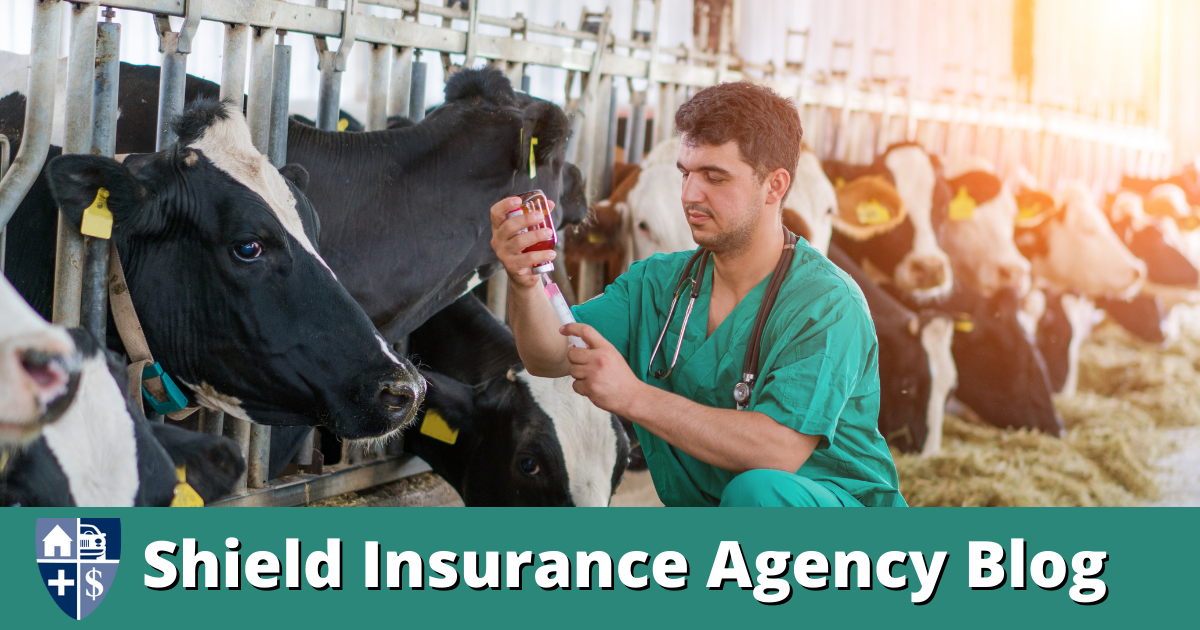
There's a shortage of vets to treat farm animals. Pandemic pets are partly to blame

There’s a shortage of vets to treat farm animals. Pandemic pets are partly to blame

NPR.org | SCOTT NEUMAN | December 19, 20225:00 AM ET | Farm Animals | Farm & Ranch Insurance

One night last spring, Andy Berry, a livestock farmer in Mississippi, was working the phone. One of his cows was experiencing a life-threatening breech birth and his regular veterinarian, 40 minutes away, was unavailable.

Berry, who is also executive vice president of the Mississippi Cattlemen’s Association, spent two hours calling around for help, finally reaching another vet, who immediately made the one-hour drive to his farm in rural Jefferson Davis County.

By the time she arrived, it was too late. “Ultimately, we ended up losing both the cow and the calf,” Berry, 48, says. “Between the time it took to get to the farm and the complications of the labor, it was too much.”

The death of the cow and calf cost him about $1,800, he says.

Experiences similar to Berry’s are becoming more common across the country. For decades, farmers have endured a shortage of rural veterinarians – the kind who specialize in care for animals like cows, pigs and sheep. But the problem is now at an all-time high – with 500 counties across 46 states reporting critical shortages this year, according to the U.S. Department of Agriculture.

Some counties have no vets to treat farm animals

“We are losing animals because we just have no one to come to the farm in time to save them,” said Sen. Cindy Hyde-Smith (R-Miss.) in a Dec. 6 hearing of the Senate Committee on Agriculture, Nutrition and Forestry. “We have counties in Mississippi that don’t even have a large animal veterinarian.”

The shortage is mirrored by a growth in the number of veterinarians that Americans are much more familiar with – those who take care of the family pet. Since at least the early 2000s, more veterinarians have chosen the better pay and more reasonable work hours that go with a practice that focuses primarily or exclusively on “companion” animals. With the COVID-19 pandemic-driven spike in pet ownership, demand – and salaries – for companion animal veterinarians have increased rapidly, according to the American Veterinary Medical Association, or AVMA.

The implications of this shortfall go beyond the farm. Some farmers and the AVMA warn that without enough vets on the front line, the food supply chain is vulnerable to diseases such as foot and mouth and swine flu.

“Food-animal veterinarians are a front-line defense in the surveillance, prevention, treatment, and control of animal diseases,” AVMA President Dr. Lori Teller wrote in an email to NPR. “Veterinarians help to protect the health and welfare of animals that produce eggs, milk, meat, wool, and other protein and fiber products,” she says.

Teller says that among veterinary school graduates, nearly half are choosing to work exclusively with companion animals, with another 8% selecting mixed practices, where they might treat a dog and cat one day and a cow the next. Fewer than 3% of recent graduates choose to work exclusively with food animals, with others deciding to pursue advanced degrees or go into specialties, such as horse care.

The burnout problem

Despite the clear need, many who start out working with food animals find that the grueling and sometimes dangerous work leads to burnout.

Dr. Remington Pettit, 37, has seen both sides of the profession. She grew up in rural Oklahoma, and attended veterinary school at Oklahoma State University. When Pettit graduated, she chose to work in mixed practices, focusing on the treatment of horses and cattle in her native state.

“I worked the sale barn,” Pettit says, referring to cattle auctions. “I did spay-neuter. I did farm calls. I did emergencies. It was all hours of the day, 365 days a year.” In the rural area she covered, a considerable amount of driving to appointments made the days even longer.

About five years ago, she hit a breaking point. Pettit, 37, was still carrying university debt, and just starting a family. For her, it was mainly exhaustion and the physical toll of working with large animals that prompted a switch to companion animals – where she says she makes double the money she did just a few years ago. But the physical demands of the job and its inherent dangers were also factors in her decision, she says.

Read more…


Click here for more great blog articles with Shield Insurance

Read More
How to Avoid the Hidden Health Hazards of Travel

How to Avoid the Hidden Health Hazards of Travel

Experts offer tips to help prevent injury and illness on your next trip

AARP | By Jaimie Seaton | December 22, 2022 | Health | Shield Health Insurance

This past summer I traveled to London and then to Scotland to attend my daughter’s college graduation. It was a jam-packed two days of garden parties, family dinners, and cocktail hours following the commencement ceremony. 

On the day I traveled back to London, a shortage of taxis forced me to wheel my large suitcase and carry-on bag about a mile over cobblestones to the train station — my purse and shopping bag slung over my shoulder. In Edinburgh, I carried my bags up a flight of stairs in order to make my connection, and at Heathrow airport, there was walking and moved my bags through a security line for more than an hour. 

Once seated on the plane, I suddenly felt a sharp pain in my right elbow. Over the next week, the pain got worse and extended down my arm. I went to an orthopedist, who diagnosed tennis elbow. He surmised that dragging and carrying my heavy bags was the cause. 

​The pain only lasted another week or so, thanks to ice and stretching, but the whole experience left me wondering what other dangers might await me on my next trip. So I asked some experts. 

​“I frequently hear stories like yours,” says Sajida Saeed Chaudry, M.D., a primary care physician who specializes in preventive care at Johns Hopkins Community Physicians. She added that her patients, especially those age 50 and over, tell her tales of getting lost while on vacation and having to walk for miles, causing foot injuries, or hurting their back by putting a heavy bag in an overhead compartment or taking it off a conveyor belt.

​“There’s an element of stress and rushing, creating the perfect storm for things to go wrong,” Chaudry says. 

​Before you go | health

​Chaudry has some simple tips to help prevent injuries or health emergencies during travel, beginning with comfortable footwear. She also recommends establishing an exercise routine prior to traveling and ramping it up if you’re planning on doing a lot of walking. “If you’re routinely walking and suddenly go from 5,000 to 20,000 steps, those extra steps won’t bother you as much,” Chaudry says.

​Another travel tip: Pack extra must-have items in your carry-on bag. “I always tell patients, when they’re traveling, to have a back-up pair of glasses or hearing aids, and to keep them (close). Don’t put them in checked luggage,” Chaudry says. “It’s also a good idea to have your medical history and list of medications handy.” 

Health in the airport and on the plane

​Traveling light and using elevators when possible can help lower the risk of injury. If you notice pain from walking or carrying a suitcase, Chaudry says to follow the RICE regimen: Rest, Ice, Compress, Elevate. And she cautions against ignoring pain and pushing through, especially for those at greater risk of fracture, such as those with osteoporosis. “If the pain isn’t going away after a few days, that’s really a sign to check in with the doctor and make sure that there’s an evaluation,” she says.

Here is the rest of the story…

Read More
Merry Christmas from all of us at Shield Insurance Agency

30+ Best Christmas Poems For Kids!

LoveLivesOn.com | Christmas | Shield Insurance Agency

Merry Christmas from the entire staff at Shield Insurance Agency!

We hope you enjoy these holiday poems with your family and friends.


Looking for Christmas poems for kids?

Look no further with our ultimate collection of holiday poems that have been specially curated with children in mind.  (We’ve also organized the poems by age group to make your life a little easier over this busy holiday season.

You are sure to find Christmas poems that your kids will love, whether they are using it in a craft activity, school or church performance, or simply to enjoy reading aloud with you.

Christmas Poems for Kids Aged 3 to 5

This first Christmas poem is perfect for kindergarteners and easy to memorize.

I Like to See Christmas

Author Unknown

I like to see the stockings
I like to see the gifts
I like to see the bells
I like to see the tree
And I like to see Santa
Looking at me!

~

When it comes to Christmas poems for kids, this one is a favourite!  It is also easy to incorporate into craft activities.

Peppermint Stick

Author Unknown

I took a lick
Of a peppermint stick
And oh it tasted yummy!

It used to be
On the Christmas tree
But now it’s in my tummy!

~

This is a childhood classic when it comes to holiday poetry.  The analogy in this Christmas poem is that little children are like little pine trees, waiting to grow up.

Little Pine Tree

Author Unknown

I’m a little pine tree
As you can see,
All the other pine trees
Are bigger than me.
Maybe when I grow up
Then I’ll be
A great big merry Christmas tree!

~

Does your family have a special angel that sits on the top of your Christmas tree?  If yes, then this Christmas poem written for children in kindergartener is sure to delight!

A Christmas Angel

By Denise Burke

Oh, I wish I was an angel on the tree
I’d give every girl and boy
Lots of Christmas peace and joy
Oh, I wish I was an angel on the tree

~

No collection of Christmas poems for kids would be complete without this next poem.

It would be a wonderful poem for a group of five children to recite at a Christmas concert, either at school or elsewhere.

Have the group of five kids recite lines 1, 7, 8, and 9 of the poem in unison.  Also, have each child recite one line on a solo basis (for the remaining lines – lines 2 to 6).

Five Little Reindeer

Author Unknown

Five little reindeer playing in the snow
The first one said, “Can you see my nose glow?”
The second one said, “Listen to me sing!”
The third one said, “I can hear the bells ring.”
The fourth one said, “Let’s eat the pie!”
The fifth one said, “I’m ready to fly.”
Then clomp went their hooves
And the snow fell white
As the five little reindeer flew out of sight.

~

This next Christmas poem for kids reminds us how much fun the holiday season is!

Christmas is a Day Full of Joy

Author Unknown

Christmas is a day full of joy,
Ask any girl or boy.

Santa’s reindeer fly up high,
By the twinkling stars in the sky.

Children love a snowball fight,
Although its freezing day and night.

~

Did you grow up having this next poem read to you on Christmas Eve?  Children all over the world love this Christmas poem, with its promise of reindeer, Santa, and presents.  It is a classic for a reason!

Magic Reindeer Food

Author Unknown

Be sure to take this magic food
and sprinkle it on the lawn.

On Christmas Eve, Santa’s reindeers
travel miles before the dawn.

The smell of oats and glitter
will guide them on their way.

And you’ll wake up to Santa’s gifts
on merry Christmas day!

~

Who doesn’t love Santa?  This next Christmas poem is beloved by kindergarteners and older children alike.

For more Children’s Christmas Poems, click here…


More great blogs from Shield Insurance

Read More
Here's How People Celebrate Christmas All Over the World

Here’s How People Celebrate Christmas All Over the World

Turns out, Santa Claus doesn’t visit the entire world for Christmas.

GoodHousekeeping.com | BY LIZZ SCHUMER | Dec 11, 2020 | Christmas | Shield Insurance

Every culture that celebrates Christmas also has its own festive ways to make the holiday special. Some of those involve dishes or treats that only appear once a year. Others give gifts that carry a particular meaning, and still, others decorate in a particular way, and hold festivals, parades or parties to ring in the season. Growing up, I know my family’s holiday season just wouldn’t have been the same if we didn’t hang the Christmas pickle on the tree, if dad didn’t read A Visit From St. Nicholas to my brother and I before we went to sleep on Christmas eve — or didn’t enjoy the Feast of Seven Fishes. In some countries, people can say the same about a visit from the Krampus, eating KFC, or pulling a Christmas cracker.

This year, the holiday might look different for a lot of us, but that doesn’t mean we can’t keep many of our most treasured traditions. Maybe you’ll even want to try out some of the most beloved Christmas traditions from around the world in your own home. You might just find a new cherished activity that your children and grandchildren (and their grandchildren!) won’t be able to do without.

1Japan: KFC for Christmas Dinner

In Japan, celebrating Christmas is still relatively new. It’s only been widely recognized for the past couple of decades and is typically seen as a time to spread joy and cheer, or even a romantic couple’s day, instead of a religious holiday. Many order KFC for Christmas dinner, or make a reservation at a restaurant instead of cooking a big feast.

2 Poland: People Share a Pre-Dinner Christmas Wafer

In Poland and many Polish communities worldwide, Christmas Eve dinner or (Wigilia) begins with sharing the Oplatek. The paper-thin square wafer is made of flour and water and has an image of the Nativity on it. Everyone at the table breaks off a piece and shares a holiday greeting before passing it along. Sometimes, even pets get in on the fun.

3 Slovakia: Carp for Dinner

All over Central Europe, people enjoy carp for Christmas Eve Dinner, according to NPR. But rather than picking it up from the supermarket, traditionalists let the fish live in the bathtub for a couple of days before preparing and eating it. Legend has it, the scales bring luck and good fortune for the coming year.

Click for the full story…


More great blogs from Shield Insurance Agency

Read More