
Don’t Wait to Renew Your Passport

Americans planning international travel face processing delays

by Larry Bleiberg, AARP, Updated July 19, 2021 | Renew Your Passport | Shield Insurance

En español | If you’re planning an international trip, check your passport’s expiration date now. It could take more than four months to get a new one.
The U.S. State Department projects a wait of up to 18 weeks for renewals, and some customers are reporting even longer delays. Those paying an extra $60 for expedited service can still expect to wait up to 12 weeks for their document. Those processing times begin the day the department receives your application, not the day you mail it.

And appointments for last-minute, in-person processing are extremely limited.

The problem is — what else? — COVID-19.

In March 2020, when pandemic restrictions were first imposed, the State Department sent most employees home, and severely scaled back processing applications. When workers began to return to the office, in June 2020, they faced a backlog of applications. Now, a year later, they still haven’t caught up with the demand, a State Department spokesman said. There are also mail delivery delays, according to the State Department website, which notes that the 18-month processing-time estimate includes up to six weeks for mailing.

As more people get vaccinated and begin to plan international trips, the backlog is likely to grow, resulting in even longer processing delays. “Put your forms in as fast as you can,” says Jeremy Scott Foster of TravelFreak.com, a travel advice website. “Unfortunately, there is no workaround. All queues are long.”

The passport delay has caused some travelers to cancel trips. For example, Samantha Meabon, a physician assistant from western Pennsylvania, needed a new passport because of a name change. The process took four months, forcing her to cancel a planned trip to St. Lucia and Martinique in the Caribbean in May. “Although we planned much further ahead of time than we normally would, we ended up having to continue to postpone international travel,” she says.

Another reason to renew early: Some countries won’t admit travelers with passports that expire in less than six months.

How to apply for or renew a passport

Click here o the rest of the story…


More great articles!

Read More

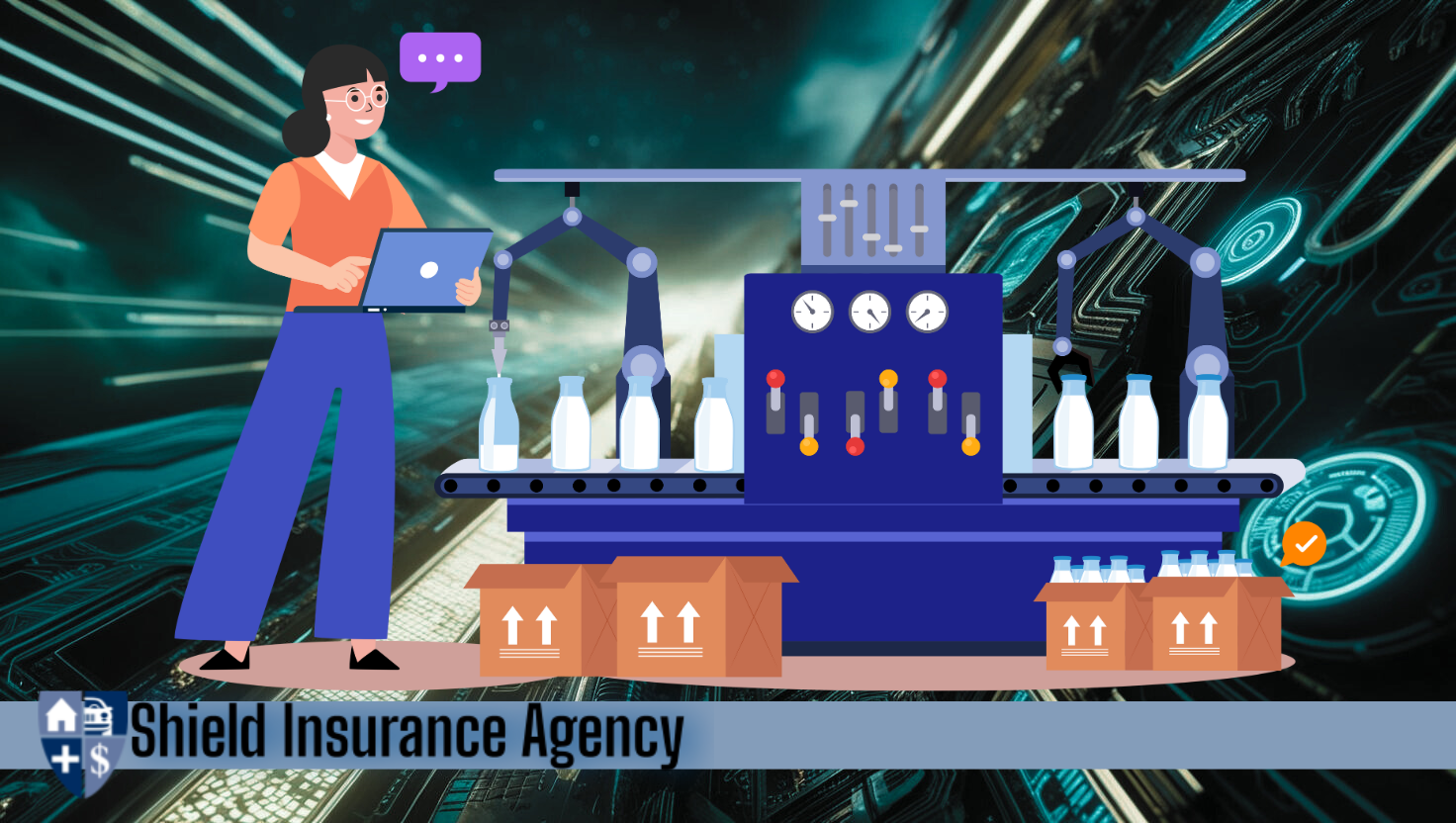
How automation in manufacturing can improve worker safety, satisfaction, and productivity

Shield Insurance Blog | Automation in manufacturing | Start A quote today

COVID-19 has put a strain on the manufacturing industry across the globe, as supply chain limitations and new health and safety regulations increase risk and threaten output. In fact, according to a recent report by Hitachi Vantara, three key challenges manufacturers struggle to manage as the pandemic continues include worker health and safety (74 percent of respondents rated a 3 or more on a scale of 1-5), productivity (66 percent), and supply chain disruption (65 percent).

As manufacturers look to address these challenges while managing costs, one solution shows significant promise: automation.

The effective deployment of automation equipment and processes can fundamentally change your business – and potentially reduce employee exposure to leading causes of workplace injury. In this article, we’ll review key reasons why the manufacturing industry is shifting to automation and three practices on how to incorporate it into operations for maximum impact.

Automation can increase productivity.

Even before COVID-19, manufacturers were looking for solutions to increase productivity despite significant reductions in the labor force.

According to FRED economic research, data indexed against 1990 benchmarks show that output has grown 44.2 percent in U.S. factories despite a 32.2 percent reduction in employment over the last 30 years. That means that the United States is producing 44 percent more goods than it did 30 years ago, with only 70 percent of the labor. In addition, according to Assembly Mag, more than 2.3 million manufacturing jobs created in the next 10 years will go unfilled.

Labor shortages are an ongoing problem for manufacturers, and automation offers a viable solution. According to Boston Consulting Group, manufacturing tasks performed by robots are expected to increase in the U.S. by 30­–45 percent from 2015 to 2025, in large part because robots are less expensive and thus more accessible for smaller factories. But labor shortages aren’t the only motivation for automation. Automation technology also helps to increase labor productivity significantly, both by increasing efficiency and by reducing workplace injuries that result in the need to hire and train temporary workers.

Automation and worker safety: a symbiotic relationship

Workplace injuries are a key driver of loss for U.S. businesses, costing more than $1 billion per week and $59 billion annually according to Liberty Mutual’s 2020 Workplace Safety Index. And for the manufacturing industry, the top five injury causes account for almost $5.2 billion (or 63 percent) of injury-related costs. Looking at these top causes, which include handling objects, falls on the same level, being hit by objects, running equipment, and awkward postures, it becomes clear how automation can help improve safety and reduce costs.

With automation technology, employees can work smarter and safer, avoiding many tasks that lead to workplace injury in the first place. For example, collaborative robots, or cobots, can work alongside human workers to help increase efficiency on the factory floor. Workers may also be able to avoid or limit heavy lifting, repetitive tasks, and contact with machinery or harmful materials — top causes of injuries and workers compensation claims and costs.

In addition to creating a safer work environment, adopting automation can benefit workers in other ways:

  • By leveraging cobots to help with physically demanding and repetitive work, employees can focus on upskilling to more intellectually challenging jobs, which can lead to higher pay and greater job satisfaction.
  • Rather than doing repetitive manual labor, employees can focus on maintaining and reprogramming cobots and managing other automated systems.
  • And because cobots aren’t human, they can help improve overall factory safety – they are never sick or tired, and they never forget safety checks.

Three practices for effective automation installation

While the benefits of automation are clear, it can be challenging to determine the best strategies to implement automation effectively at your company. Here are three best practices to guide your process.

1. Focus on the most critical business needs.

Automation is modular, which means you don’t need to implement it across the board. Taking an agile approach and putting automation where it’s most critically needed will help you manage expenses and reduce confusion as you change procedures. If you want to reduce slips and falls, for instance, install sensor technology. To help drive more productivity, consider cobots. When you take this approach, you don’t need as much upfront investment, and you can more closely monitor how automation is impacting your bottom line.

Click here for the rest of the story..

Read More

Insurance solutions for your industry

Liberty Mutual Small Commercial: Insurance solutions for your industry

As an expert in your business, you know your operation inside and out – from how to market during your high-selling season to what equipment is best to use in your production lines. At Liberty Mutual Insurance, we know how to protect your business. With industry expertise in areas such as underwriting, risk control, and claims, we know how to keep your specific type of business and employees protected. Whether you manage a clothing store, operate a farm, or run a publishing house, you need the right coverage to ensure your business is protected.

Read More

Property losses to anticipate after a severe weather event

Recovering your business after a storm: 5 property losses to anticipate after a severe weather event

As natural disasters become increasingly costly, property damage claims are on the rise. Since 2011, the U.S. has seen at least $20 billion a year in estimated insured property losses. Alarmingly, that number has risen annually, culminating in a 2020 insured property loss of more than $74 billion, according to the Insurance Information Institute.

Property claims are often a given in the aftermath of a severe weather event, meaning that business leaders need to have a plan to prepare for potential property loss or damage. Follow along to learn about five common property losses businesses can expect after an extreme weather event.

1. Property damage

After the storm has passed, evaluating and addressing the damage done to your business’ infrastructure is a pressing concern. Extreme weather events like hail, tornadoes, flooding, and even strong winds can cause extensive property damage, and you’ll need to work with your insurance provider to determine the extent of the damage and the estimated funds required for repair. If property damage has destroyed your building or rendered it temporarily uninhabitable, you should have a contingency plan in place to resume normal business operations, store equipment, and protect existing inventory.

2. Equipment breakdown

Weather events, particularly those that involve flooding or heavy rainfall, can damage equipment needed to maintain business operations. Servers, electrical systems, heavy machinery, and other equipment might be damaged or destroyed entirely. Before reopening, ensure your equipment is functional and safe for use. You should also talk to your insurance provider about how to account for unexpected wear and tear, which may shorten the life of your equipment and lead to financial losses down the road.

3. Theft and vandalism

During and after natural disasters, many business owners worry about theft and vandalism, although sometimes it can be hard to determine whether looting has occurred, given the existing property damage. Regardless, vacant buildings can be susceptible to vandalism and theft without proper security and oversight. If your property requires post-event construction, you should work with your insurance provider and contractor to discuss potential liabilities during rebuilding. You can also take precautions, like hiring security, to help reduce your risk.

4. Business interruption and continuity plans

Click here for the rest of the story…

Read More

Join the Celebration: Shield Insurance Agency Recognized for Business Excellence!

Shield Insurance Agency | Shield Blog | About Us | Start A Quote Today! | Business Excellence Award

We are pleased to announce that Shield Insurance Agency has been nominated for the prestigious Business Excellence Award. This recognition is a testament to our commitment to providing exceptional insurance services and our dedication to our clients.

The Business Excellence Award is given to companies that have demonstrated outstanding performance, innovation, and leadership in their respective industries. It recognizes organizations that have achieved significant growth, maintained high ethical standards, and made a positive impact on their communities.
We are honored to be considered for this award and would like to express our gratitude to our clients for their continued support and trust in our services. This nomination serves as motivation for us to continue delivering the highest level of service and to constantly improve our offerings.

We would also like to extend our appreciation to our dedicated team members who have worked tirelessly to ensure the success of our agency. Their hard work, expertise, and commitment to excellence have been instrumental in our nomination for this prestigious award.

Winners of the Business Excellence Award will be announced at a ceremony later this year. We are excited about the opportunity to be recognized among other outstanding businesses and look forward to the results.

Once again, we would like to thank everyone who has contributed to our success and helped us achieve this nomination. We remain committed to providing exceptional insurance services and being a trusted partner for all our clients’ insurance needs.

Thank you for your continued support.

Big News from the Hudsonville Chamber of Commerce!

It’s Awards Season!


The Chamber is SO excited to be hosting the Chamber Awards once again this year!

Here are our nominees for the 2021 Awards!
::::: drumroll :::::

Business Excellence Award

  • Hudsonville Physical Therapy
  • Advent Physical Therapy
  • Shield Insurance Agency

Leadership Award

  • Dr. Therese House-Vereeke
  • Patrick Waterman
  • Mary Jane Schreur

Spark Award

  • Hand 2 Hand Ministries
  • Meijer
  • Joy 99

The winners of the Awards will be announced at our official Awards Ceremony MEAL. June 17th at noon at the Pinnacle Center.

Make sure to get registered, we hope to see you there!


Visit the Shield Insurance Blog for some great reading…

Read More

Home Business Insurance

Home business insurance: Business property vs. homeowners coverage

Home Business Insurance. The line between homeowners insurance and business property insurance can be blurry if you have a home-based business.

Your homeowners policy may provide some coverage for your business property, but limits are typically low. And it may not be enough if the value of the property is more than a few thousand dollars.

Home business insurance can help protect everything you need to run your company with much higher limits than those provided by homeowners insurance. And it offers additional protection homeowners insurance doesn’t have.

What does homeowners insurance cover?

Homeowners insurance is meant to protect your home and personal possessions.

If your house burns down in a fire or a tree comes crashing through your roof, the insurance company will help you cover costs to repair or replace your personal belongings and the physical structure of your home.

But most homeowners insurance policies only cover business property up to $2,500. So if that same tree comes crashing through your roof and destroys the equipment you use in your business, your insurer will reimburse you up to the policy’s limit for business property.

If you only need a laptop and some basic office supplies, that might be enough. 

You might need business insurance if you have more than $2,500 in business equipment at your home

If you have special business equipment, office furniture, or inventory stored in your home, you probably need more coverage than what your homeowners insurance can provide.

For example, let’s say you’re a photographer and you have a studio in an extra bedroom or garage at your home. The tree destroys your camera, lighting, backdrops, props, and other equipment. If you don’t have commercial property insurance, your homeowners insurance is unlikely to reimburse you for everything you lost.

If the limit isn’t high enough to cover all the property that was damaged, you’ll have to pay the difference to replace your equipment so that you can get back to work.

If you keep business supplies somewhere other than your home, such as in your car or a storage unit, the coverage limits in a homeowners insurance policy are typically even lower.


What does commercial property insurance cover?

Commercial property insurance helps protect all the things you need to do business. Plus, it covers things homeowners insurance doesn’t. Here are three types of coverage commercial property insurance offers that can help protect your home-based business: 

Click here for the rest of the story

Read More

2021 Business Insurance Trends

Business Insurance Trends and Predictions for 2021 and the Impact on Your Business

BUSINESS INSURANCE

Here are a few business insurance trends that are likely to dominate in 2021, along with tips on how to position your business for growth. For small businesses across America, 2020 has been one of the most challenging years in history. Despite the coronavirus pandemic, small business owners have been resilient, pivoting and adapting their business models to navigate continually changing conditions. With the new year on the horizon, there are potential new opportunities to take advantage of and ways to adapt to challenges you may face.

1. Hard market conditions are ahead.

Due to the hit that the economy has taken in 2020 as a result of the COVID-19 pandemic, business owners must prepare for hard market conditions in 2021: this will include higher premiums. Insurance companies will likely be erring on the side of caution, introducing new coverage limits and adding new terms and conditions to policies to ensure they aren’t hit too hard by any potential further waves of Covid-19.

Although higher premiums may be in the forecast, insurance companies will no doubt double down on their efforts to add value and ensure that customers don’t look for other options when premiums rise.

2. Data-driven business insurance trends may deliver lower premiums for some.

Over time, Big Data and sophisticated models will allow insurance companies to lead with risk-based pricing at an increasingly granular level. The emergence of new risks will create new underwriting and portfolio risk management techniques as well. Data-enabled processes will minimize friction and streamline the customer insurance journey, from request for coverage to claim.

In the long run, this pricing strategy will save insurance companies money and ensure that pricing is fair. As a result, low-risk customers will enjoy lower premiums, and only truly high-risk customers will be required to pay steeper rates.

3. Value propositions will become a big part of the business insurance landscape.

Since higher insurance premiums are in the forecast, insurance companies will need to come up with creative ways to retain existing clients and earn the business of new clients. To stay competitive,  insurance companies will likely bring new value propositions to the market to gain that competitive edge. This is likely to take the form of more flexible insurance offerings, including usage-based solutions.

4. More businesses will lean on captive insurance.

In 2021, business owners will continue to face pressure to reduce insurance premiums or at least battle against the rising prices. As a result, many business owners will be considering alternative insurance options such as captives.

Captives and similar alternatives have been an effective and financially beneficial way for small businesses to mitigate risk for decades, and that’s no different in the age of COVID. Captives will take a leading role in 2021 renewals and give business owners a stronger hand when it comes to negotiations with insurers. They will be at the core of companies’ risk transfer and risk management strategies.

Click here for the rest of the story

Read More

Hello 2020-21 NBA Season!

Things you need to know about the 2020-21 NBA season

Here are some common questions and answers about the format, rules, scheduling, structure, and health protocols of the 2020-21 NBA season.

The NBA and the National Basketball Players Association announced on Nov. 9 that they’ve struck a deal on rules for the 2020-21 NBA season, which will start on Dec. 22. On November 10, the NBA’s Board of Governors approved the amended Collective Bargaining Agreement for 2020-21 by a unanimous vote, allowing the 2020-21 season to begin. The NBA announced the 2020-21 season structure and format, including a playoff Play-In Tournament on Nov. 17.

In anticipation of the new NBA season, here are some common questions and answers about the 2020-21 NBA season.


Q: When does the 2020-21 NBA season begin and end?

Dec. 22 is the start date. The end of the 2020-21 season is tentatively scheduled for May 16.

Q: When did training camps open? When was the preseason?

Individual player workouts ran from Dec. 1-5 with Media “Week” taking place during the same time frame. Group player workouts went from Dec. 6-10 and the preseason ran from Dec. 11-19. In the preseason, each team played a minimum of two and a maximum of four games as part of the NBA’s 49-game preseason schedule. The game schedule for the 2020 preseason is available here.

Q: How many games will each team play in the 2020-21 NBA season

Each team will play 72 regular-season games, which is 10 games fewer than in a typical, 82-game NBA season.

Q: What does the 2020-21 schedule look like?

The schedule will be released in two segments, with the First Half of the schedule coming around the start of training camp and the Second Half of the schedule coming out during the latter part of the First Half. For now, the plan is for each team to play three games against each intraconference opponent (42 total), and two against each interconference opponent (30 games).

Q: How will the Play-In Tournament be structured?

The Play-In Tournament, which will take place after the regular season and before the first round of the playoffs, will include the teams with the seventh-highest through the tenth-highest winning percentages in each conference. For further information on the Play-In Tournament, click here.

Q: What are the Key Dates for the 2020-21 NBA season?

• Dec. 1-5: Individual player workouts and Media “Week”
• Dec. 6-10: Group player workouts begin• Dec. 11-19: Preseason games
• Dec. 22 – March 4: First Half of regular season
 March 5-9: All-Star break
 March 10-May 16: Second Half of regular season
 March 25: NBA Trade Deadline
 May 13-15: Class of 2020 Hall of Fame Enshrinement
 May 18-21: Play-In Tournament
 May 22-July 22: 2021 NBA Playoffs

Click here for the rest of the story…


Recent Blogs

Read More

How technology is transforming the construction industry

In today’s construction industry market, there’s little doubt that technology holds transformative power.

Not only have new technological advancements led to greater efficiency in day-to-day operations, but they’ve also created new opportunities for companies to gain a competitive edge and focus on strategic growth.

There are several ways technology is making positive impacts on key priorities within the construction industry, including workforce, safety and risk management, and operational efficiency.

Finding solutions for construction industry labor challenges

Labor shortages in the construction industry remain significant and widespread. A new survey by the Associated General Contractors of America (AGC) found that 80 percent of construction companies report having a tough time filling hourly craft positions, representing the bulk of the construction workforce. On top of that, 56 percent also are finding it difficult to fill salaried positions. According to AGC, preparing, attracting, and re-skilling the future workforce are necessary steps in reducing that figure – and technology can help bridge the gap.

How can technology help with labor shortages? First, investing in cutting-edge approaches can help recruit and retain more young adults from tech-savvy generations into construction careers. Second, technology can streamline labor needs. By adopting tech methods to reduce on-site work time, such as using virtual construction tools like Building Information Modeling (BIM) and automating inventories and the ordering process, a contractor can better manage productivity levels and its workforce.

Addressing construction industry safety and risk

According to the latest Construction Technology Report by JBKnowledge, almost 50 percent of today’s contractors now have dedicated IT departments, and more construction companies are using technology solutions to internally manage workflows like estimating, project scheduling, and project management as well as to improve safety. Here are some of the ways technology is helping with efficiency and safety:

  • Wearables.

With wearable technology’s popularity and growth in consumer markets, the construction industry is now considering how to use different features to improve worksite safety. Some potential applications for wearable technology include monitoring an employee’s movements or vitals and providing real-time alerts if work conditions become dangerous. Smart helmets, for example, turn traditional hardhats into on-the-ground safety systems that can detect a worker’s level of fatigue or a worksite’s carbon monoxide level or temperature.

Smart helmets turn traditional hardhats into on-the-ground safety systems that can detect a worker’s level of fatigue or a worksite’s carbon monoxide level or temperature.

As another example, gear like augmented-reality glasses can provide workers with real-time guidance and detect errors before an accident, which, along with the proper training, could help improve productivity and safety.

Plusses like these will likely fuel more experimentation with wearables and research on their effectiveness at improving safety. Nearly two-thirds of insurers, for example, expect wearable technologies to have a significant impact in coming years, according to a survey of more than 200 insurance executives.

  • Mobile devices.

The importance of mobile capabilities has soared, the JBKnowledge report shows, with 83 percent of firms surveyed saying mobile is “important” or “very important” to their operations vs. just 59 percent who thought so in 2012.

The daily use of laptops in the construction field also has increased, from 64 percent in 2015 to 78 percent in 2017. And the use of smartphones, tablets, and other portable devices is quickly streamlining much of the construction process, from creating and approving blueprints to post-construction monitoring.

In terms of safety benefits, the adoption of mobile technologies enables real-time communication with all members of a construction team as well as faster incident reporting and injury documentation, all of which can help reduce the risk of injuries and the cost of worker’s compensation claims.

Boosting worksite efficiency with labor-saving strategies

Click here for the rest of the story

Read More

Careful when choosing your deductible

Choosing Your Deductible | Shield Insurance Agency Blog | Start A Quote Today!

Careful when choosing your deductible

A high deductible is often a great way to keep your insurance premiums down.  However, you shouldn’t set a deductible that is so high that you cannot afford to pay the deductible when you have a claim.  I’ve seen people change their collision deductible from a $500 deductible to a $1,000 deductible because money was tight and this allowed them to save about $10 per month on the premium.

Wouldn’t you know it, but not even 2 months later they ended up in an At-Fault accident.  Money was tight so they didn’t have that $1,000 to get the vehicle repaired. It took forever to save up that $1,000 so they were down to one vehicle which made it tough getting back and forth to work.

Please make sure you have something in savings for an emergency.  Whether it’s a car accident or your furnace breaks down. Emergencies will happen, but if you’re prepared, you can transform that emergency into an inconvenience.

submitted by Joe


Recent Blog Posts

Read More