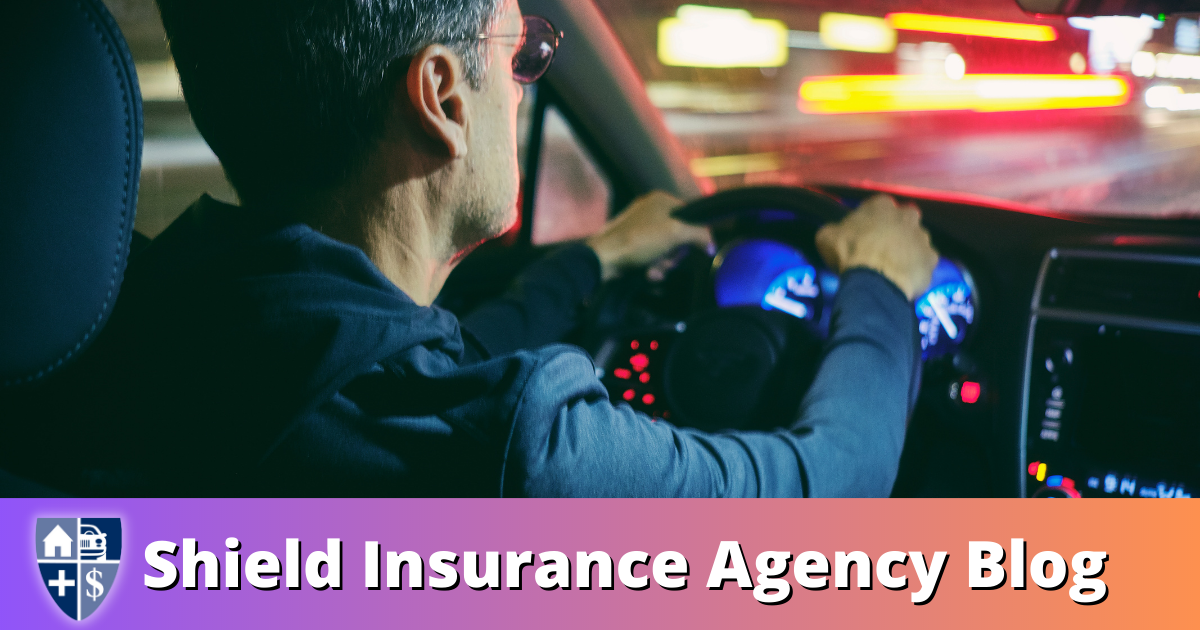
Driving at Night: How to Stay Safe

Driving at Night: How to Stay Safe

Nationwide | March 08, 2023 | Driving at Night | Auto Insurance | Start a Quote Today!

While we typically drive a quarter of the time at night, studies show that 50% of traffic deaths happen at night. [1] It doesn’t matter whether you know the road you’re driving on or not; it is always more dangerous to drive at night. With a few extra precautions, you can reduce the risk of something dangerous happening while driving at night.

Why is driving at night more dangerous?

There are several reasons why driving at night is significantly more dangerous than during the day.

  1. Compromised night vision: This is especially prevalent in drivers over 60.
  2. Fatigue: 1 in 25 adult drivers report falling asleep in the last 30 days, and many more admit to driving while sleep-deprived. [2]
  3. Rush hour: Roads get more crowded and dangerous between 4 and 7 p.m. due to drivers eager to get home after work.
  4. Impaired drivers: Drivers impaired by drugs and alcohol are more frequently on the road after dark.

Tips for driving at night in the dark

1. Be a defensive driver.

Defensive driving is utilizing safe driving strategies to address identified hazards predictably. When you drive defensively, this reduces your driving risk by anticipating situations and making well-informed decisions. [3]

2. Clean your windshield before driving at night.

Built-up grime on your windshield can increase the glare from other cars and streetlights, making it harder for you to see the road. Damaged windshields can have a similar effect, so fix any cracks before driving. [4]

3. Don’t drive while drowsy when driving at night

It’s always important to ensure you’re well-rested and alert when you’re behind the wheel. But your brain makes more sleep-inducing melatonin when it’s dark, meaning you’re more likely to get tired while driving at night. If you experience eye drooping or extreme fatigue, find a place to stop and rest for the night. [4]

4. Check your headlights.

Keeping headlights clean and lit is the key to safe night driving. If just one headlight is illuminated, it not only cuts down on your visibility but can also get you a citation from law enforcement. Double-check before driving that both headlights are on and working. [5]

5. Slow down.

It’s never a good idea to drive too fast and follow the driver in front of you too closely. This could cause an accident if they stop too suddenly. Also, the closer your headlights are, the brighter they can seem and the more distracting they can be. [5]

6. Watch out for pedestrians.

Always take extra time to watch for pedestrians on poorly lit roads. People don’t always wear safety gear, which can be incredibly difficult to see after dark. Also, make sure you’re not driving distracted, whether texting, adjusting the radio, or eating in your car. Taking your full attention off the road is a bad idea. [6]

7. Keep up with your yearly vision tests.

Stay current on eye exams to ensure your vision is at its best, especially while driving at night. If you wear glasses, ensure they are anti-reflective to reduce glare and increase visibility. [7]

8. Watch out for wildlife.

Make sure to be extra cautious, slow down, and keep an eye out for any big animals. Hitting a deer or an elk is hazardous to drivers and passengers, often resulting in thousands of dollars in vehicle damage. [8]

One of the best ways to protect yourself and your vehicle from any harm from driving at night is to ensure you have the right auto insurance.

Sources:

[1] “The Most Dangerous Time to Drive,” nsc.org/road/safety-topics/driving-at-night? (accessed Jan. 6, 2023).

[2] “Drivers are Falling Asleep Behind the Wheel,” nsc.org/road/safety-topics/fatigued-driver (accessed Jan. 6, 2023).

[3] “What is Defensive Driving?” safemotorist.com/articles/defensive-driving (accessed Jan. 6, 2023).

[4] “10 Night Driving Safety Tips You Should Know for Future Road Trips,” self.com/story/night-driving-safety-tips (Dec. 14, 2020).

[5] “Enjoy the Stars: 5 Critical Tips for Safe Night Driving,” driving-tests.org/beginner-drivers/top-5-tips-for-safe-night-driving (accessed Jan. 6, 2023).

[6] “Night Driving Tips: What You Need to Know,” idrivesafely.com/defensive-driving/trending/night-driving-tips-what-you-need-know (accessed Jan. 6, 2023).

[7] “Safety Tips for Night Driving,” verywellhealth.com/night-driving (July 12, 2022).

[8] “Watch for wildlife on highways and avoid costly collisions,” Connor Liess, cdapress.com/news/2022/nov/24/watch-wildlife-highways-and-avoid-costly-collision (Nov. 4, 2022).

Disclaimer:

The information included here is designed for informational purposes only. It is not legal, tax, financial or any other sort of advice, nor is it a substitute for such advice. The information may not apply to your specific situation. We have tried to make sure the information is accurate, but it could be outdated or even inaccurate in parts. It is the reader’s responsibility to comply with any applicable local, state or federal regulations. Nationwide Mutual Insurance Company, its affiliates and their employees make no warranties about the information nor guarantee of results, and they assume no liability in connection with the information provided. Nationwide and the Nationwide N and Eagle are service marks of Nationwide Mutual Insurance Company. © 2023 Nationwide and Shield Insurance


More exciting articles featured by Shield InsuranceAagency

Read More
What Is Power Steering Fluid?

What Is Power Steering Fluid?

Nationwide | February 22, 2023 | Power Steering | Auto Insurance | Start a quote today!

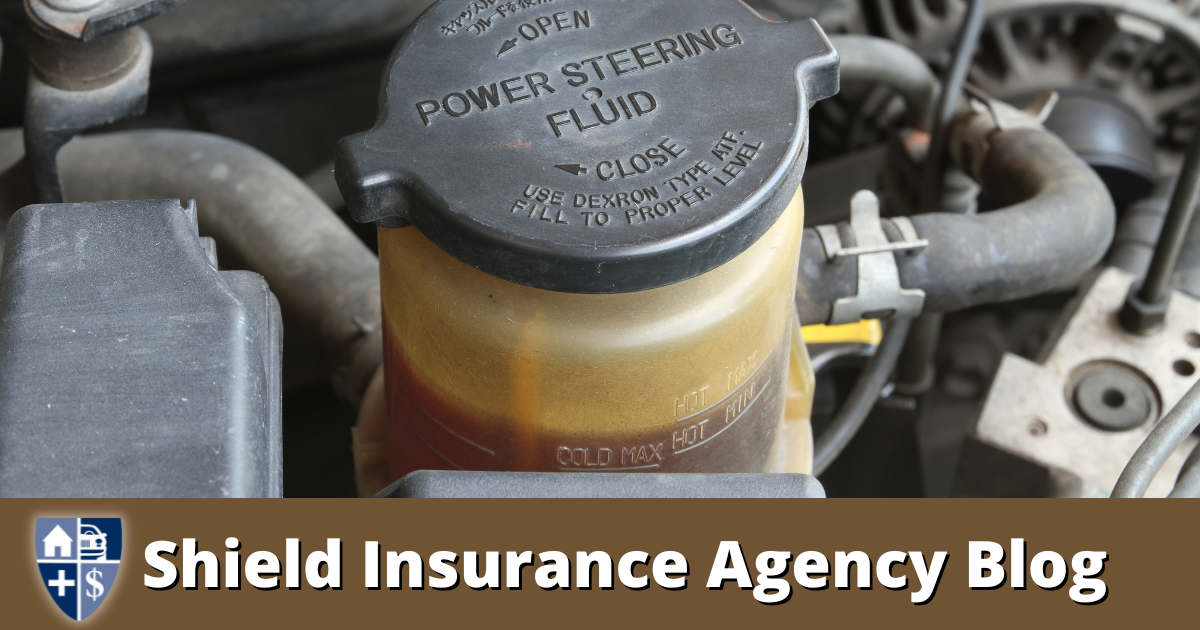
Like all fluids in your vehicle, power steering fluid plays an important and specific role in keeping your car operating at peak performance. This fluid is critical for providing the steering system with hydraulic assistance so you can turn your vehicle’s steering wheel easily. It also helps lubricate the power steering pump and the steering components. Power steering fluid even prevents corrosion. Because this fluid serves various purposes, you can see why it’s important to use the right kind. [1]

Where is the power steering fluid located?

When you’re looking for the power steering fluid under the hood, check the passenger side of the vehicle, and you should be able to spot the reservoir. The power steering fluid is usually in a white or yellow container with a black cap labeled “power steering” or “steering fluid.” [1]

How to check power steering fluid

If you hear a whining sound coming from your hood when you turn or if it’s becoming more difficult to turn, your car might be running low on power steering fluid.

Before checking your car’s power steering fluid, warm the engine to a normal operating temperature by turning the steering wheel in one direction until it stops. Next, turn the wheel all the way in the opposite direction. Repeat this process several times, then follow the steps below:

  1. Turn off the engine.
  2. Wipe the power steering reservoir and cap clean with a cloth.
  3. Check the dipstick attached to the reservoir to see the fluid level, then wipe it clean.
  4. If the fluid level is below the MIN line, add new fluid, careful not to exceed the MAX line.
  5. Examine the quality of fluid in the reservoir. [2]

What color is the fluid?

Most power steering fluid is red, amber, pink, or clear. If the fluid is lighter, it doesn’t contain any debris and is okay to use. It likely needs to be changed if it’s dark brown or foamy. [1]

What does power steering fluid do?

Power steering fluid is a hydraulic fluid used in the steering system to decrease the effort required to turn the wheels. It also lubricates the moving parts within the steering system and prevents corrosion in the power steering gear to keep the vehicle working optimally. [1]

How often do I need to replace the power steering fluid?

On average, your car needs a power steering fluid flush every 40,000 to 80,000 miles. Your recommended flush routine depends on your vehicle because the steering system and fluid needs vary by car. Check your owner’s manual for specific manufacturer recommendations. [3]

Can you drive without it?

When you drive without power steering fluid, you need to exert more force when turning the wheel, and the steering is much heavier. If you wait a long time before filling your car with power steering fluid, damage to the steering pump becomes inevitable. When the pump vanes lack lubrication, the risk of damaging the drive belt increases. The shaft and rack seal can also break down without power steering fluid. [4]

Cons of driving without fluid:

  • Noisy steering
  • Jerky or jumpy power steering
  • Difficulty turning the steering wheel
  • Stains or puddles under the vehicle
  • Locked steering wheel [5]

Types of power steering fluid

  • Automatic transmission fluid (ATF): The same fluid used for automatic transmissions can be used in some power steering systems.

  • Synthetic power steering fluid: A fluid usually engineered for specific types of cars or steering systems. Most newer vehicles use synthetic fluid created in a lab.
  • Nonsynthetic mineral power steering fluid: Mineral hydraulic fluid may be used in some instances that accept ATF. [2]

Which power steering fluid is right for your car?

No single rule applies when it comes to power steering fluids for cars. Instead, take time to review your owner’s manual, do some online research, or check with your dealership’s service department to ensure that the fluids you’re using are right for your car.

Power steering fluid substitutes

Can you use brake fluid for power steering fluid?

Using brake fluid in the power steering system will damage your car. Both fluids may have been similar in the past, but now they are very different and should only go in their designated systems. [6]

Can you use transmission fluid for power steering fluid?

It gets a little trickier when deciding if you can use automatic transmission fluid instead of power steering fluid. You want to ensure you’ve done your homework on this one before you consider swapping out fluids. While some systems were designed to use automatic transmission fluid, others require that you use only steering wheel fluid.

Before doing car maintenance on your own, check your owner’s manual to see what the car manufacturer recommends. It should specifically state in the manual which fluid to use. Some models require specific fluid types, such as synthetics, so it’s worth taking the time to track down the correct information. If you can’t find your owner’s manual, contact a car mechanic or car dealership and talk to the service department. [7]

Using the wrong type of fluid can cause damage to some seals, plastic, and rubber components inside your vehicle. And, if it doesn’t mix well with the fluid you’re adding it to, it could create an acidic reaction. [8]

Adding power steering fluid isn’t the only important maintenance task to perform on your car. Use this maintenance checklist to keep up with the various time-sensitive checks and changes your vehicle needs to run at its best.

Sources:

[1] “What Is Power Steering Fluid? Everything You Need to Know,” uti.edu/blog/automotive/power-steering-fluid (Mar. 29, 2021).

[2] “Power Steering Guide: Everything You Need to Know,” Chris Hardesty. kbb.com/car-advice/power-steering-guide (Oct. 12, 2021).

[3] “Do I Need a Power Steering Fluid Change?” chapelhilltire.com/do-i-need-a-power-steering-fluid-change (accessed Dec. 22, 2022).

[4] “Is it safe to drive a vehicle without power steering fluid?” cfmautopro.ca/blog/is-it-safe-to-drive-a-vehicle-without-power-steering-fluid (Jan. 7, 2021).

[5] “What Happens If You Drive The Car With Low Power Steering Fluid?” Tsukasa Azuma. carfromjapan.com/article/car-maintenance/what-happens-if-you-drive-the-car-with-no-power-steering-fluid (May 17, 2021).

[6] “Can I Use Break Fluid in Power Steering? What Will Happen?” drivinglife.net/brake-fluid-in-power-steering (July 2019).

[7] “How Much Does a Power Steering Flush Cost?,” gobdp.com/blog/power-steering-fluid-car/ (accessed Dec. 22, 2022).

[8] “Power Steering Fluid Alternatives,” Richard Reed. thevehiclelab.com/power-steering-fluid-substitute/ (Aug. 31, 2021).

Disclaimer:

The information included here is designed for informational purposes only. It is not legal, tax, financial or any other sort of advice, nor is it a substitute for such advice. The information may not apply to your specific situation. We have tried to make sure the information is accurate, but it could be outdated or even inaccurate in parts. It is the reader’s responsibility to comply with any applicable local, state or federal regulations. Nationwide Mutual Insurance Company, its affiliates and their employees make no warranties about the information nor guarantee of results, and they assume no liability in connection with the information provided. Nationwide and the Nationwide N and Eagle are service marks of Nationwide Mutual Insurance Company. © 2022 Nationwide and Shield Insurance Agency


More fascinating articles featured by Shield Insurance Agency

Read More
Your Guide to Driving in a Roundabout

Your Guide to Driving in a Roundabout

Nationwide | March 15, 2023 | roundabout | Auto Insurance | Start your quote today!

Even though roundabouts are more common in European countries, they are growing in popularity everywhere in the United States, especially in cities that want to increase traffic flow and prevent clogs at popular intersections. If you haven’t driven through a roundabout before, it can be confusing. That’s why it is essential to familiarize yourself with them so you can move around them safely. [1]

What is a roundabout?

A roundabout is a circular-shaped intersection where drivers move counterclockwise around a center point. There aren’t any traffic signals or stop signs. Instead, every driver yields at the entry of the roundabout to other traffic. Once you’ve entered the roundabout, you may enter the intersection and exit at your desired street. The Federal Highway Administration studied roundabouts and found they can increase traffic capacity by as much as 50 percent compared to more traditional intersections. [2]

What are the differences between roundabouts and traffic circles?

Although most people believe roundabouts and traffic circles are the same, the two have distinct differences. Traffic circles often have stop signs or traffic signals within the circle’s intersection. To enter the traffic circle, vehicles enter in a straight line. Vehicles in the circle have the right of way, while vehicles approaching and attempting to enter must yield to vehicles already in the circle. Traffic circles are designed to allow vehicles to enter and circulate at higher speeds, and they are typically much larger than roundabouts.

The roundabout is designed to provide a more positive direction to motorists as they approach, enter, and exit the roundabout. The entrances are tapered, so the vehicles don’t enter the roundabout at 90 degrees. Traffic speeds are lower compared with a traffic circle. In a roundabout, the entry points are yield-controlled, which prevents traffic from locking up and allows the free flow of vehicles. [3]

Top 7 tips for driving in a roundabout

  1. Slow down. Pay close attention to the change in speed limit around the roundabout and decrease your speed when approaching the entrance. Going slower allows you more time to make decisions and be better prepared to yield to other road users.

  2. Yield. Look around as you approach the roundabout. Yield to the drivers already in the roundabout and pedestrians and bicyclists in the surrounding area.


  3. Choose the right lane. If there is more than one lane, use the left lane to turn left, the right lane to turn right, and all lanes to go through, unless directed otherwise by signs and pavement markings. Make sure to use your indicator to let all cars in the roundabout know where you are going.
  4. Don’t drive next to large vehicles. Always assume trucks and larger vehicles need all available space. Therefore, do not pass them or drive close to them.
  5. Do not stop. Once you’ve entered the roundabout successfully, do not stop. If you miss your exit, continue driving in the roundabout until you have circled and reached your exit again.
  6. Stay in your lane. Do not change lanes within the roundabout. Instead, stay in the lane that you entered and use your right turn signal to indicate your intention to exit.
  7. Let emergency vehicles pass. Make sure to clear the roundabout to allow emergency vehicles to pass. [1]

Benefits of using a roundabout

Compared with other types of intersections, roundabouts have demonstrated many benefits. Roundabouts:

  • Improve safety: Slower speeds are generally safer for pedestrians. In addition, head-on, and high-speed right-angle collisions are virtually eliminated.
  • Reduce congestion: They make traffic efficient during peak hours and other times. Typically, there’s less of a delay.
  • Reduce pollution and fuel use: Fewer stops and hard accelerations mean less time idling.
  • Save money: There’s no signal equipment to install and maintain. Smaller roundabouts may require less right-of-way than traditional intersections. Often less pavement is needed. [4]

What else should you know about roundabouts?

Studies by the Federal Highway Administration suggest that roundabouts can improve traffic capacity by 30% to 50%. They can reduce overall collisions by 37%, injury collisions by 75%, fatal collisions by 90% and pedestrian collisions by 40%. Although the public tends to fear roundabouts when they are first introduced, the approval rate doubles once drivers get used to them. If you are concerned about your ability to successfully navigate a roundabout, consider taking an adult driver’s ed lesson to refresh your skills. [1]

With all this knowledge, now you can take to the road and successfully navigate roundabouts with ease. While on the road, ensure that your vehicle and you are protected with auto insurance.

Sources:

[1] “What Is a Roundabout and How Do I Drive Through One?” driversed.com/trending/what-roundabout-and-how-do-i-drive-through-one (Nov. 16, 2021).

[2] “How to Drive in a Roundabout: A Helpful Guide,” drivesafeonline.org/traffic-school/how-to-drive-in-a-roundabout (March 24, 2020).

[3] “Traffic Circles & Roundabouts,” Gordon Meth, robsonforensic.com/articles/traffic-circles-roundabouts-expert-article (June 4, 2013).

[4] “Roundabouts: A Safer Choice,” highways.dot.gov/sites/fhwa.dot.gov/files/2022-06/fhwasa08006.pdf (accessed Feb. 2, 2023).

Disclaimer:

The information included here is designed for informational purposes only. It is not legal, tax, financial or any other sort of advice, nor is it a substitute for such advice. The information may not apply to your specific situation. We have tried to make sure the information is accurate, but it could be outdated or even inaccurate in parts. It is the reader’s responsibility to comply with any applicable local, state, or federal regulations. Nationwide Mutual Insurance Company, its affiliates, and their employees make no warranties about the information nor guarantee of results, and they assume no liability in connection with the information provided. Nationwide and the Nationwide N and Eagle are service marks of Nationwide Mutual Insurance Company and Shield Agency. © 2023


More Blogs by Shield Insurance Agency

Read More
When a Car Recall covers your auto.

When a Car Recall includes your auto.

Nationwide | January 27, 2023 | Car Recall | Auto Insurance | Start your quote today!

A car recall can hit home, but the process may be relatively painless.

It can be quite unsettling to discover that your car has been recalled. And it’s happening more than ever: There were over 400 recalls in the U.S. in 2022 according to the National Highway Traffic Safety Administration (NHTSA). Recently, the NHTSA issued a recall on Takata airbags, one of the largest and most complex safety recalls in U.S. history, affecting approximately 47 million vehicles. Visit NHTSA for details and see if you’ve been impacted. [1]

“With so many new cars on the market every year, the chance of yours being recalled at some point during its life span is pretty good,” says consumer auto expert Kristin Varela of Cars.com.

What is a car recall?

For starters, car recalls can result from a number of events. Car manufacturers will put their products through multiple tests and may issue a recall based on subsequent findings. NHTSA can also ask for a recall after investigating a number of complaints from owners. If your vehicle is subject to a recall, don’t panic; it doesn’t necessarily mean that the car has a defect. Sometimes a recall is intended to check for potential defects, Varela says.

“Recalls are issued because the defect or possible defect might make the vehicle unsafe in some way,” she says. “You don’t have to wait to be contacted by mail, which happens 2 or 3 months after a recall is announced. After all, chances are that you’re transporting your most precious cargo: your family. It’s always better to be safe than sorry.” To stay connected, NHTSA provides recall notifications and updates. You can sign up there to receive notifications via email or have alerts sent directly to your phone through NHTSA’s Safer Car app.

What happens if your car is recalled?

The recall letter should have instructions on how to proceed. Typically, you will be advised to take your vehicle to an authorized local dealer to conduct a maintenance check for defects, update software or replace parts. Make sure to call and set up an appointment beforehand. 

Is there a cost to car recall?

For any recall, defective parts are replaced at no cost to the owner. As for anything else, that depends upon the manufacturer in question. However, automakers have been known to provide free rentals, taxi reimbursements, and even the free pickup and return of the vehicle in question.  

In addition to paying attention to vehicle recalls, having the right auto insurance is another safety essential. Learn about Nationwide’s available car insurance coverage options today. 

Sources:

[1] “Automakers With The Most Recalls In 2022,” carpro.com/blog/automakers-with-the-most-recalls-in-2022 (Jan. 5, 2023)

Disclaimer:

The information included here is designed for informational purposes only. It is not legal, tax, financial or any other sort of advice, nor is it a substitute for such advice. The information may not apply to your specific situation. We have tried to make sure the information is accurate, but it could be outdated or even inaccurate in parts. It is the reader’s responsibility to comply with any applicable local, state, or federal regulations. Nationwide Mutual Insurance Company, its affiliates, and their employees make no warranties about the information nor guarantee of results, and they assume no liability in connection with the information provided. Nationwide and the Nationwide N and Eagle are service marks of Nationwide Mutual Insurance Company and Shield Agency. © 2023


Visit more Shield Insurance Blogs

Read More
How to use car wax

How To Use Car Wax

Nationwide Blog | March 22, 2023 | Car Wax | Auto Insurance | Start A Quote Today!

If you just bought a new car or had it painted, you want to keep it looking new for as long as possible. Waxing your car with car wax can be very beneficial to maintain that fresh look.

What is Car wax? And what does car wax do?

Car wax, or automotive wax, can be natural or synthetic and is designed to protect the body parts of a vehicle and enhance the paint’s shine. [1]

Waxing your car is a great way to keep it looking sharp, but did you know it has many more benefits? In addition to giving your car a beautiful shine, waxing helps by:

  • Protecting the paint from airborne contaminants and the elements. By forming a protective coat, it prevents corrosive elements (such as salt or tar) and bugs from becoming embedded in your paint.
  • Preventing paint chipping. It also slows the effects of smog, wind, rain, and sun on your finish.
  • Filling in scratches. While you can’t remove minor scratches from your car by waxing, you can help make them less noticeable.
  • Expediting the car-washing process. Without a coat of wax, it’s harder to remove impurities like bugs, sap, and other unwanted substances that can collect during your daily drive.

What are the different types of car wax?

Waxing your vehicle will make it shine and protect the finish from various environmental hazards, mainly birds, tree droppings, and pollutants. There are plenty of car wax types on the market; here are the pros and cons of each. [2]

Liquid car wax

Liquid wax is the best for cleaning, gloss, and durability, but it’s somewhat challenging to apply. Some liquid waxes are also slightly abrasive, which could damage your car’s finish.

Paste waxes

Paste waxes are very easy to apply, but they tend to lose their luster sooner than liquid waxes. It may also contain abrasive components, so be careful when applying it to your car.

Spray waxes

Spray waxes work well for the paint on newer cars and are the quickest to apply, but they do not last as long as a liquid wax. In addition, spray waxes are typically nonabrasive.

Check with the dealership where you purchased your vehicle or the shop that painted it to get recommendations on which type of wax would be best for your vehicle’s finish and the environment you will be driving in.

How often should you use car wax?

To reap the benefits of waxing, you’ll need to maintain a regular schedule. Waiting until it looks like a fresh coat of wax will make your vehicle more vulnerable to small chips and fading paint.

Just as you have a regular maintenance schedule for your engine, it’s essential to have a regular schedule to maintain the exterior. How often you wax can depend upon several factors, including:

  • How often you drive your vehicle
  • Whether it’s parked in a garage or out in the open
  • The type of wax you use

If you want that fresh-from-the-showroom-floor look, some experts recommend you wax your car about once a month. Some of the newer synthetic waxes on the market claim they can keep a showroom-worthy shine for up to a year; others say every three months is sufficient.

One way to tell it’s time to wax your car is to see if water beads on the surface when it’s wet. If not, it’s time for a new coat of wax. [3]

How to properly wax a car

The easiest way to get a super shine is to go to a car wash that provides a professional wax service. But you can also do it yourself and get fantastic results. An electric polisher will make the job easier and faster, but you can also do it by hand and get a beautiful finish.

How to Wax a Car by Hand

  1. Wash your car.
  2. Apply the appropriate kind of wax.
  3. Work in sections and rub in the wax using polishing pads. [4]

How to Wax a Car with a Buffer

  1. Wash your car.
  2. Apply the appropriate kind of wax for a mechanical buffer.
  3. Buff in the wax, being sure to follow the instructions for your mechanical buffer. [4]

Car Waxing Tips

Keep these tips in mind for the best results:

Prep for your wax with clay

A clay bar is used as part of the cleaning process before waxing. Even after a thorough wash, your vehicle will still have some gunk embedded in the finish — which is where clay bars come in. Used with a lubricant, a clay bar grabs these particles out of the finish. As with the waxes, there are various levels of abrasiveness with clay bars, and you need to make sure you use one suitable for your vehicle’s finish.

Once you have “clayed” your vehicle, you can apply a fresh coat of wax to keep other contaminants out. While waxing cannot make your old car look new, it can protect the finish of a new or newly painted car for years to come.

Always wax your car in the shade

Try to wax your car under a protective cover, such as a carport, tent, or other structure. On a sunny day, your car can become hot, and when you apply wax to the hot surface, the wax will dry quite quickly. This makes it more difficult to remove.

Another reason to wax undercover is the possibility of bad weather. The wax can’t adhere properly to the surface of a wet car and can create a sloppy mess. It can also run off the body of the car and get on the molding and plastic parts, which can be a pain to remove. [5]

Apply car wax to small sections

Complete each section before moving on to the next to avoid having the wax dry. Adding more wax will not give you a better shine; it will just make it harder to buff the wax off. If you want more shine, add another coat, but check the label to see how long the first coat should be allowed to dry before applying the second one.

Make friends with microfiber

These are the best towels for polishing your car because they don’t leave behind lint and are great for buffing. Be sure to have plenty of towels on hand, so you’re not using a wax-caked towel.

Use a soft brush for gaps and molding

Keeping a soft brush handy while waxing your car can help get wax off molding and out of cracks. You can buy these brushes at most auto parts stores, which are typically inexpensive. Removing wax from a car’s molding after it’s dry can be tricky, and sometimes the wax will leave permanent staining. Instead, use a soft brush to remove wax from moldings or cracks before it dries to help avoid permanent staining.

Use a random orbital buffer to car wax

Waxing your car with a mechanical buffer can save time and effort, making waxing your car a breeze. Many people prefer rotary buffers; however, they spin in a circular motion at a high velocity, which can cause permanent “burn” marks from the edge of the pad digging into the paint. Rotary buffers can also cause swirl marks due to the pad becoming dry and making micro scratches in the paint.

To help prevent this, use a random orbital buffer, which moves the pad in a random pattern rather than a circular one. This results in an even application of wax without the risk of creating damaging marks. Both the rotary and random orbital buffers are similarly priced. [5]

How long does car wax last?

In each case, the time and care you spend waxing your vehicle will translate into how long the job will last. If you are willing to spend the time and elbow grease, you can expect your shine to last up to 3 months. A general rule of thumb is to wash your vehicle weekly and wax it every 8 to 12 weeks. [3]

Waxing your vehicle is a great way to ensure it stays shiny and looks great. Waxing helps protect your car’s paint from damaging sun rays, abrasive dirt, and chemicals in the rain and snow. Proper, regular waxing can extend the life of your car’s paint and help keep your vehicle looking sharp long into the future.

For more tips on keeping your car in mint condition, discover cleaning tools every car owner should have.

Sources:

[1] “The Truth About Car Wax: 9 Things You May Have Overlooked!” avalonking.com/blogs/guides/the-truth-about-car-wax (March 28, 2019).

[2] “How Car Wax Protects Your Car’s Finish,” turtlewax.com/blogs/how-to/how-car-wax-protects-your-car-s-finish (accessed Dec. 8, 2022).

[3] “How Often Should You Wax Your Car?” Jessica Shea Choksey, jdpower.com/cars/shopping-guides/how-often-should-you-wax-your-car (Dec. 18, 2020).

[4] “How to Wax a Car by Hand or with a Buffer,” Chloe Murphy, leasefetcher.co.uk/guides/car-maintenance/how-to-wax-car (Aug. 26, 2021).

[5] “How to Wax Your Car with Amazing Results: 7-Step Guide,” driving-tests.org/beginner-drivers/how-to-wax-your-car/ (accessed Dec. 9, 2022).

Disclaimer:
The information included here is designed for informational purposes only. It is not legal, tax, financial or any other sort of advice, nor is it a substitute for such advice. The information may not apply to your specific situation. We have tried to make sure the information is accurate, but it could be outdated or even inaccurate in parts. It is the reader’s responsibility to comply with any applicable local, state or federal regulations. Nationwide Mutual Insurance Company, its affiliates, and their employees make no warranties about the information nor guarantee of results, and they assume no liability in connection with the information provided. Nationwide and the Nationwide N and Eagle are service marks of Nationwide Mutual Insurance Company. © 2022 Nationwide

Check out more blog articles presented by Shield Insurance Agency

Read More
Scooter safety tips

Scooter safety tips

Foremost | Scooter Safety | Shield Insurance | Start a quote today!

With increasing gas prices it’s hard not to notice the spiking trend of people choosing scooters as alternate transportation. Whatever make or model you choose to fit your style, you can’t deny the money-saving and environmental effects riding a scooter has over driving a 2-ton motor vehicle that only gets 20 miles to the gallon.

A growing problem with having more people on scooters is how to safely share the road. State legislation varies on scooters; some states equate scooters with bicycles, in-line skates, and skateboards, while other states put scooters in the same category as motorcycles, requiring helmets and regulating where scooters can be ridden. Check your state’s DMV Web site for the appropriate laws and licensing rules for your state.

Regardless of where you live, scooters are most likely sharing the road with vehicles that significantly outweigh them and can easily overtake them. By using common sense and some very simple safety tactics, scooter riders can effectively, and safely, share the road with other vehicles.

Scooter safety tip: Wear a helmet

Even if your state does not require you to, studies show helmets significantly minimize head injuries if an accident occurs.

Scooter safety tip: Use your lights

Always turn on your headlight when you’re riding your scooter even during the day, especially if it’s raining, and of course always in the evening. Make sure you can be seen by other cars.

Scooter safety tip: use turn signals

Just like in a car, you need to let people know where you are going. In addition to a signal light, it’s also a good idea to use hand turn signals that motorcyclists and bicyclists use when they are sharing the road with cars. Based on U.S. standards, for a left turn, extend your left arm straight out in the direction of the turn, parallel to the road. For a right turn, extend your right arm straight out in the direction of the turn, parallel to the road.

Obey speed limits and road markings

Obey all posted limits and follow lane markings. Don’t attempt to make a right turn by coming up next to a vehicle on the shoulder, unless there is a lane. You could easily be in a car’s blind spot and be hit if they turn right as well and can’t see you.

Scooters are a fresh alternative to getting around town while saving money and the environment. Riding scooters present challenges that any motorist faces when sharing the road with vehicles of all sizes and speeds. Keep your head about you and make sure you put safety first when taking your new scooter out for a spin.

Looking for Scooter Insurance?

Foremost offers scooter insurance on all scooter makes and models and offers coverages such as:

  • Physical Damage and Liability
  • Total Loss Replacement Coverage
  • Towing and Roadside Assistance
  • Safety Apparel and Optional Equipment when Physical Damage coverage is purchased.

More blogs by Shield Insurance Agency

Read More
Top Five Uses for a Trailer Hitch

Top Five Uses for a Trailer Hitch

Foremost | by Rachel Neva | Trailer Hitch | Auto Insurance | Click here to start a quote today!

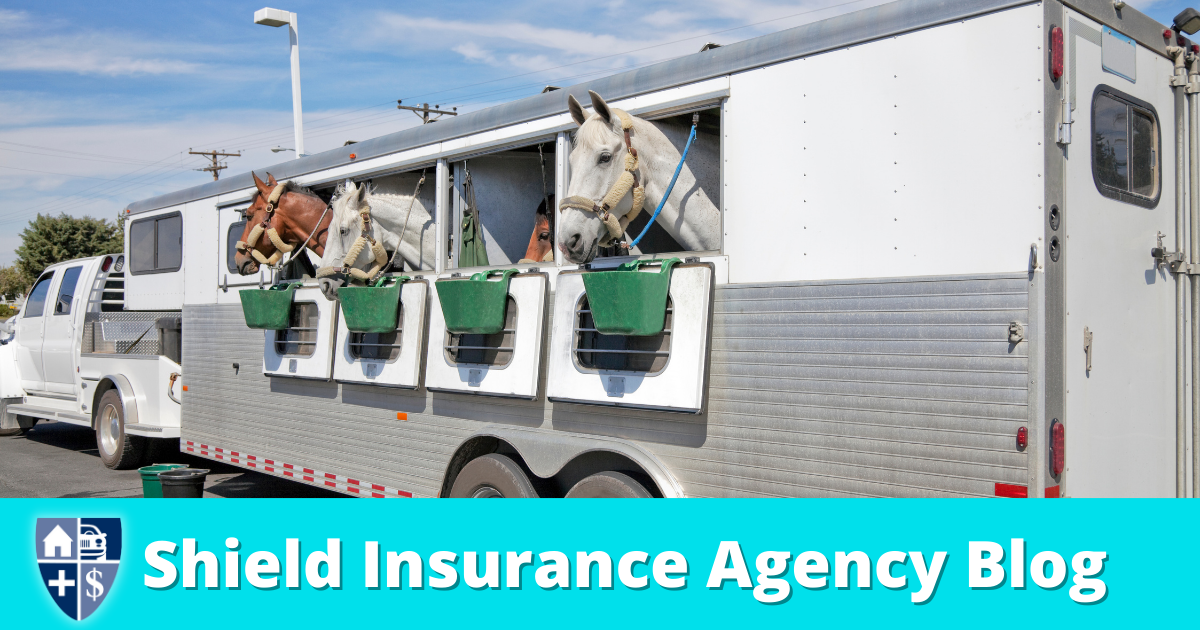
A trailer hitch just might be the most inventive way to add more cargo space, value, and extra opportunities for fun to your vehicle. While some vehicles like trucks and SUVs may come with a factory-installed hitch or tow package, it’s very common for drivers to install a hitch or tow package to their vehicle as an after-market accessory.

Wondering what the difference between a hitch and a tow package is? Depending on what you plan to tow, you may need more than a standard hitch with a trailer ball attached to your vehicle. In addition to the tow hitch itself, a tow package (especially if it’s factory-installed) may include things like a wiring harness and circuitry to power the lights and accessories on a trailer, heavy-duty suspension and brakes to handle the extra weight, an enhanced engine and transmission cooling system, larger battery and alternator to help power your vehicle and what you’re towing with ease, and additional driver-assistance systems that can help with overall spatial awareness while towing.

Depending on what you’re towing and where you’re going, this article provides some helpful information if you’re deciding between a factory-installed tow package or an aftermarket tow package for your vehicle.

If you’re thinking about adding a hitch to your vehicle … here are our top five uses for a trailer hitch:

  • Hitch-mounted bike rack — If you like to hit the mountain bike trails, go on scenic family bike rides in your area, or take bikes along on family vacations, a hitch-mounted bike rack is an easy way to transport bicycles of all kinds. While this type of bike rack extends the overall length of your vehicle (something to be aware of when parking), loading and unloading bikes can be much easier than bike racks that are mounted on a vehicle’s roof.
  • Utility trailer — A small utility trailer can be ideal for many towing tasks such as hauling plants and supplies for a garden or landscape project (and any debris resulting) or moving large items that won’t fit in your vehicle, like furniture or appliances.
  • Travel trailer — From pop-up camper trailers to luxury, fifth-wheel travel trailers, there’s a camping travel trailer to fit almost every kind of person who enjoys camping and exploring the great outdoors.
  • Boat trailer — If you don’t live on a lake or body of water but want to take nearly any kind of boat — a small fishing boat, a ski or wake boat, a pontoon or sailboat – out on the water, you’ll need a trailer that’s specific to the boat. Unless you have a boat slip at a marina that offers haul-out and storage service, you’ll likely need a trailer for your boat at some point.
  • Off-road vehicle trailer — There are many types of off-road vehicle trailers from simple, utility-type trailers for things like ORVs and off-road motorcycles to enclosed cargo-type trailers for ORVs and snowmobiles. If you like to explore new trails on your ORV or snowmobile, you may want to invest in a trailer to haul them with you wherever you go.

If you add a trailer hitch to your vehicle and have questions about insuring the things that you’ll tow, give Shield Insurance A call to shop for coverages that can help you protect the things you tow.


More great articles by Shield Insurance Agency

Read More

Helping turtle friends cross the road

Foremost | by Niki King-Todd | Turtle | Start a Quote with Shield Insurance | Auto Insurance

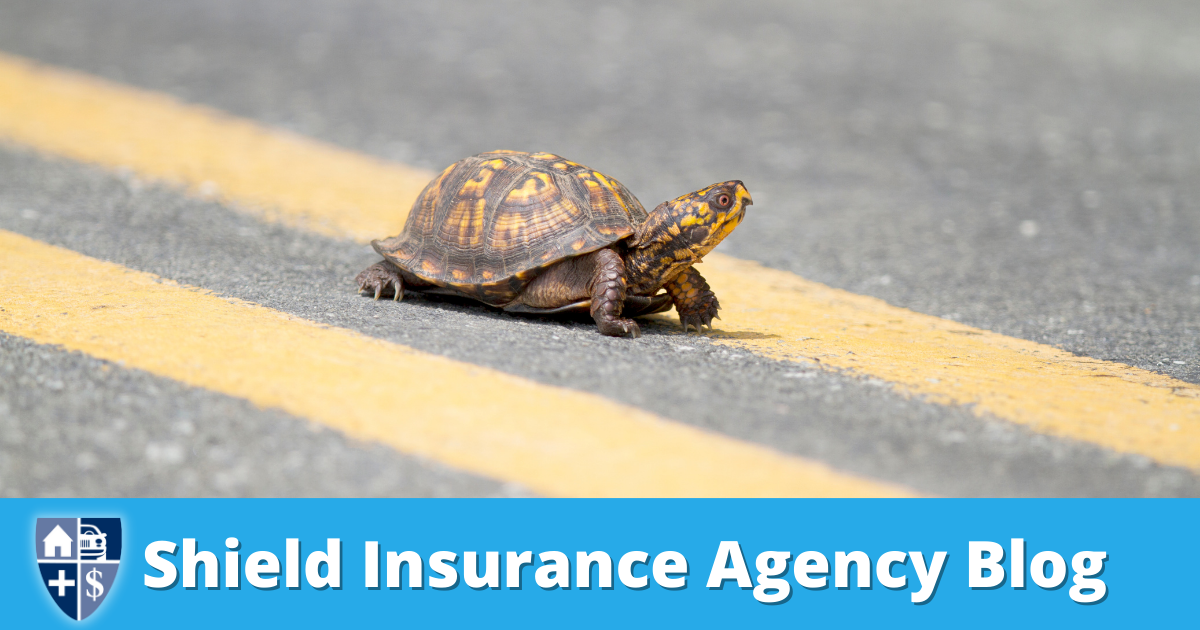
Did you know that May 23 is World Turtle Day? It’s all about raising awareness for turtles and encouraging people to help them survive. Participating can be as simple as helping a turtle cross the road.

Most turtles begin to move as the weather warms. This may be for mating, nesting or many other reasons. Of course, turtles move much slower than cars (and don’t understand human traffic laws), which makes crossing the road incredibly dangerous. To celebrate and protect all of the turtles out there, here are some tips for safely helping them reach their destination!

Turtle Safety First

If you see a turtle on the road, remember to use the correct signals when pulling over. Keep your flashers on to warn oncoming vehicles and always check your surroundings.

Moving the Turtle

If the turtle is moving at a decent pace, you may be able to stand nearby and watch it cross. If the turtle is stagnant (or if you are uncomfortable touching the turtle), you may use a blunt object to help push it. Make sure the object isn’t sharp, and be gentle! This will be your best option for moving a snapping turtle, they may bite if you use your hands.

Picking up the Turtle

Most turtles will hide in their shells if they are frightened, which makes it easier for you to pick them up. Place both of your hands behind the front legs and towards the back legs. The turtle may try to kick, so don’t hold it up high – you don’t want to drop it! Also, it’s very important to never pick up a turtle by the tail, as this can severely injure them.

Car Mat

Another option for moving the turtles is using a car mat. This works best for larger turtles that you may not be able to lift. You can allow the turtle to walk onto the mat, or help gently push it onto the mat. Be sure to carry the mat low to the ground in case the turtle falls off.

Going in the Same Direction

Be sure to move the turtle in the same direction it was trying to go. If you place it back where it was coming from, it will most likely turn around and return to the road.

Do Not Take it with You

Turtles and other wildlife are meant to stay in the wild. No matter how cute turtles can be, resist the temptation to bring them home. When taken out of their home areas, they will most likely try to go back. They are not pets so they need to be in their natural environment.

Injured Turtles

An injured turtle may look dead, so if you are unsure as to whether or not the turtle is injured, there are a few tricks you can try. Try gently touching the back of their foot, or touch the corner of its eye to test for a reaction. The turtle may try and kick, or move its head or eyes. If a turtle has a crack in its shell, it might drown if it returns to the water. If the turtle you find has a damaged shell, or seems seriously injured, contact a professional. Many veterinarians, animal shelters and wildlife rehabilitation centers will treat them for free.


More great articles by Shield Insurance Blog

Read More
Five coolest places to travel in the U.S.A.

Five coolest places to travel in the U.S.A.

Foremost Creative Team | travel | Start a Quote Today! | Shield Insurance

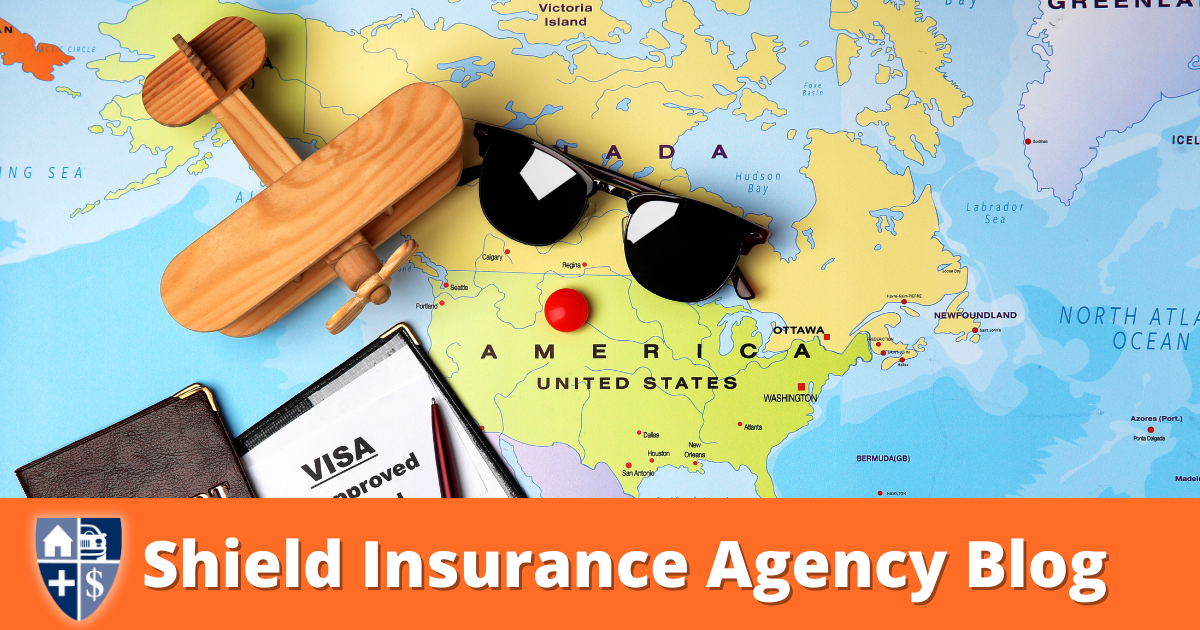
Ah, summer. It’s the time of year the whole country comes alive and beckons us to get on the road and experience it. That’s why we put together this list of what I consider the five most incredible places to visit in the U.S. If you’ve never been to these places, now is the time to pack those bags, explore and enjoy your summertime travels!

Travel to New York City

You have to experience the “Big Apple” at least once. It has everything you could ever want from a big city—museums, Broadway shows, restaurants with every type of food you can imagine, specialty boutiques, and high-end shops. Plus, you need to see the Statue of Liberty in person and check out those neon lights of Times Square. Make Central Park one of your main destinations. Remember to see the amazing works of art at the Met and the Guggenheim. This is a city that never sleeps with endless things to try and taste.

Travel San Francisco

The home of the Golden Gate Bridge offers gorgeous sights across its renowned hilly landscape and so many fun things to do, like riding cable cars, checking out Alcatraz Island, strolling along Fisherman’s Wharf and driving up the famously steep and crooked Lombard Street. Just a few miles north, you can leave the hustle and bustle behind to visit the towering Redwood trees in Muir Woods. Or for some tranquility within the city, plan a picnic at Golden Gate Park and see lakes, museums, monuments and the Steinhart Aquarium. For another great view of the city, check out Strawberry Hill in the middle of the park.

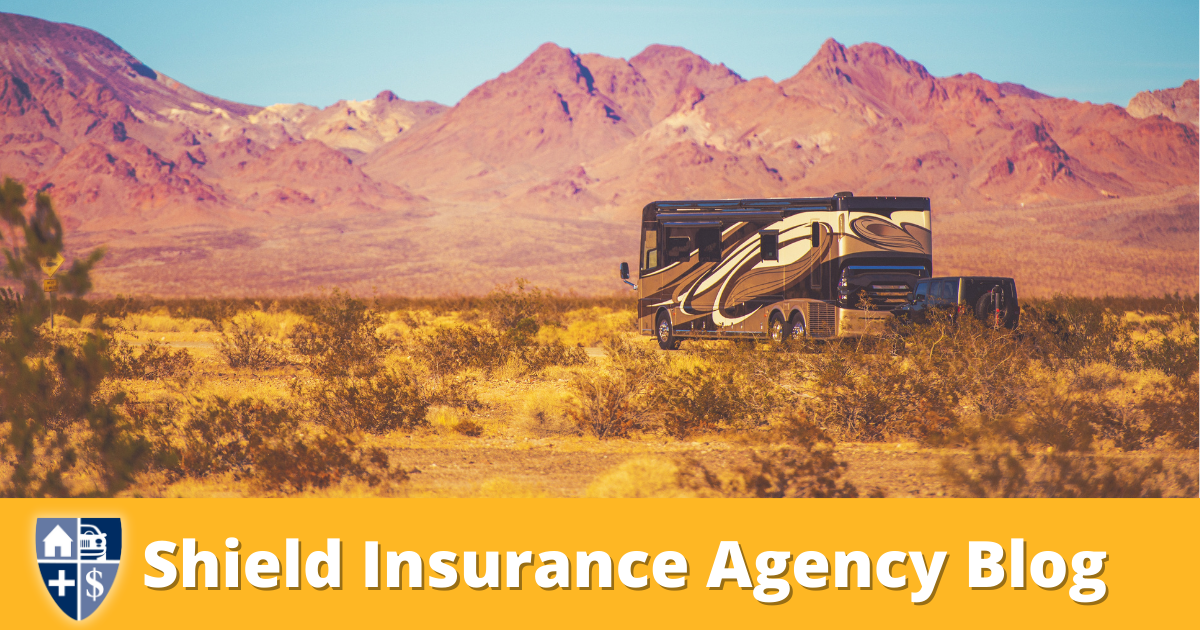
If you’ve never been to these places, now is the time to explore! If you’re traveling by car, motorcycle or RV, contact your local Foremost agency to get the right coverage for your ride!

Travel to Grand Canyon

If it’s the natural beauty you’re looking for, you’ll definitely find it at the Grand Canyon in northern Arizona. If you weren’t seeing it with your own eyes, you’d swear it was a painting in glorious shades of red and orange. Nothing can top the magnificent views as you gaze through the canyon over the Colorado River. Visit the South Rim where you’ll find Grand Canyon Village and the Bright Angel Trail. And if you’re into roughing it in the wilderness, you’ll want to head to the North Rim for backcountry camping and some serious hiking.

Yellowstone

Yellowstone has 2.2 million acres of paradise for you to explore—crystal blue lakes, tumbling waterfalls, majestic mountains, hot springs, abundant forests, open meadows, and active geysers. There are so many trails, it could take weeks to travel them all. Check out everyone’s favorite spots like Old Faithful, Yellowstone Lake, and Mammoth Hot springs. Then visit lesser-known areas like the West Thumb Geyser Basin, the Lewis River Channel, and the Dogshead Loop. You will likely be treated to sights of wildlife during your journey since over 60 types of mammals call the park their home. You could see buffalo, elk, coyotes, badgers, and perhaps a few bears along the way.

Washington D.C.

Our country’s capital has earned its place on the list of exciting East Coast vacation destinations. Not only can you soak up loads of our country’s history by checking out the classic attractions like the White House, Lincoln Memorial, and the Washington Monument, but you can also enjoy the many hip restaurants, cafes, clubs, and boutiques. Endless opportunities abound to learn about our past at museums like the Smithsonian, the U.S. Holocaust Memorial Museum, the Newseum, and the Mount Vernon Estate. It’s impossible to leave the city without feeling a deeper connection to our roots and pride in our home country.

Now that you know where to go, get those bags packed and enjoy your summertime travels!


Read More
Top eight towing mistakes people make

Top eight towing mistakes people make

The Foremost Creative Team | towing mistakes | Auto Insurance | Start a Quick Quote here!

The idea of hauling something huge behind your truck or SUV may sound like a fun adventure, but for those who aren’t familiar with the complexities of towing, it can actually be pretty intimidating! According to Complete Trailers LLC, there are eight common mistakes people make while towing. To avoid costly damages, read this list before you hitch and go:

Towing Mistakes: Overworking Your Engine

The number one towing mistake people make is overworking their tow vehicle. Overextending your vehicle can start a landslide of engine problems. This mistake could lead to a meltdown on the side of the road and potentially require a brand-new transmission. To avoid this, keep an eye on your pressure, temperature gauges, and exhaust gas temperature gauges.

Towing Mistakes: Weight Distribution Bars

If you don’t have your weight distribution bars set up right, you’re bound to have your vehicle and trailer bouncing from each other. Your ride will be bumpier than usual and the hitch and frame can be damaged from this too. And when it comes to weight distribution bars, bigger is not better. The bars with chains are tunable and come in various strengths and weights. If you properly load the correct bar size, they’ll be parallel to the trailer’s frame.

Towing Mistakes: Checking or Maintaining Brakes

Brakes are the most essential and overlooked safety system. Trailer brakes don’t self-adjust like the brakes on your tow vehicle. In fact, they must be manually adjusted by you. Additionally, trailer brakes wear out just like any other brake does, so be sure to check for wear and tear regularly.

Poorly Loaded Vehicles us a towing mistake

It’s crucial for safety and damage prevention to always put a balanced load on your trailer. Read up on weight restrictions and follow them closely because if you don’t, your tow vehicle won’t last very long.

Wrong Ball/Ball Mount

Make sure that you have the right ball and mount for your trailer. There are three different sizes of balls: 1 7/8 inches, 2 inches, and 2 5/16 inches — each with a different weight rating. Using the wrong mount or ball will pitch your trailer up or down on your axles and it also puts extra stress on your brakes and tires, which eventually reduces your braking ability. If you use multiple trailers, carry multiple mounts.

“Racing” While Towing

We know how exciting it is to get to a destination, but remember, slow and steady wins the race! Speeding up or down a grade is the last thing you want to do because it’ll ruin the longevity of your tow vehicle.

Low-Pressure Tires

If you maintain the right tire pressure on both your tow vehicle and trailer, you’ll have even tire wear, which means you’re less likely to have blowouts from overheating. This scenario is especially dangerous when it happens on your rear trailer tires, so make sure to pay special attention to them. Tires degrade more quickly when not in use. Before you hitch and go, remember to always inspect your tires and pressure.

Not Lubing Your Components

Like any well-oiled machine, taking preventative measures with your trailer and tow vehicle goes a long way. Axles and all pivot points where steel meets steel (or rubber bushings meet steel) should be greased.

Shield Insurance Agency wants you to travel and tow safely.


More great articles are at the Shield Insurance Agency Blog

Read More