Insurance Rates and your Credit Score

How credit affects auto insurance: Rates could increase up to 72%

Kacie Goff /October 15, 2020

Article Highlights

Before offering you a policy, insurance providers analyze your risk profile by looking at things like your driving history, as well as personal details, such as age or marital status. This evaluation is used in determining your premium. 

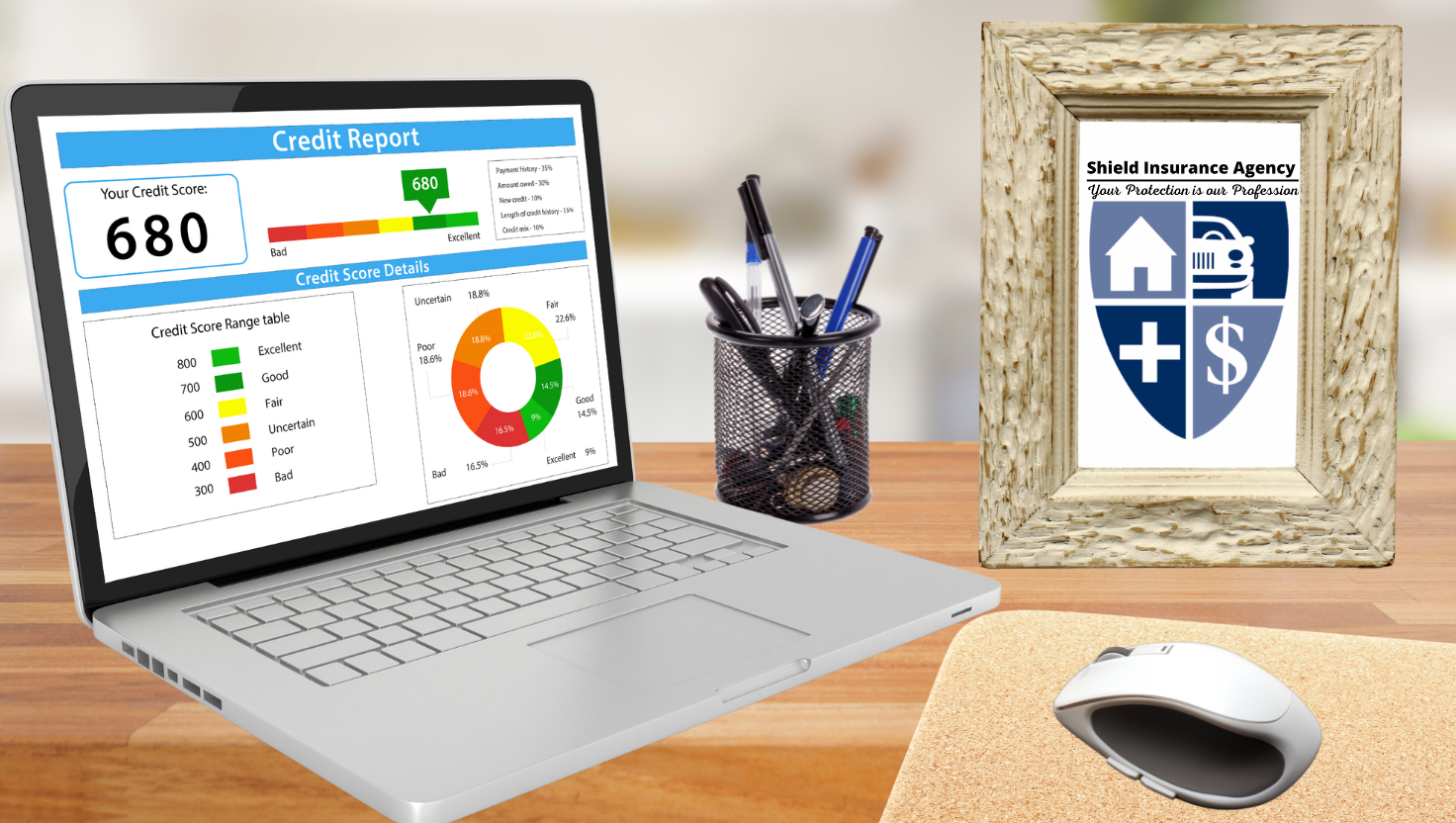
But there’s another somewhat surprising factor that affects your premiums in all but three states: your credit score. Unless you live in California, Massachusetts, or Hawaii, expect your credit score to affect how much you pay to insure your car, at least to some degree. 

You may already be familiar with your credit score as determined by the three major credit bureaus, TransUnion, Experian, and Equifax, it’s important to know that insurers assign you an insurance credit score that varies from your traditional credit score. While your credit score plays a role in that insurance score, additional factors are also involved.

It’s important to understand why credit affects car insurance. Carriers’ proprietary credit-based insurance score provides a way to check two things: your likelihood of making insurance payments on time and your likelihood of filing a claim.  

While insurance carriers use a more complex algorithm to calculate premiums based on your insurance credit score, for the sake of this study, Coverage simplified the ratings by classifying insurance scores into three general categories: “good,” “average” and “poor” credit. This is to give you a general idea of the premium impact by credit tier. 

Can credit scores be evaluated for auto insurance rates?

Short answer: yes, in most states. California, Massachusetts, and Hawaii are the exceptions here.

Michigan is a bit of a gray area, too. In Michigan, you might be mostly off the hook. Insurers can’t use your credit score, but they can look at your credit information. That means a low score won’t necessarily increase your rates, but a history of missed payments might make an insurance provider wary, and could ultimately affect your rates. 

Let’s look closer at why credit affects car insurance rates. Studies, including a Congress report by the Federal Trade Commission, have shown that a lower score means you’re a higher risk for your insurer. A poor score directly correlates to an increased risk of filing a claim. 

Click here for the rest of the story…

Read More

Healthcare Enrollment 2021

Healthcare Enrollment Period in Response to the COVID-19 Emergency

The coronavirus disease 2019 (COVID-19) national emergency has presented unprecedented challenges for the American public and Healthcare enrollment.  Millions of Americans are facing uncertainty and millions of Americans are experiencing new health problems during the pandemic.  Due to the exceptional circumstances and rapidly changing Public Health Emergency (PHE) impacting millions of people throughout the US every day, many Americans remain uninsured or underinsured and still need affordable health coverage. In accordance with the Executive Order issued today by President Biden, the Centers for Medicare & Medicaid Services (CMS) determined that the COVID-19 emergency presents exceptional circumstances for consumers in accessing health insurance and will provide a Special Healthcare Enrollment Period (SEP) for individuals and families to apply and enroll in the coverage they need. This SEP will be available to consumers in the 36 states served by Marketplaces that use the HealthCare.gov platform, and CMS will conduct outreach activities to encourage those who are eligible to enroll in healthcare coverage. CMS strongly encourages states to operate their own Marketplace platforms to make a similar enrollment opportunity available to consumers in their states.

Starting on February 15, 2021, and continuing through May 15, 2021, Marketplaces using the HealthCare.gov platform will operationalize functionality to make a Special Enrollment Period available to all Marketplace-eligible consumers who are submitting a new application or updating an existing application. These consumers will newly be able to access the SEP through a variety of channels: through HealthCare.gov directly, the Marketplace call center, or direct healthcare enrollment channels.  Additionally, consumers can work with a network of over 50,000 agents and brokers who are registered with the Marketplace, along with over 8,000 trained assisters, ready to assist consumers with their application for coverage.

To promote the SEP and ensure that a broad and diverse range of consumers is aware of this implementation, CMS will conduct an outreach campaign in cooperation with community and stakeholder organizations, focused on education and awareness of this new opportunity to enroll in English, Spanish, and other languages.  CMS outreach efforts will use a mix of paid advertising and direct outreach to consumers. Outreach efforts will include considerable awareness-building efforts to encourage the uninsured and those who come to HealthCare.gov to explore coverage to continue the process and enroll. CMS plans to spend $50 million on outreach and education, on a mix of tactics to increase awareness, including advertisements on broadcast, digital, and an earned media. 

Some consumers may already be eligible for other existing SEPs, Medicaid, or the Children’s Health Insurance Program (CHIP) – they can visit HealthCare.gov now to find out if they can enroll even before this new SEP.  Starting February 15, consumers seeking to take advantage of this SEP can find out if they are eligible by visiting HealthCare.gov, and are no longer limited to calling the Marketplace call center to access this SEP.  Consumers who are eligible and enroll under this SEP will be able to select a plan with coverage that starts prospectively the first of the month after plan selection.  Consumers will have 30 days after they submit their application to choose a plan.  Current enrollees will be able to change to any available plan in their area without restriction to the same level of coverage as their current plan. To use this SEP, current enrollees will need to step through their application and make any changes if needed to their current information and submit their application to receive an updated eligibility result that provides the SEP before continuing to enrollment. This SEP opportunity will not involve any new application questions or require consumers or enrollment partners to provide any new information not otherwise required to determine eligibility and enroll in coverage. In addition, consumers won’t need to provide any documentation of a qualifying event (e.g., loss of a job or birth of a child), which is typically required for SEP eligibility.

As always, consumers found eligible for Medicaid or CHIP will be transferred to their state Medicaid and CHIP agencies for enrollment in those programs.

For more information about the Health Insurance Marketplace®[1], visit: https://www.healthcare.gov/quick-guide/getting-marketplace-health-insurance/

###

Read More

What Will Business Leadership Look Like This Year?

What Will Business Leadership Look Like This Year?

Business Leadership and Executives’ expectations for 2021 are high. Many hope to make up for everything that was lost, cancelled or postponed in 2020.

Overcoming the pandemic and political turmoil next year won’t be easy, and these challenges have a way of bleeding into the workplace. Internal leadership will be every bit as important as external needs.

Business leaders must be ready to support their teams mentally, professionally, financially and in every area in between. In 2021, the best leaders will:

Keep Their Spirits High

The events of 2020 were debilitating, distressing and downright exhausting. To keep employees not just motivated but excited to come to work, leaders have to set the tone.

Show up every day with a positive attitude. Make it a point to clock in before your team so you can greet each member as they arrive. Set calendar reminders to provide words of encouragement throughout the day.

Motivating people takes more than daily pick-me-ups, though. Set aside time with each team member to discuss their goals. Start with personal ones, and then discuss professional milestones that support both your business and their own objectives. Making progress together will be uplifting and inspiring for everyone.

Offer Radical Flexibility

One of the biggest trends to come out of 2020 is the sharp increase in remote work. Working from home allowed companies to continue operations while their employees stayed safe from COVID-19. 

The pandemic is far from over, and employees know other employers are also offering flexible scheduling. Going into 2021, radical flexibility will be required.

Some employees will feel more comfortable working from home all the time. Others may need just one day a week outside of the office. Others might want to work in the office, but only at night. Cater to as many different schedules as you can.

You can embrace flexibility in additional ways as well. Give employees freedom to decorate and rearrange their desks. Provide additional sick days to help them manage their mental health. As long as their productivity stays high, so should your willingness to be flexible.

Rethink Their Workflow

It’s one thing to let your team work a hybrid schedule or move into a home office. More difficult but just as important is revisiting their workflow.

Learn to do all that you can over digital platforms. If you have to send everyone home again in 2021, you don’t want it to be as much of a disruption as it was in 2020. 

Lean on project management systems like Asana and instant messengers like Slack to facilitate remote communication and file sharing. Look for efficiencies, such as writers self-editing their content, to reduce the number of people involved in each process.

Refine Their Culture

Company culture will be more important than ever in 2021. The economy is fluid right now, meaning that many employees are evaluating other opportunities. Make sure you give them a reason to stick with you. 

A strong culture is stickier than a larger paycheck. When a team feels like family, team members won’t want to leave simply because some other employer made them a slightly better offer.

Boost your company culture through regular activities that build relationships. Volunteer together. Sponsor an after-work activity, such as a happy hour, every once in a while. 

Take a Stand

Employees and consumers alike want to see companies take a stand on current issues. The challenge for business leaders is to know when, where and how to make a statement.

Look for worthy causes that everyone can get on board with. Nobody is going to object to a food drive. Everyone wants to see communities get access to shelter, education, food and clean water. 

Once you’ve identified a worthy cause, pause. Explain not just why you support the cause, but how it relates to your company’s mission and values. Otherwise, people might be suspicious or confused about the nature of your partnership. 

What if somebody does get upset? Welcome the discussion. Respectful communication helps teammates and customers better understand one another — and isn’t that what leadership is all about?

Business leadership has never been easy, but 2021 will put your leadership skills to the test. The good news is, you’ve already made it through 2020. Meet the new year’s challenges with grace, and you’ll cue your team to do the same.

Read More

National Bath Safety Month

4 Tips for National Bath Safety Month

Keep the fun in the tub throughout the month of January.

Stay with her. 

The American Academy of Pediatrics recommends that children 4 and under always have a parent or caregiver present when they are near water, including the tub. Accidents can happen in an instant.

Prevent slips. 

Young children do not have the coordination or strength to hold steady if they lose their balance. Affix a slip-resistant plastic mat that suctions to the bottom of the tub and make sure the throw rug outside the tub does not slide when stepped on. Consider installing a grab bar for kids to hold onto when stepping in and out of the bath.

Test the temperature. 

Always wait until the tub is finished filling up before placing your child in the water, as the temperature can change. Set your home’s water heater to deliver water no hotter than 120 degrees to lower the risk of scalding. If you don’t have control over the heater, buy an anti-scald device that attaches to the faucet.

Beware of Sharp Edges

Use a rubber cover for the faucet head and drape a towel over metal rails for shower doors when your child is in the bath. Make sure any glass shower doors are made of shatterproof glass. Avoid bath toys with hard edges or points that could be hazardous if your child falls onto them.

Read More

PPP 2.0: Paycheck Protection Program, Round 2

5 Things To Know About PPP 2.0

By Gerri Detweiler
December 28, 2020

PPP 2.0

Update: The President signed a stimulus bill approving the second draw PPP loans on December 27, 2020. These business loans will likely be available sometime in the first few weeks of January. 

With cash buffers of just 27 days, small and medium-sized businesses (SMBs) are notoriously vulnerable. This year, though, the fight for business survival has been particularly difficult. 2020 saw numerous restaurants, gift shops, and salons shutter their doors—more than 100,000 businesses. That said, there are still countless business owners fighting to stay open, and this week’s headlines have brought newfound hope.

While slight, these changes are hugely important. This year, I saw firsthand why the first round of aid fell short for so many small businesses. At Nav, a fintech that helps SMBs secure financing, our team helped over 4,000 business owners secure loans through PPP, but we also saw many small businesses get left behind. A recent survey by Nav found that only 36% of the smallest U.S. businesses applied for PPP, as compared to 61% of mid-sized businesses. Many of these smallest businesses reported opting out of the process due to its now-famous complexities or a lack of the sheer resources required to apply.

In this article, I’ve pulled from the over 5,000 pages of legislation to distill five key points about the new round of PPP loans. This won’t be fully official until a bill is signed, but for now, here’s what you need to know:

1—This round of PPP .02 is meant to target smaller businesses impacted by COVID-19

From the top, changes to eligibility requirements make it clear that the second draw PPP loans are meant to better target smaller businesses negatively affected by the pandemic. Not only must eligible businesses qualify as a small business according to SBA industry revenue standards, but they also must employ fewer than 300 employees, and have suffered at least a 25% gross revenue reduction in at least one 2020 quarter compared to 2019, with alternative calculations for seasonal businesses and those not in business for all of 2019.

Beyond this eligibility approach, a draft of the proposed stimulus bill indicates that the use of funds will be more flexible. It’s true that both rounds are very payroll-focused, but this round adds new categories of eligible non-payroll expenses businesses have had to invest in to weather this pandemic, like PPE or delivery software. This is important for small business owners because that means they can use the money for critical operations costs to stay afloat.

2—There are some very favorable tax changes for small businesses. 

Separately, there are some very favorable tax changes. Neither PPP funds nor EIDL grants are taxable. In addition, businesses may still deduct eligible expenses paid for with PPP or EIDL funds. Before EIDL grants were taxable and businesses could not deduct expenses paid for with PPP funds. Borrowers who got an EIDL grant had to deduct this from their PPP loan for forgiveness purposes, effectively saddling them with a loan for that amount. That will be eliminated retroactively.

The ability to subtract EIDL from PPP forgiveness (combined with the fact that SMBs can still deduct qualified expenses paid for with PPP/EIDL) means business owners will avoid a bigger tax bill and ultimately gain more value from stimulus funds.

3—Even if you received funds in the first round of PPP, you may qualify for a second loan.

Of course, new applicants are welcome as well as long as they qualify, but what if you already received PPP funding? Turns out, you may be welcomed back. Businesses that got a PPP loan in the first round can apply again so long as they are eligible.

Now, what if you returned portions of your loan? If you return all or part of your PPP loan, you may apply for an “amount equal to the difference between the amount retained and the maximum amount applicable.” Or, if you did not accept the full amount you may request a modification to allow you to borrow the full amount for which your business is eligible.

4—The maximum PPP loan amount for a single business is $2 million.

Down from the $10 million maximum loan in the CARES Act, the maximum loan amount for any business getting a second draw loan is $2 million. This means fewer businesses will get large loans that crowd out smaller businesses. For context, the total budgeted amount for these new PPP loans is just over $284 billion. And, as with the first round of PPP, businesses may be eligible for full forgiveness of these loans if proceeds are spent properly within a specific time period.

5—For full forgiveness, borrowers must spend the majority of the loan on payroll. 

Similar to the first round of PPP, this program is primarily intended to keep employees (including the business owner or independent contractor) on payroll. To obtain full forgiveness, borrowers will need to spend at least 60% of loan proceeds funding on payroll, specifically, compensation of up to $100,000 per employee plus payment of a variety of other compensation expenses including the newly added group life, disability, vision, or dental insurance.

While these are key takeaways from the PPP-specific terms of this Act, it’s worth noting that other forms of relief may be authorized as well. If approved, the Act will bring another $20 billion in new EIDL grants into play, offering up to $10,000 in funds that don’t have to be repaid. That includes businesses that may not have received the full amount in round one. From here, join me in crossing your fingers for speedy approval of this legislation, and cheers to what’s looking like a brighter 2021.

Gerri Detweiler is Education Director at Nav.

Read More

How Should You Insure Your Home-Based Business?

Shield Insurance Blog | Business | Business Insurance | Start a quote today!

Three Basic Coverage Options Home-Based Business Owners Should Know

 Updated November 19, 2020

Many businesses begin in the home. As of 2018, there were 30.2 million small businesses operating in the United States, and 50% of them were home-based.

A home-based business offers many advantages, including low startup costs, flexibility, tax benefits, and freedom from commuting. Like any business, a home-based operation requires insurance. Several insurance options are available so business owners can choose the one that best meets their needs.

Why You Need Home-Based Business Insurance 

While home-based businesses may operate on a small scale, they face many of the same risks as their larger counterparts. These include third-party claims, auto accidents, and damage to company-owned property. To protect themselves from losses, business owners must purchase adequate insurance.

Some home-based business owners might assume their homeowner’s insurance will cover claims arising from their business activities. This is a faulty assumption because most homeowner’s policies contain business-related exclusions and limitations. For example, many policies exclude structures not attached to the dwelling (like a detached garage or shop building) if they’re used for business purposes.

Types of Coverage

Small business owners have three basic options for insuring home-based operations. They can cover business exposures via endorsements to a homeowners policy, purchase an in-home business policy, or buy a business owner’s package policy. Which option is best depends on the size and nature of the business and the cost of insurance.

Homeowners Policy Endorsement

Many home-based businesses depend on equipment like computers and printers. Unfortunately, most homeowner’s policies provide a very low limit (typically $2,500) for equipment on the residence premises that are used for business purposes. Business owners may be able to double or triple that limit by purchasing an endorsement for a modest additional premium.

Business owners may also have the option to add a homeowners liability endorsement to their policy. The endorsement covers third-party claims by customers or delivery people for injuries sustained on their property. It’s typically available only if policyholders have few business-related visitors.

In-Home Business Policy

An in-home home business policy affords broader coverage than a homeowners endorsement and may cost less than $300 per year. It’s a middle ground between a homeowners policy and commercial insurance. Policies typically include business personal property and general liability coverages. Optional coverages like business income, valuable papers, and accounts receivable may also be available.

In-home business policies can vary widely from one insurer to the next. Before you buy a policy, be sure you understand what it does and doesn’t cover.

Business Owners Policy

A business that needs more coverage than an in-home policy provides can choose a business owner’s policy (BOP). A BOP is a commercial package policy designed for small businesses. It includes commercial property, business income, and general liability coverages.

The general liability section covers claims for bodily injury or property damage, including claims against the business that arise out of its products or completed work. It also covers Personal and Advertising Injury Liability and claims based on damage to rented premises. A wide variety of endorsements are available for broadening or restricting coverage. Small businesses pay an average annual premium of $1,191 for a BOP.

If your home-based business sells a product or does construction work, be sure your liability insurance includes coverage for products and completed work.

Other Coverages To Consider

Homeowner’s policies, in-home business policies, and BOPs provide general liability and property coverages only. Here are some other coverages home-based businesses should consider.

Commercial Auto Insurance

Many home-based businesses use vehicles in their day-to-day operations. Business owners should not rely on a personal auto policy to insure business-use autos unless they have verified with their insurer that those vehicles are covered. Personal auto insurers generally won’t insure vehicles registered to a business (other than a sole proprietorship). Moreover, personal policies don’t cover trucks larger than a pickup or vehicles used for delivery.

A business auto policy includes commercial auto liability and physical damage coverages. It’s a flexible policy that can be tailored to the needs of a business by the use of endorsements. It can cover vehicles the business owns or hires as well as autos it doesn’t own (like employees’ autos) that are used in its operations.

Errors and Omissions (Professional) Liability

Accountants, lawyers, engineers, consultants, and other businesses that provide a service or advice to clients may need errors and omissions (E&O) liability insurance. Also called professional liability coverage, E&O insurance covers third-party claims for financial losses that result from mistakes made by a business when serving clients. Most E&O policies are written on claims-made forms.

Small business owners typically pay between $500 and $1,000 per year for an E&O policy.

Workers’ Compensation Insurance

Like all businesses, home-based companies must comply with state workers’ compensation laws. The obligation to buy workers’ compensation insurance is typically determined by the number of workers a business employs. Many states require businesses to purchase coverage if they employ one or more workers.

Most states don’t require sole proprietors to purchase workers’ compensation insurance if they don’t employ any workers. Many states allow sole proprietors to purchase coverage for themselves


Check out more articles!

Read More

3 Ways to Winterize Your Business

3 ways to winterize your business

For business owners, Jack Frost can nip at more than your nose. If you don’t winterize, bitter winter temperatures can cause damages that will take a chunk out of your bottom line.

But a few preventative steps can keep your business winterized and safe from the dangers posed by the cold, ice, and snow.

1. Keep the water flowing during winter.

Frozen pipes can burst, causing major damage to any business location. Prevent this from happening by winterizing:

  • Keeping your thermostats set at a minimum of 55°F when the building is empty.
  • During especially cold winter situations, running a small trickle of water through your faucets to help keep pipes from freezing.
  • Exposing pipes to warmer temperatures by keeping cabinet and utility room doors open.
  • Making sure all pipes in difficult-to-access areas—such as crawlspaces, exterior walls, or attics—are insulated. Hardware or big box stores have foam and fiberglass insulation. The more insulated, the better!
  • For unheated sprinkler control valve/fire pump rooms, using UL-approved gas or electric unit heaters to help keep temperatures warm.
  • Installing a monitored electric leak detection system for the main domestic water line along with monitored electronic sensors near water sources to help you discover leaks before they cause significant damage.

2. Keep your heating bills in check.

Maintain an efficient furnace and keep energy costs under control with a few simple steps to winterize:

  • Use a programmable thermostat to reduce heating costs by as much as 30%. During low-occupancy hours, set the thermostat several degrees lower for significant savings.
  • Check your heating ducts to see if the insulation should be replaced. Inadequate insulation could lead to higher energy bills.
  • Install energy-efficient glaze on windows and doors. Save money on your energy bills by replacing the existing glass with low-emissivity glass designed to prevent heat from escaping. As much as 20% of a facility’s heat is lost through windows and doors.
  • Clogged, dirty air filters can restrict airflow and increase your energy demands. Replace or clean your furnace filters regularly to keep your heating system efficient.
  • Alter your ceiling fans so they rotate in a clockwise direction, which can actually reduce heating costs by forcing warm air near the ceiling lower and warming the room.

3. Keep a roof over your head.

Your roof can take the brunt of winter’s force, whether it’s bitter cold, snow, or ice. Keep it in tip-top shape by keeping it winterized:

  • Clearing your roof of all debris, dirt, and leaves, which can block gutters and downspouts, preventing snowmelt from properly draining away from the building. It can also cause ice dams and heavy snow buildup on your roof, which can cause additional damage.
  • Inspect gutters and downspouts to see how securely they’re fastened to the building. Snow and ice can cause gutters to weaken and break away from the building, allowing water to seep into the wrong areas.
  • If a winter storm occurs, plan to have a professional snow removal service clear the roof of excess-accumulation. This will prevent excessive loads on the roof and eliminate the possibility of structural failure.

Talk to your local independent Shield agent for complete details on our business coverage. This article is for information purposes only. For specific coverage details, always refer to your policy. If the policy coverage descriptions in this article conflict with the language in the policy, the language in the policy apply.

References:
– Insurance Institute for Business & Home Safety (IBHS)
– Smallbiztrends.com

Read More

Are Electric Space Heaters Safe?

Are electric space heaters safe?

Electric space heaters can be used safely, but they are not the safest option for staying warm when the temperature drops.

According to the National Fire Protection Association (NFPA), space heaters account for 43% of home heating fires and 85% of home heating deaths.

They can also be a hazard in the workplace. While there are no federal safety rules prohibiting space heaters at a worksite, you should follow local rules and regulations. OSHA also requires businesses to follow all manufacturer specifications on the unit’s label and in the user manual when using electrical equipment.

So, if you’ve tried other ways to warm the area, like adjusting your HVAC system or adding weather stripping, and it’s just not working, an electric space heater might be the next best option. And it can be used safely at home or in the workplace when you take the right precautions.

Here are steps you can take to increase space heater safety for your home or business.

Use your indoor electric space heater safely

Here’s how to increase safety while enjoying the warm comfort of your electric space heater indoors:

  • Follow all manufacturer’s instructions and guidelines.
  • Before you use it, do an inspection of the space heater to check for damage on its parts, knobs, coils, and legs. If any damage is detected, take the space heater out of service immediately and have it repaired by a professional.
  • Place the space heater at least six feet away from combustible materials and never place anything on top of or touching it.
  • Keep a fire extinguisher near each space heater.
  • Put your space heater on a level, hard and nonflammable surface. Avoid furniture, countertops, rugs, or carpets. Keep it out of high-traffic areas, such as doorways.
  • Make sure your space heater is plugged into properly grounded outlets. Do not use extension cords or power strips.
  • Turn off the space heater when no one is occupying that area or when it is out of sight.
  • Do not use space heaters if small children are in the area.
  • Unplug space heaters at the end of each day and make sure the unit has cooled before exiting the room or job site.
  • Only use a space heater as a temporary (not permanent) heat source.
  • Make sure your smoke and carbon monoxide detectors are in good working condition.
  • For business use, require employees to request permission from a supervisor or facility manager.

When you use your electric space heater the right way, you are reducing the likelihood of property damage and injuries — keeping you and the important things around you safe and sound.

Safely use electric space heaters outdoors

Many restaurants, schools, offices, and other businesses use outdoor spaces during the cooler months of the year and rely on outdoor heaters to keep businesses running and people warm. Check out these safety tips for heating and storing propane cylinders and other outdoor space heaters

  • Use propane heaters in accordance with the manufacturer’s instructions.
  • Set up heaters in open, ventilated areas. Propane cylinders cannot be used in enclosed spaces.
  • Use the shortest possible hose to operate the propane cylinder.
  • Follow restrictions based on occupancy. For example, restaurants with 50 or more occupants cannot have propane cylinders within five feet of exits.
  • Store propane cylinders inside and in an area with minimal potential exposure to temperature increases, physical damage, etc.

There are also electric patio heater options for heating the outdoors.

NFPA recommends following these safety guidelines for electric patio heaters:

  • Follow the manufacturer’s guidelines for safe use and storage.
  • Complete proper inspection, cleaning, and maintenance procedures for each use.
  • Be mindful of necessary clearances from the heating element as well as installation and wiring requirements.
  • Pay attention to the power requirements and whether an electric patio heater can be plugged into an outdoor extension cord and receptacle, power tap, or multiplug adapter safely.
  • Ensure any extension cords used are in good condition and free from splices or deterioration.

It’s possible to accomplish the safe use of space heaters by following the right precautions during setup, use, and storage.

Keep this article handy as a quick reference for basic space heater safety indoors and outdoors.

Things to consider before you buy or replace an electric space heater

In addition to using your space heater safely, here are other safety tips to consider for buying, maintaining, or replacing an electric space heater

  • Understand which type of space heater you have. There are convection and radiant heaters. Convection space heaters circulate air in the room. Radiant space heaters emit infrared radiation that directly heats the objects and people in line with the space heater.
  • Invest in an electric space heater with added safety features. An automatic shut-off feature if the heater falls over or heating element guards are good features to look for.
  • Consider the hours you have used your space heater as an indication for when it is time to replace it. For example, a space heater you have used daily for two years might need to be replaced due to the long hours of use. Replace your heater with a newer, safer model when possible.

Electric space heater safety is essential for you and the people around you. Practice safe use of space heaters on a regular basis to reduce the risk of fire in your home or business.

This article is for informational and suggestion purposes only. Talk to your Shield Insurance Agent to learn more about Homeowners and Business insurance coverage options

Read More