
5 Ways to Stay Warm During a Winter Power Outage - Shield Insurance Agency Blog

5 Ways to Stay Warm During a Winter Power Outage

ConsumerReports.org | By Paul Hope | Published February 18, 2021 | Updated January 5, 2022

  • Never use a generator indoors or within 20 feet of your house.
  • Have working smoke and carbon monoxide alarms on every floor.
  • If you use your car to stay warm or charge devices, make sure it’s outside the garage.
  • Never use a device (such as an oven) to produce heat unless that’s its intended purpose.
  • Indoor portable heaters should have an automatic shutoff switch in case they tip over.

Winter storms leave thousands of Americans without power each year, but there are several steps you can take to stay warm and safe.

The biggest threat from a power outage, of course, is the lack of heat. But even during an extended outage, there are ways to survive the cold.

The danger is that some alternative heating systems pose their own threats, such as fire and carbon monoxide. But there are precautions you can take to minimize the danger.

Here are five ways to stay warm—and safe—during a power outage.

1. If You Can, Get a Generator

Even if you’ve already lost power, it’s not too late to look for a portable generator. Sales always spike during weather emergencies, but it’s still worth trying.

Some major retailers have told CR that they’re able to reallocate the supply of generators to affected areas in as little as a day or two. A good strategy is to show up early at a store to grab one before they’re sold out.

If you’re fortunate enough to find a portable generator, use our guide to get it up and running quickly and safely. Once the outage is over, hire an electrician to install a transfer switch or interlock device so that the generator can power entire circuits in your home, which is both safer and more helpful.

If you can’t find a portable generator at a home center or power equipment dealer, try looking for a recreational generator at places like Dick’s Sporting Goods and Walmart, or even at a local RV or boat dealership.

These smaller generators aren’t really designed for power outages, but their output of 1,800 to 2,000 watts is still enough to power a large space heater and charge cell phones, which may be enough to get you through an outage.How to Run a Generator Safely

2. Stay in a Southern-Facing Room

Click here for the rest of the story…


Wanna see more great articles?

Read More
22 Tiny Mental Health Habits That Can Improve Your Life In 2022 - Shield Insurance Agency Blog

22 Tiny Mental Health Habits That Can Improve Your Life In 2022

Huffpost.com | By Amber Gibson12/28/2021 06:44pm EST | Mental Health | Health Insurance

Self-care won’t solve every problem, but these quick and easy activities may at least bring some happiness to your day.

Another roller coaster year is coming to an end, and the lingering effects of the ongoing COVID-19 pandemic have certainly taken a collective toll on our mental health.

There’s no way to know what 2022 has in store for us, nor can self-care erase the grief, trauma or other challenges we may have endured over the last 12 months. But as we look toward the new year, we can adopt healthy new habits to help incrementally improve our days, even if just for a moment. Sometimes, that’s more than enough.

Below are 22 happiness tips to try in the new year:

Start a gratitude journal.

This only takes a few minutes. Recording positive things about your day, whether major achievements or simple pleasures, can reduce stress, improve sleep and even foster better relationships by building a sense of empathy.

“There is no right or wrong way to write a journal, but I recommend that this becomes a daily exercise,” 

John Lee, director of clinical psychology at Executive Mental Health.

Lee suggests journaling at the same time each day, whether before dinner or before bed, and identifying at least one item for daily gratitude.

Take five deep breaths.

“Stress has many physical manifestations,” explained Amanda Goldstein, a psychiatrist in California. This can include issues like stomachaches or other digestive problems.

“By changing your breathing pattern, you can trick your brain into suppressing your fight-or-flight sympathetic nervous system and increase your parasympathetic activity, or rest and digest. Not only will this make you feel calmer, but it will also help you digest your lunch better.”

Keep a light therapy lamp on your desk.

“Your circadian rhythm regulates your sleep-wake cycle, which affects bodily functions and behavioral responses,” Goldstein said. “Exposure to sunlight, especially first thing in the morning, helps keep your clock on time. Since most of us work indoors, a light therapy lamp serves this purpose and gives a nice boost in energy and mood. And as an added bonus, it provides excellent lighting for video calls.” (Here’s how to use one properly.)

Drink water.

Our bodies are made up of 60% water, yet up to 75% of Americans are chronically dehydrated.

Sara Cullen, founder and CEO of GEM, said drinking enough water daily helps boost her mood. “Water is the essence of us and what we need in order for our micronutrients and functions to operate,” she said.

Check out the rest of the story…


Wanna see more great articles in the Shield Insurance Agency Blog?

Read More
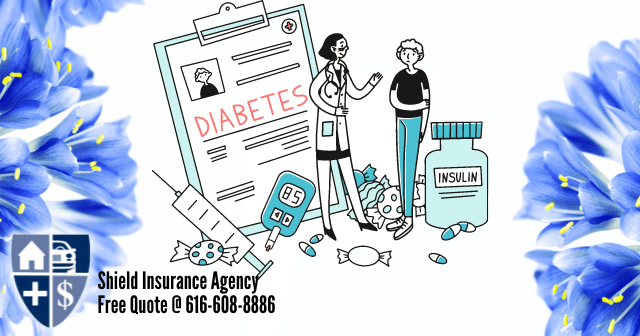
Managing Diabetes is an Uphill Climb

Managing Diabetes is an Uphill Climb

Source: Diabetes.org

Giving support to those you love can make all the difference.

Diabetes affects millions, but its impact goes far beyond that.

It affects everyone—family, friends, and loved ones.

When a family member, especially a child, is diagnosed, it sends an emotional shockwave. What are the medical costs? What about getting proper care? How can you help manage diabetes at school? Suddenly, you have the world on your shoulders. But you also have support. There are countless ways to help your loved ones live a healthy, happy life. Reach out and ask for help: we have it for you here.

Talk to a health care provider

Too often, it can be hard to know where to start when you find out someone you love has been diagnosed with diabetes. Ask your healthcare provider what you can do to keep your loved one safe and healthy. Reach out to other parents or family members who have been impacted by this disease. You are now part of a worldwide community. And asking for help is the first step in supporting your loved one’s journey to health.

Parents: it’s a challenge you can meet head on

Hearing that your child or loved one has diabetes can be a shock. But after that shock wears off, know that there are plenty of things you can do to help along the way. Sure, daily life with diabetes can be a challenge, but it’s a challenge you can meet head on.

With planning and preparation, you can get back to daily life and resume your routine activities. You can help make physical activity part of every day. You can create a balanced eating plan for your loved one—one that everyone can live with and thrive on. Throughout it all, know that diabetes can’t keep your loved one from doing whatever they want or achieving their highest goals. There are Olympic athletes with diabetes, as well as professional football players, politicians, actors, rock stars and CEOs. So, take a deep breath. You can do so much to make sure the people you love are thriving as they manage their diabetes.

Keep them safe at school

Click here for the rest of the story…

Wanna see more great articles?

Read More

Georgia’s youngest farmer, Kendall Rae Johnson, is only 6 years old, and she loves ‘playing in the dirt’

By Lee Alexander and Chiamaka Ofulue, CNN

Updated 9:53 AM ET, Sun January 9, 2022

(CNN) At just 6 years old, Kendall Rae Johnson is making history as the youngest certified farmer in Georgia. Kendall Rae says her love of farming comes from her great grandmother Kate Johnson. “She taught me all kinds of stuff about gardening. Like, how collard greens grow — you start with a stem and put it in the dirt and it grows,” the young girl said.

 A 2-year-old from California is the youngest American to become a member of Mensa

Ursula Johnson, her mother, has only encouraged Kendall Rae’s love of gardening.

“When we found out that she really enjoyed this whole process of putting a seed in and seeing something come out of it, we were like, ‘Okay we have her interest,’ ” she said. So, for her fourth birthday, Kendall Rae’s parents built her a small patio garden at their home in Atlanta and threw her a garden party.

Two years later, Kendall Rae’s patio garden has grown into a small backyard farm that produces carrots, sweet potatoes, strawberries, okra, tomatoes, blueberries and even Carolina Reapers. “It’s a scary name for a pepper,” Kendall Rae said, “because it makes your mouth real hot.”

For Kendall Rae, who is home schooled, the backyard farm also doubles as her classroom. “She’s learning hands-on and then she’s able to bring it into the house and do school work, because she still needs to know her a-b-c’s,” her mother said. “There is always a lesson in digging in the dirt.””I like playing in the dirt because it makes me happy. It makes me want to garden and share it with my friends,” Kendall Rae said.

Check out the rest of this adorable story at CNN


Have you see the other great storeis featuered here?

Read More
Healthcare Enrollment Ends Soon - Shield Insurance Agency Blog

Healthcare Enrollment Ends Soon

The Deadline to register for healthcare ends January 15th. | Healthcare Enrollment

Let Carlos with Shield Insurance Agency get you signed up and covered.

You can call or text 616.777.3017 or email Carlos and get covered today!

Need other insurance? Shield Insurance Agency is locally owned and operated for over 20 years and can help with all your insurance needs!

Shield Insurance Carries Every Kind of Insurance Imaginable: Healthcare Enrollment

Healthcare Enrollment

You can call or text 616.777.3017 or email Carlos and get covered today!


More great blogs by Shield Insurance Agency

Read More

6 Anti-inflammatory Foods You Should Be Eating

HowStuffWorks.com | By: Alia Hoyt  |  Updated: Feb 11, 2021 | Anti-inflammatory Foods | Shield Blog

You’ve probably heard that anti-inflammatory foods are good for you, but why? And how can they help you anyway?

Anti-inflammatory Foods

First, it’s important to understand what bodily inflammation is, and why it can be harmful. In fact, there are actually two types: acute and chronic. The former is nothing to get too worked up over. “Acute inflammation is part of healing and is a normal, healthy response to injury or infection,” says registered dietitian Jean LaMantia in an email interview.

Basically, whenever your body recognizes something that is foreign – such as a microbe, pollen or a chemical, it goes to work to get rid of it. It does this by activating your immune system which triggers a process called inflammation. Inflammation helps to get rid of the offending organism.

But sometimes this inflammation continues even when there isn’t a foreign invader. That’s called chronic inflammation.

Anti-inflammatory Foods causes problems

“Chronic inflammation starts out as acute, but then doesn’t shut off. This creates a new environment at the area of injury, as the inflammatory messengers tell the body’s cells to die off and replace themselves with new cells,” says LaMantia. “With this rapid cell turnover, there is greater likelihood of a cell with a genetic defect to appear.” Chronic inflammation is linked to a higher risk of cancerdiabetesasthma, depression, metabolic syndrome and atherosclerosis (hardening of the arteries), among other problems, she notes.

Chronic inflammation can also have a pretty big impact on the simplicities of daily life. “Excess internal inflammation plays a key role in a host of problems including joint pain, lethargy, weight gain, autoimmune disease, sleep problems, headaches and much more,” emails Dr. Candice Seti, a licensed clinical psychologist, certified personal trainer and certified nutrition coach.

The typical diet that many Americans follow is loaded with foods that are processed and high in saturated fats, trans fats, sugars and tropical oils. These foods are not good for your heart and studies have associated eating a lot of these “pro-inflammatory” foods with an increased risk of cancer and death. Inflammation is an underlying mechanism for many diseases, including cancer, diabetes and heart disease.

Click here for the rest of the story…


Check out some other great articles shared by Shield Insurance Agency

Read More

How to Have More Fun — and Why It Matters

Advice from the author of ‘The Power of Fun’ on living a more joyful life

by Catherine Price, AARP, December 14, 2021 | Have More Fun | Home Insurance | Start a Quote Today!

En español

There is a common belief among people of all ages that the main obstacle standing between us and a joyful existence is the lack of free time. We tell ourselves that if we had more leisure time — whether through retirement or a vacation or even just an unscheduled long weekend — we would be happier, with no thought or effort required.

You already may have discovered this yourself: You work extra hours to “earn” your vacation, only to spend your time at the beach restlessly checking your email. Or you finally retire and are surprised to find that the lack of regular interaction with colleagues leaves you feeling lonely rather than relaxed.

In extreme cases, you might even find yourself experiencing what psychiatrist and Holocaust survivor Viktor Frankl described, rather dramatically, in his 1946 book, Man’s Search for Meaning, as “Sunday neurosis” — namely, “that kind of depression which afflicts people who become aware of the lack of content in their lives when the rush of the busy week is over and the void within themselves becomes manifest.”

The problem is that most of us haven’t learned how to use our leisure time effectively — and so it ends up feeling boring or unfulfilling rather than satisfying and joyful. So how, exactly, can you learn how to use your leisure time more effectively and avoid falling into an existential void?

You focus on How to Have More Fun

I know that might sound counterintuitive, but hear me out. Despite how often we use the word, most of us have not put much thought into what “fun” actually means — let alone how to have more of it.  

As a result, we often fill our leisure time (and, for that matter, our internal voids!) with activities that have been marketed to us as fun but that, upon reflection, often leave us feeling numb or empty — which is not what most of us are hoping to feel at any time, let alone during supposed leisure.

The TV Trap and How to Have More Fun

In 2020, Americans over the age of 65 watched an average of more than 4.5 hours of television a day, while people ages 55 to 64 averaged about 3.2 hours.

If you assume that the average person spends about eight hours asleep, this means that many Americans are spending a full quarter of their waking lives watching TV. Add in the amount of time we spend on our phones and other devices, and it’s not unreasonable to conclude that many people are spending the majority of their waking lives passively consuming content on a screen.

Indeed, in both age groups, the time spent watching TV adds up to more than twice the total amount of time that people reported spending on socialization and communication, relaxation and thinking, playing games, reading for personal interest, and participating in sports, exercise or recreation.

Of course, some of our television watching may be genuinely enjoyable and relaxing. But the disproportionate amount of time devoted to TV suggests some of its appeal is due to its convenience and accessibility. After all, it’s much easier to allow our time to be filled than it is to figure out how we ourselves want to fill our time, and the platforms that stream our favorite programs are deliberately designed to encourage us to binge. (The CEO of Netflix, Reed Hastings, once famously said that the company’s main competitor is sleep.) 

Click here for the rest of the story…


Check out more great articles from Shield Insurance

Read More

Mental Health and the Benefits of Journaling

Diabetes.org | Mental Health | Shield Health Insurance

Journaling has been recommended for years as a way to reduce stress, anxiety, and depression—but mood journals are unique.

Unlike regular journals, which are usually meant for chronicling your day-to-day life, mood journals are a place to focus specifically on your feelings and emotions. They’ve become increasingly popular, as apps and online mood trackers have emerged on the Internet. But they are more than just a trend: Research shows they can be effective tools to help people manage chronic health conditions.

A study published in the journal JIMR Mental Health looked at 70 adults with various medical symptoms who also experienced anxiety. Participants were asked to keep a web-based journal for 15 minutes a day, three days a week, for 12 weeks. Those who did so reported less stress and better moods. People with diabetes are often bothered or stressed out by experiences or challenges in our lives, and this can crowd out or displace positive experiences, thoughts and reflection. Journaling allows you to refocus on more positive topics, such as good experiences or strong relationships. That, in turn, can tamp down stress hormones that affect overall health.

A landmark study published in the Journal of Abnormal Psychology found that people who wrote about past traumatic experiences had lower blood pressure and heart rates, as well as increases in T-cells, which help fight disease, compared with those who wrote about superficial things.

Mental Health Feelings to the Forefront

A mood journal gives you a place to release thoughts and feelings that you may not be acknowledging. For many, the problem with our emotions is not the emotions that we have but the fact that we don’t know how to express them. For example, have you ever been frustrated when you couldn’t find the right blood glucose test strips or another diabetes supply you need at your local pharmacy and noticed your blood glucose go up along with your anxiety?

It’s not surprising. As levels of stress hormones such as epinephrine (adrenaline) rise, more glucose is released from the liver. But at the same time, cortisol levels rise, which causes body tissue (both muscle and fat) to be less sensitive to insulin. The result: more glucose in your bloodstream.

The good news is that lowered stress can lead to other health benefits. When you feel better about yourself, you’re more likely to stick to healthy habits, such as getting enough sleep and regular physical activity.

Writing down your thoughts may also help you break not-so-healthy patterns. Say, for instance, potato chips have become your go-to snack. Jot some notes about how you’re feeling and include what happened right before. You may realize that you got into an argument with someone or were late to a meeting and were so upset from those events that you turned to comfort food. Catching yourself at the time and actually writing down your feelings can give you the information you need to understand your motivation and make a different choice.

How to get started to Improve your mental health

Check out the rest of this story…


More great articles!

Read More

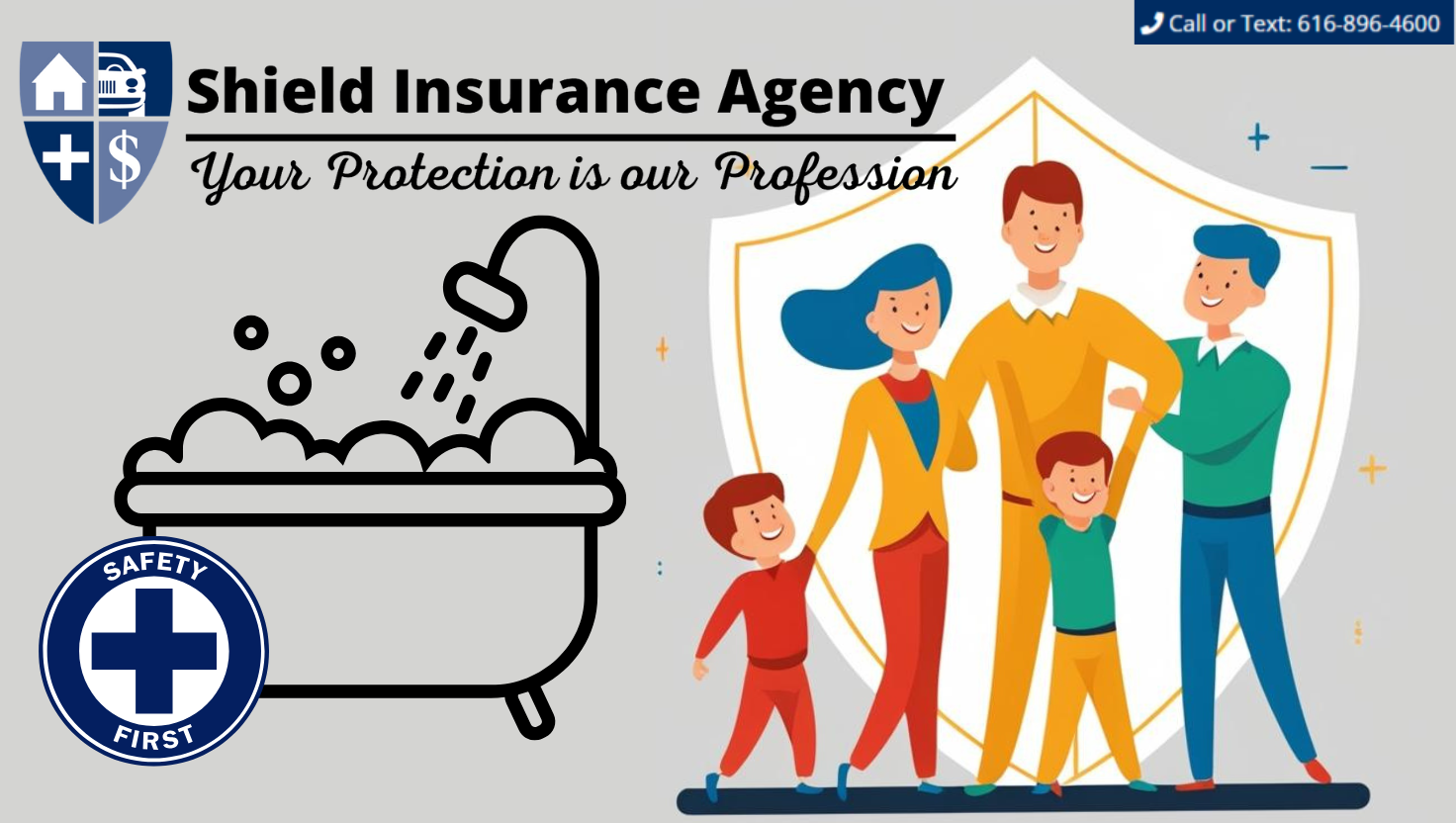
4 Tips for National Bath Safety Month

Keep the fun in the tub throughout the month of January.


Scholastic.com | BY SCHOLASTIC PARENTS STAFF | Shield Insurance Blog | Start A Quote Today!

Stay with her. The American Academy of Pediatrics recommends that children 4 and under always have a parent or caregiver present when they are near water, including the tub. Accidents can happen in an instant.

Prevent slips. Young children do not have the coordination or strength to hold steady if they lose their balance. Affix a slip-resistant plastic mat that suctions to the bottom of the tub and make sure the throw rug outside the tub does not slide when stepped on. Consider installing a grab bar for kids to hold onto when stepping in and out of the bath.

Test the temperature. Always wait until the tub is finished filling up before placing your child in the water, as the temperature can change. Set your home’s water heater to deliver water no hotter than 120 degrees to lower the risk of scalding. If you don’t have control over the heater, buy an anti-scald device that attaches to the faucet.

Beware of sharp edges. 

Click here for the rest of the story…

More Great Blogs from Shield Insurance Agency

Read More
Flos Restaurant Gift Card given away from Shield Insurance Agency

Gift Card Winners Compliments of Shield Insurance Agency!

Friday, December 31, 2021

Every week, Shield Insurance Agency draws a winner of a local gift card from its clients and social media followers.

Why? Because we love giving stuff away!

Be sure to LIKE our Facebook Page to get yourself entered to win and see who the winners are!

Shield Insurance Agency has given away thousands of dollars in local gift cards over the last 20 years serving Michigan.

Look who is winning!

Shield Insurance Weekly Gift Card Winner
Shield Insurance Weekly Winner
Target Gift Winner from Shield Insurance Agency in Michigan
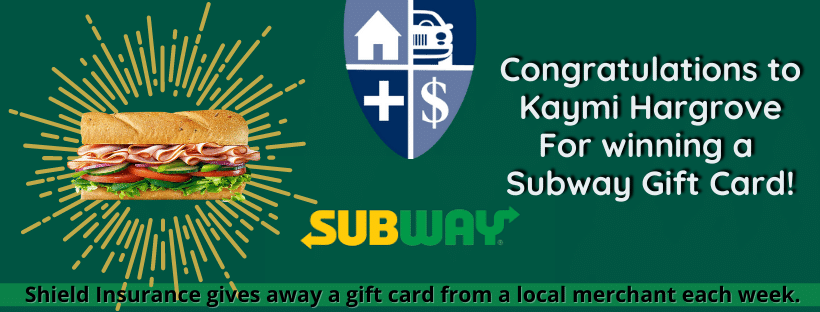
Subway Giftcard Winner from Shield Insurance
Meijer gift card winner from Shield Insurance Agency
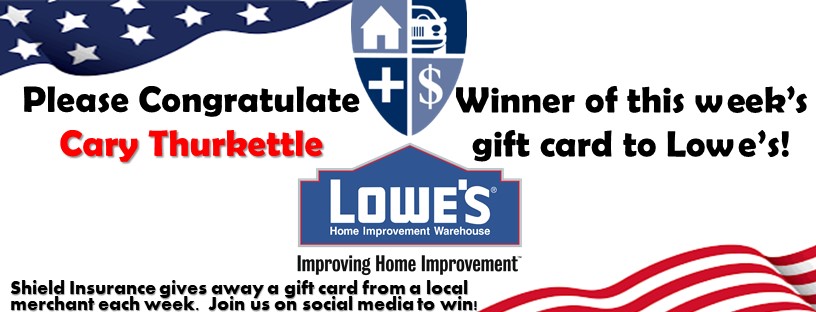
Shield Insurance Agency Lowes Gift Card Winner
Shield Insurance Agency Denny's Gift Card Winner
Shield Insurance Agency Cracker Barrel Gift Card Winner
Shield Insurance Agency Meijer Gift Card Winner
Shield Insurance Agency Lowes Gift Card Winner!
Shield Insurance Agency Target Gift Card Winner!
Shield Insurance Agency Red Robin Gift Card Winner
Panera Bread Gift Card Winner at Shield Insurance Agency
Subway Gift Card Winner at Shield Insurance Agency
Shield Insurance gives away another local gift card!
Target Shield Insurance Gift Card Give A Way
Red Robin Gift Card Winner at Shield Insurance Agency

Read More