100th Anniversary of Fire Prevention Week
NFPA.org | 2022 Campaign | Fire Prevention Week
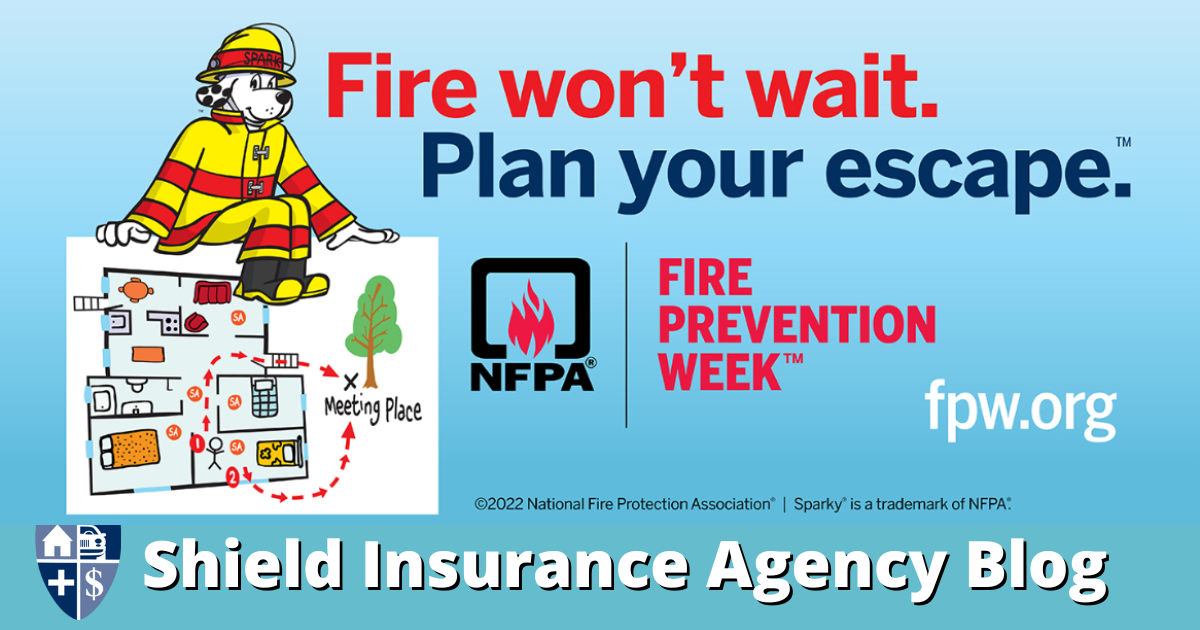
Join NFPA® in celebrating the 100th anniversary of Fire Prevention Week™ (FPW). This year’s FPW campaign, “Fire won’t wait. Plan your escape™”, works to educate everyone about simple but important actions they can take to keep themselves and those around them safe from home fires.
Today’s homes burn faster than ever. You may have as little as two minutes (or even less time) to safely escape a home fire from the time the smoke alarm sounds. Your ability to get out of a home during a fire depends on early warning from smoke alarms and advance planning.
Home fire escape planning and practicing
It is important for everyone to plan and practice a home fire escape. Everyone needs to be prepared in advance, so that they know what to do when the smoke alarm sounds. Given that every home is different, every home fire escape plan will also be different.
Have a plan for everyone in the home. Children, older adults, and people with disabilities may need assistance to wake up and get out. Make sure that someone will help them!
Smoke alarms
Smoke alarms sense smoke well before you can, alerting you to danger. Smoke alarms need to be in every bedroom, outside of the sleeping areas (like a hallway), and on each level (including the basement) of your home. Do not put smoke alarms in your kitchen or bathrooms.
Choose an alarm that is listed with a testing laboratory, meaning it has met certain standards for protection.
For the best protection, use combination smoke and carbon monoxide alarms that are interconnected throughout the home. These can be installed by a qualified electrician, so that when one sounds, they all sound. This ensures you can hear the alarm no matter where in your home the alarm originates.
Importance of fire prevention
In a fire, mere seconds can mean the difference between a safe escape and a tragedy. Fire safety education isn’t just for school children. Teenagers, adults, and the elderly are also at risk in fires, making it important for every member of the community to take some time every October during Fire Prevention Week to make sure they understand how to stay safe in case of a fire.
On this site, you’ll find loads of educational resources to make sure that every person knows what to do in case of a fire. We have everything from apps to videos to printables and much more, to make sure you have the resources you need to keep your family, your community, and your city safe.
Learn more about Fire Prevention at this great website!
Check out more great articles from Shield Insurance!
- Why Now Is a Smart Time for Michigan Businesses to Review Liability Coverage Before Spring Foot Traffic Increases
- Snowstorms and Roof Damage: Is Your Michigan Home Covered?
- Do You Need Recreational Insurance for Your Snowmobile in Michigan?
- The Importance of Giving Back During the Holiday Season
- Michigan Winter Driving: Essential Snow & Ice Safety Tips You Need to Know