What Are REITs and How to Invest in Them

What is a REIT and How to Invest in Them

From what a REIT is to how it invests, here’s how to make money from these real estate vehicles.

US News.com | By Paulina Likos and Coryanne Hicks | May 18, 2021, at 4:17 p.m. | REITs

The Ultimate Guide to REITs

A real estate investment trust, or REIT, is a company that owns, operates or finances income-producing real estate.

This is often done by pooling investors’ money to buy and possibly manage commercial or residential buildings. The company then collects rent from its tenants and passes that income onto investors in the form of high dividends.

“REITs are publicly traded companies that exist purely to own real estate or real estate-related assets and allow investors exposure to real estate,” says Jeff Saul, co-CEO and co-founder at Nativ based in New York City. “You can think of a REIT as analogous to an (exchange-traded fund) in the stock world – this is a basket of diversified real estate assets (could be loans or direct equity investments) that is actively managed by qualified real estate investment managers.”

As REIT shareholders, investors get exposure to real estate without the headaches of owning, operating or directly financing properties.

Types of REIT

There are two broad categories of real estate investment trusts: equity REITs and mortgage REITs, or mREITs. Most REITs are equity REITs, which own or operate income-producing real estate such as apartment buildings, offices or shopping centers.

Each advisor has been vetted by SmartAsset and is legally bound to act in your best interests. If you’re ready to be matched with local advisors that will help you achieve your financial goals, get started now.

Equity REITs typically invest in a particular type of property. For example, retail REITs invest in shopping centers, while residential REITs invest in apartment complexes, single-family homes and even student housing. There are other types of equity REITs, too, such as:

  • Lodging and resort REITs, which invest in hotels and resorts.
  • Self-storage REITs, which invest in storage facilities.
  • Data center REITs, which invest in data storage centers.
  • Infrastructure REITs, which invest in infrastructures such as pipelines and cellular towers.
  • Industrial REITs, which invest in facilities such as distribution centers and warehouses.
  • Timberland REITs, which specialize in harvesting and selling timber.

If a REIT invests in a mix of property types, it’s called a diversified REIT. If the properties it owns and manages don’t fit into any other category, it’s called a specialty REIT. Examples of specialty REITs include Lamar Advertising Co. (ticker: LAMR), an advertising real estate provider, and Gladstone Land Corp. (LAND), a REIT investing in the agricultural market, leasing land to farmers.

Mortgage REITs finance commercial and residential properties by investing in mortgages and mortgage-backed securities. These can be agency mortgages secured by Fannie Mae, Freddie Mac or Ginnie Mae, nonagency mortgages or commercial mortgages. Mortgage REITs typically specialize in either commercial or residential mortgages but some invest in both.

These REITs borrow money to buy mortgages paying a higher interest rate. The difference between the rate the REIT pays lenders and the one it receives from investments, called the interest rate spread, is how it generates income and ultimately pays dividends for investors.

How a REIT Works

Click here for the full story…

More great articles from the Shield Insurance Agency Blog

Read More
Survey highlights issues workers have with PPE

Issues workers have with PPE

Business Insurance.com | Louise Esola | October 20, 2022 | PPE | Business Insurance

A study released Thursday exploring the availability of personal protective equipment ( PPE ) in workplaces found 72% of workers who forgo protocols do so because they “just didn’t want to wear it.”

J.J. Keller Center for Market Insights, the research arm of safety supplies provider J.J. Keller and Associates Inc., surveyed 172 people from more than 10 industries, with transportation, manufacturing and construction making up 70% of respondents. The study examined such gear as vests, hard hats, and protective eyewear.

What is personal protective equipment?

Personal protective equipment, commonly referred to as “PPE”, is equipment worn to minimize exposure to hazards that cause serious workplace injuries and illnesses. These injuries and illnesses may result from contact with chemical, radiological, physical, electrical, mechanical, or other workplace hazards. Personal protective equipment may include items such as gloves, safety glasses and shoes, earplugs or muffs, hard hats, respirators, or coveralls, vests and full body suits.

PPE

A study released Thursday exploring the availability of personal protective equipment in workplaces found 72% of workers who forgo protocols do so because they “just didn’t want to wear it.”

J.J. Keller Center for Market Insights, the research arm of safety supplies provider J.J. Keller and Associates Inc., surveyed 172 people from more than 10 industries, with transportation, manufacturing and construction making up 70% of respondents. The study examined such gear as vests, hard hats, and protective eyewear.

The survey found that 50% of companies said their workers didn’t think the protective gear was necessary, another 50% said the gear “make the job more difficult,” and 21% said workers forgo safety gear because they “didn’t know it was required,” according to results that allowed respondents to provide more than one answer.

The survey also found the top three barriers to providing gear. The first issue is sizing, as 55% of workers needed larger sizes while 41% said they needed a smaller size, and 35% of companies said they struggled to find gear for female workers.

Check out the rest of the story…


Check out more blogs by Shield Insurance Company!

Read More
Michigan Supreme Court to hear car insurance case – will it lead to higher rates?

Michigan Supreme Court to hear car insurance case

Michigan Supreme Court to hear car insurance case – will it lead to higher rates?

WXYZ.com | By: Kiara Hay | Posted at 6:25 AM, Sep 30, 2022 | car insurance

The fight over no-fault car insurance in Michigan could lead to higher premiums for all drivers next year.

It’s part of the fallout surrounding the 2019 reform law that is now heading to the State Supreme Court.

Every driver who received a $400 auto insurance refund check last year will likely slowly pay it back with claims that insurance rates will go up starting in July.

The Michigan Supreme Court will rule on whether or not people catastrophically injured before 2019 will continue to get their medical expenses covered indefinitely.

So, how did we get here?

In 2019, Gov. Gretchen Whitmer rolled out a no-fault reform law. It set a fee schedule and cap on reimbursements not covered by Medicaid, impacting people who have been severely injured in a crash.

In August 2022, the Michigan Court of Appeals ruled it unconstitutional to cut payments off to people injured before 2019.

The state Supreme Court will now hear oral arguments in March 2023.

The decision is hitting everyone in their pockets with the Michigan Catastrophic Claims Association saying it will increase rates in July.

It could go up $48 a year for people who select no personal injury protection, or limited protection, and a 42% increase for drivers who want unlimited personal injury protection, going from $86 per year to $122.

Click here for the full story…


Visit more great blogs from Shield Insurance Agency

Read More
Growing child care program splits costs between parents, employers, and the state

Growing child care program splits costs

Growing child care program splits costs between parents, employers, and the state

Grand Rapids Business Journal | By Rachel Watson | Crain’s Detroit Business | October 19, 2022

GRAND RAPIDS — Michigan is expanding a program to help cover the cost of child care thanks to $2.5 million in the 2023 budget.

The Michigan Department of Labor and Economic Opportunity (LEO) and the Michigan Women’s Commission on Wednesday announced the expansion of the MI Tri-Share pilot, which divides child care costs evenly between employees, employers and the state, with coordination by regional “facilitator hubs.”

First piloted in March 2021, the program expanded to 59 Michigan counties earlier this month. That’s up from just three counties when it launched as a public-private partnership between the Grand Rapids Area Chamber of Commerce and Representative Greg VanWoerkom (R-Norton Shores) with $1 million from the state. Lawmakers allocated another $2.5 million to the program in November 2021. By February 2022, seven hubs were added covering 52 counties and the city of Detroit.

Click here for the full story…


More great blogs from Shield Insurance Agency

Read More
Simple Steps for an Extra Safe Halloween

Simple Steps for an Extra Safe Halloween

National Safety Council | October 21, 2022 | Safe Halloween

Kids love the magic of Halloween, but costume and traffic safety are essential for trick-or-treaters. These tips can help make a safe and happy holiday for everyone.

Costume Safety for a Safe Halloween

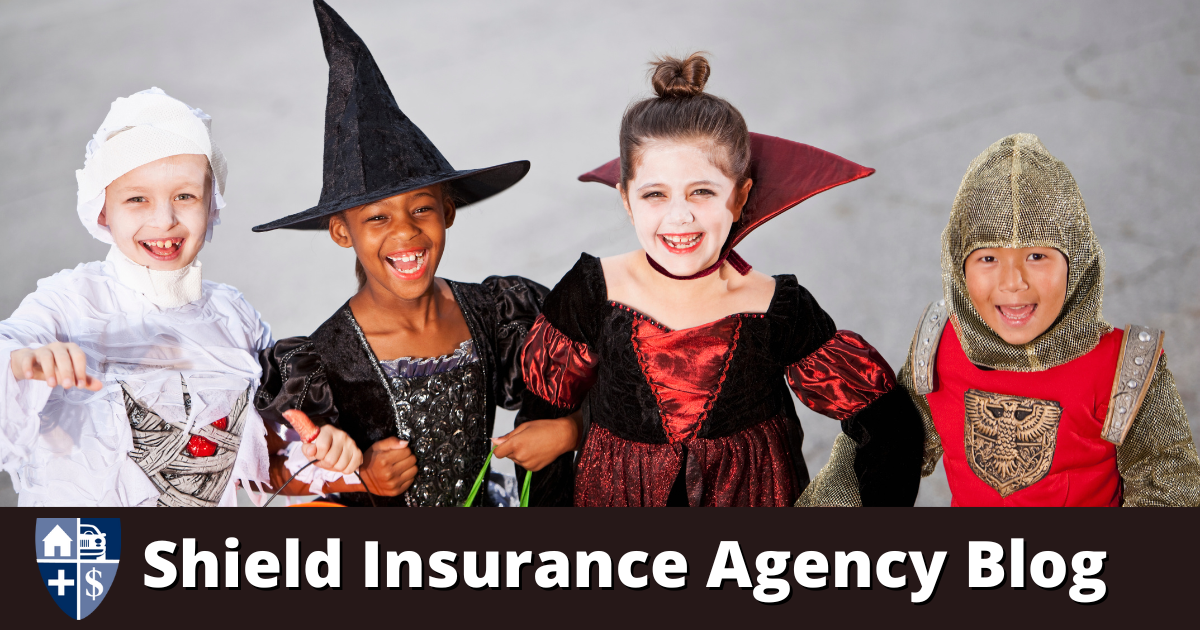
To help ensure adults and children have a safe holiday, fda.gov has compiled a list of Halloween safety tips. Before Halloween arrives, be sure to choose a costume that won’t cause safety hazards.

● All costumes, wigs and accessories should be fire-resistant
● If children are allowed out after dark, fasten reflective tape to their costumes and bags, or give them glow sticks
● Opt for nontoxic Halloween makeup over masks, which can obscure vision; always test makeup in a small area first to see if any irritation develops
● Remove all makeup before children go to bed to prevent skin and eye irritation

When They’re on the Prowl

Here’s a scary statistic: Children are more than twice as likely to be hit by a car and killed on Halloween than on any other day of the year. Lack of visibility because of low lighting at night also plays a factor in these incidents.

Keep these tips in mind when your children are out on Halloween night:

● A responsible adult should accompany young children on the neighborhood rounds
● If your older children are going alone, plan and review a route acceptable to you
● Agree on a specific time children should return home
● Teach your children never to enter a stranger’s home or car
● Instruct children to travel only in familiar, well-lit areas and stick with their friends
● Tell your children not to eat any treats until they return home, and take care to avoid any food allergies

Safe Halloween Tips for Motorists

NSC offers these additional safety tips for parents – and anyone who plans to be on the road during trick-or-treat hours:

● Watch for children walking on roadways, medians and curbs
● Enter and exit driveways and alleys carefully
● At twilight and later in the evening, watch for children in dark clothing
● Discourage new, inexperienced drivers from driving on Halloween

Visit the National Safety Council website for more great safety ideas!


More great articles from Shield Insurance Agency!

Read More
45 Halloween Party Games for Adults

45 Halloween Party Games for Adults

45 Halloween Party Games for Adults That’ll Make This Year’s Bash the Best One Yet

Good housekeeping | BY AMANDA GARRITY AND MONIQUE VALERIS | Updated: Oct 11, 2022 | Halloween Party

Get ready for a spooktacular time with these activities and entertainment ideas (including drinking games!) for any Halloween party.

From trick-or-treating and baking spooky delicious desserts to assembling creative costumes, if you’re like most people, Halloween is usually all about your kids. This year, switch things up by settling on an array of Halloween party games that are perfect for adults.

You and the 21+ folks in your circle can celebrate the spookiest day of the year with exciting twists on traditionals games. But if that’s not your style, take the liberty of arranging a pumpkin carving contest or wreath-making session to put your creativity on full display. And if all else fails, there’s nothing like a good Halloween-themed drinking game (just make sure there’s a designated driver).

Halloween Party

Whatever you decide, this roundup of Halloween party games for adults are full of humor and a dose of fright — just what you need to make this year’s event one to remember.

Click here for the full story and more great costume ideas!


Visit our great articles in the Shield Insurance Blog Section!

Read More
Not Sure What to Wear on Halloween? Google Just Ranked the Most Popular Costumes of 2022

Not Sure What to Wear on Halloween?

Not Sure What to Wear on Halloween? Google Just Ranked the Most Popular Costumes of 2022

Expect to see a few familiar scary faces (and some pop culture favorites!) on Halloween, October 31.

MarthaStewart.com | By Nashia Baker | October 18, 2022

If you’re like Martha, dressing up for Halloween is probably one of your favorite parts of the spooky holiday. And on October 31, you certainly won’t be alone: Your neighborhood’s streets will be filled with trick-or-treaters (and their parents!) in costumes fit for the occasion.

When you do step out in character this year, you might notice a few recurring themes. According to Google Trends’ 2022 FrightGeist report, which highlighted the most-searched Halloween costumes across the United States, a few familiar monsters will prowl the streets, candy baskets in hand—but there will likely be some creative pop-culture references and beloved superheroes, too. As for the look you’ll see in droves on Halloween night? Google users searched most for a witch costume.

The runner-up spot was claimed by a famed movie and TV character: Spider-Man was the second most-searched costume. Rounding out the top three is an ancient, extinct creature that, on any other night, exists in fossil form only: Halloween enthusiasts plan to don plenty of dinosaur costumes in 2022.

Related: 15 Last-Minute Costume Ideas for Halloween

Creatures of the past and champions of the present aren’t the only costume themes that have captured trick-or-treaters’ interests this year: Google users are also planning on dressing up as characters from Netflix’s Stranger Things, which clocked in at number four (not Eleven!). And if you were considering being something more fearsome, think again. The fifth most-searched pick, a fairy, proves that ethereal and whimsical options are trending, too.

Want to see how your Halloween costume ranks on Google Trends’ list this year? Discover the 20 most-searched costumes, below—and visit FrightGeist for the full list.

Click here for the full list…


More Blogs from Shield Insurance Agency

Read More
How Long Do Carved Pumpkins Last?

How Long Do Carved Pumpkins Last?

Martha Stewart.com | By Lauren Wellbank | Updated August 01, 2022 | Carved Pumpkins

Plus, How to Make Carved Pumpkins Last Longer

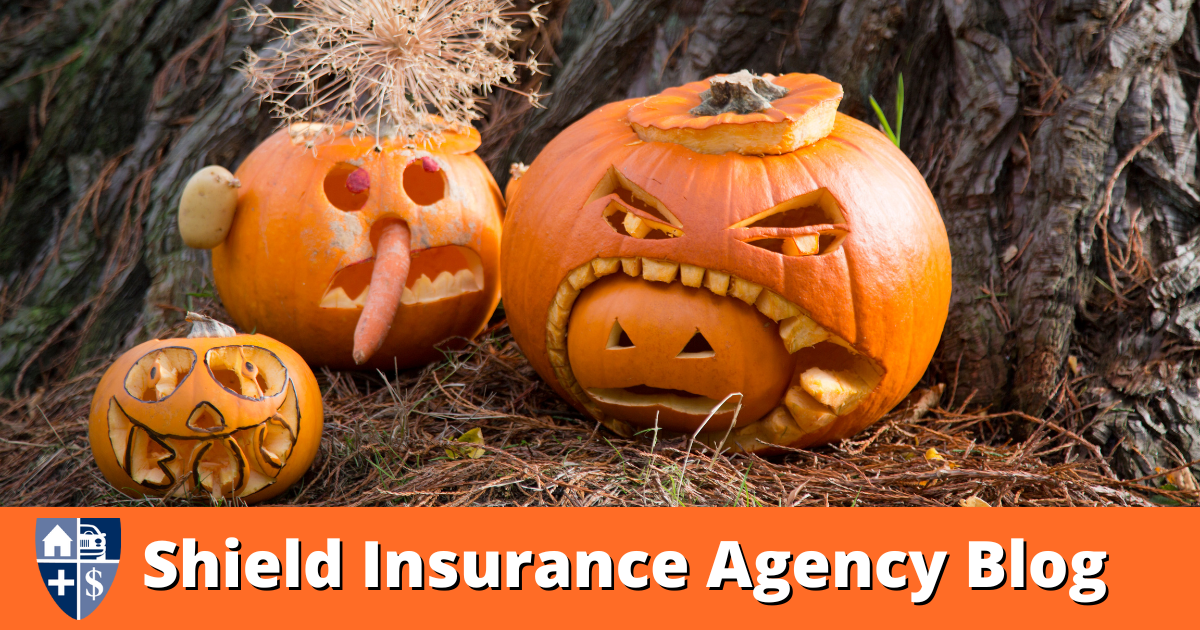
You don’t want a moldy, bug-infested Jack-o’-Lantern to be your scariest Halloween decoration.

Carved, painted, or simply stacked on your front steps or porch, carved pumpkins are the quintessential Halloween decoration. But, like all vegetables, gourds eventually decay, and that begs the question: How long do carved pumpkins really last? And is there anything you can do to prolong the life of your creative gourd?

If you don’t take the right steps in caring for your pumpkin, they can become a haven for mold, bugs, and other frightful pests. Fortunately, our experts share a few tricks for keeping your prized Jack-o’-Lantern looking fresh throughout the spooky season.

How Long Carved Pumpkins Last

As soon as you carve a pumpkin, the clock starts counting down to its inevitable decline, says Ashley Renne Nsonwu, host of the show Ashley Renne on Smart Healthy Green Living. “You have anywhere from three to five days max before they start to soften and get moldy,” she says. That’s because once the insides of the pumpkin are exposed to the elements, the rotting process begins.

Source an Unblemished, Local Pumpkin

Make sure you start with the best-looking pumpkin you can find. “Look for ones with the least amount of bruises and blemishes,” says Renne Nsonwu. “You’ll have better luck if you get them locally. Less transport means less bumping and bruising—and as a bonus, it’s more eco-friendly because the pumpkin has a lower carbon footprint!”

Carve Immediately

If you want your pumpkin to last more than five days, Renne Nsonwu says you’ll need to make sure you’re getting the timing right. “You’ll want to get your pumpkin within a week of when you plan to carve it,” she says.

Consider the Weather and Your Location

n addition to picking the right pumpkin, factors like weather and geography will impact how long it lasts, according to Kevin Busch, VP of operations of Mr. Handyman, a Neighborly brand. “The colder the climate, the longer your pumpkin will last,” he says. That means those who live in areas that are already experiencing chillier temperatures will see their pumpkins remain in good shape longer than those who live further south.

How to Make Carved Pumpkins Last Longer

To extend the life of your pumpkin just a little bit more, Renne Nsonwu says you should clean it out well and disinfect it with a solution.

Castile Soap

“Some swear by bleach, but I’m not a fan,” she says. “Bleaching your pumpkins means you can’t compost them later!” Instead, she says to make a Castile soap spritz, which will delay the decay process.

  1. Combine 1 tablespoon of Dr. Bronner’s peppermint soap ($10.79, target.com) with 6 drops of peppermint oil in an 8-ounce spray bottle.
  2. Fill the bottle with water.
  3. Thoroughly spraying your pumpkin inside and out.

Vinegar and Petroleum Jelly

Another method that Busch swears by includes spraying your carved pumpkin down with a white vinegar solution. After you have spritzed on the vinegar, he suggests applying petroleum jelly or vegetable oil to the exposed areas and the interior of your pumpkin. “This will create a barrier that won’t allow the pumpkin to dry out, and also protects [it] from external humidity, rain, or other elements that can jumpstart the rotting process,” he says.

Skip Carving

Click here for the rest of the story…


More great blogs from Shield Insurance Agency!

Read More
Should everyone in Michigan get auto insurance?

Should everyone in Michigan get auto insurance?

In the state of Michigan, owning a car is a good idea. When you are a car owner here, you will have an easy and convenient way to get around the state and enjoy all that it has to offer. When you are going to drive a car here, you also need to carefully assess your auto insurance needs.

There are various reasons why you should always get an auto insurance plan:

Protect Your Car

A reason that all people here should have an auto plan is so they can protect their car. If you are going to buy a car, you will want to know that it is covered in the event there is an incident of theft or an accident. When you are insured with auto insurance, you will have support in these cases. It is important to select a collision and comprehensive plan to ensure you have full coverage. 

Meet Auto Insurance Obligations

You also should obtain auto insurance coverage to meet any of your insurance obligations. People that live in Michigan will need to have liability coverage in order to drive their car on a public road. Further, those that have taken out a loan when buying a car will need to have comprehensive and collision coverage. If you remain properly covered, it will ensure you are in good standing with your obligations. 

Get The Right Coverage For Your Needs

It is always a good idea for someone here to get auto coverage. As you shop for insurance, discussing your insurance needs with the Shield Insurance Agency is always a good option. Our team of insurance experts at Shield Insurance Agency will give you the guidance to build your next plan. This can help ensure you are properly covered and in good standing with any obligations. 


Visit more blogs from Shield Insurance Agency!

Read More
A Bond is a safe investment when you compare them with stocks

What is a Bond?

Acorns.com | Stacy Rapacon | Aug 18, 2022 | Bond

An investing novice might know just one thing about bonds: They’re boring. Which is precisely why you need them in your portfolio, and should get to know them better.

“Bonds are safe investments when you compare them with stocks,” says Tim Kim, a Certified Financial Planner and analyst with Francis Financial in New York City. “The main role [they play] is to further diversify your investments and act as a safety net for your portfolio when the market isn’t doing too well.”

They can also provide a steady stream of cash payments. But don’t confuse safety with simplicity; bonds can actually be pretty complicated. “They are a different breed [of investment],” says Certified Financial Planner Vid Ponnapalli, founder of Holmdel, N.J.-based Unique Financial Advisors. “Bonds are a little more loaded when compared with stocks.”

So we’ve pulled together a primer of all you need to know about bonds—starting with the most basic question of all.

What is a bond?

Basically, a bond is an IOU, or a loan that you give to the issuer. When you buy bonds, you do so with the expectation of getting paid back—with interest—in a certain amount of time.

They are also securities that can be traded, similarly to stocks, on exchanges or over-the-counter (directly with dealers, such as investment banks).

Who issues bonds?

Companies issue corporate bonds. The U.S. government issues Treasuries. States and municipalities (cities or towns with a local government) issue municipal bonds, adorably nicknamed “munis.”

These three main types of bonds each come with different levels of risk and expected returns, based on the general stability of the issuer. Overall, we think of Uncle Sam as pretty reliable (since he can print his own money), so the risks of Treasuries are minimal—as are the returns. On the other hand, companies can come and there’s a risk they can go, so corporate bonds typically offer greater returns with greater risk. Munis fall in the middle.

How do you buy bonds?

You can buy Treasuries at www.treasurydirect.gov.

For other types of individual bonds, you can make your purchase through a brokerage firm, but understand that you’re buying secondhand. The investment banks that deal bonds get them new, then pass them on to you on what’s called the secondary market.

The difference between how much the dealer pays for the bond and how much you pay is called the “spread.” You typically won’t know what that is because dealers don’t have to disclose it. What you can and should know when buying a bond is its coupon rate (how much interest it pays) and when it matures.

What does it mean when a bond matures?

Click here for the full story…


Wanna see more great blogs by Shield Insurance Agency?

Read More