How to Avoid the Hidden Health Hazards of Travel

How to Avoid the Hidden Health Hazards of Travel

Experts offer tips to help prevent injury and illness on your next trip

AARP | By Jaimie Seaton | December 22, 2022 | Health | Shield Health Insurance

This past summer I traveled to London and then to Scotland to attend my daughter’s college graduation. It was a jam-packed two days of garden parties, family dinners, and cocktail hours following the commencement ceremony. 

On the day I traveled back to London, a shortage of taxis forced me to wheel my large suitcase and carry-on bag about a mile over cobblestones to the train station — my purse and shopping bag slung over my shoulder. In Edinburgh, I carried my bags up a flight of stairs in order to make my connection, and at Heathrow airport, there was walking and moved my bags through a security line for more than an hour. 

Once seated on the plane, I suddenly felt a sharp pain in my right elbow. Over the next week, the pain got worse and extended down my arm. I went to an orthopedist, who diagnosed tennis elbow. He surmised that dragging and carrying my heavy bags was the cause. 

​The pain only lasted another week or so, thanks to ice and stretching, but the whole experience left me wondering what other dangers might await me on my next trip. So I asked some experts. 

​“I frequently hear stories like yours,” says Sajida Saeed Chaudry, M.D., a primary care physician who specializes in preventive care at Johns Hopkins Community Physicians. She added that her patients, especially those age 50 and over, tell her tales of getting lost while on vacation and having to walk for miles, causing foot injuries, or hurting their back by putting a heavy bag in an overhead compartment or taking it off a conveyor belt.

​“There’s an element of stress and rushing, creating the perfect storm for things to go wrong,” Chaudry says. 

​Before you go | health

​Chaudry has some simple tips to help prevent injuries or health emergencies during travel, beginning with comfortable footwear. She also recommends establishing an exercise routine prior to traveling and ramping it up if you’re planning on doing a lot of walking. “If you’re routinely walking and suddenly go from 5,000 to 20,000 steps, those extra steps won’t bother you as much,” Chaudry says.

​Another travel tip: Pack extra must-have items in your carry-on bag. “I always tell patients, when they’re traveling, to have a back-up pair of glasses or hearing aids, and to keep them (close). Don’t put them in checked luggage,” Chaudry says. “It’s also a good idea to have your medical history and list of medications handy.” 

Health in the airport and on the plane

​Traveling light and using elevators when possible can help lower the risk of injury. If you notice pain from walking or carrying a suitcase, Chaudry says to follow the RICE regimen: Rest, Ice, Compress, Elevate. And she cautions against ignoring pain and pushing through, especially for those at greater risk of fracture, such as those with osteoporosis. “If the pain isn’t going away after a few days, that’s really a sign to check in with the doctor and make sure that there’s an evaluation,” she says.
Here is the rest of the story…

Read More
4 Surprising Benefits of the Flu Shot

4 Surprising Benefits of the Flu Shot

The vaccine can protect you from influenza, and it may have some other perks as well

AARP | by Beth Howard | October 3, 2022 | Flu Shot | Health Insurance with Shield Insurance

Not getting sick from the flu is reason enough to roll up your sleeve for a flu vaccine every fall. And along with preventing millions of cases of influenza each year, flu shots also reduce hospitalizations for complications of this misery-making seasonal illness.

A 2021 study from researchers at the Centers for Disease Control and Prevention (CDC) found that adults who got vaccinated were 26 percent less likely to be admitted to the intensive care unit and 31 percent less likely to die from the flu compared to those who were unvaccinated. There seems to be protection from illness even when vaccines aren’t perfectly matched to the strain of flu virus circulating (since the shot is formulated months in advance).

But evidence suggests that there are other payoffs beyond defense from fever, fatigue, chills, and aches.

“People don’t really appreciate the other potential benefits of flu shots,” says Michelle Barron, M.D., senior medical director of infection prevention and control for UCHealth in Aurora, Colorado. “It’s actually arming your immune system to fend off other problems.”

Here are four unexpected ways a flu vaccine can benefit the body and the brain.

1. A boost for the brain?

Previous research has suggested that flu vaccines may protect the brain from dementia, and a new study from the McGovern Medical School at UTHealth in Houston makes the case even stronger.

This study, published in the Journal of Alzheimer’s Disease, compared more than 47,000 people age 65 and older who were vaccinated against flu to a similar group of nearly 80,000 people who were not vaccinated. The findings: Those who got a flu shot were 40 percent less likely to develop Alzheimer’s disease over a four-year period.

“We weren’t actually expecting it to be that high,” says study coauthor Avram S. Bukhbinder, M.D., now a neurologist at Massachusetts General Hospital in Boston.

Bukhbinder has several theories for the vaccination’s potential effects on the brain. Perhaps by preventing the flu, the shot quells inflammation that can lead to harmful brain changes.

His most intriguing hypothesis is that vaccines alter the brain’s overall defenses. “There’s good evidence that when we get these vaccines, they help us make antibodies to the specific pathogen — the influenza virus,” he says. “But they may also modify the immune system in such a way that it’s better at either cleaning up amyloid and tau [the proteins responsible for the plaques and tangles that are the hallmarks of Alzheimer’s] or by preventing these proteins from building up in the first place.” 

2. The flu shot is linked to a stronger heart

A history of heart disease or a stroke can make flu more likely and more dangerous. In addition, flu can be a trigger for heart attacks and strokes in people at high risk for them. 

According to a 2018 Canadian study, people who got the flu were 6 times more likely to have a heart attack within a week of getting the diagnosis. And Columbia University researchers saw a significant jump in strokes in the month after fighting the flu, according to new research published in the American Heart Association’s journal Stroke

A flu shot can also spare you the potential heart harms. A new study led by the University of Toronto that incorporated six previous studies covering more than 9,000 patients showed that people who received a flu vaccine had a 34 percent lower risk of a major cardiovascular event in the 12 months following vaccination. Higher-risk vaccinated individuals with acute coronary syndrome — a group of conditions that abruptly stop blood flow to the heart — had a 45 percent risk reduction of a major cardiovascular event, and a 56 percent reduced risk of dying from heart disease in the year after they got the shot, according to the findings, which appear in JAMA Network Open. How the flu shot protects the heart isn’t fully known, but it may have to do with the plaques that build up on the artery walls of people with heart disease. The body’s immune response to the flu creates inflammation that is believed to disrupt these fat deposits, causing blood clots that may trigger heart attacks and strokes.

“The vaccine may interact with the body’s immune system and inflammatory processes to help stabilize plaques that might be present in blood vessels, thus preventing these plaques from rupturing and causing further problems,” says lead study author Bahar Behrouzi Homa, an M.D./Ph.D. candidate at the university. 

3. The flu shot could curb complications from other chronic conditions

Read the rest of the article here…


Wanna read more great articles featured by Shield Insurance Agency?

Read More
Child care disruptions continue to wreak havoc for working mothers

Sickness and child care disruptions continue to wreak havoc for working mothers

Worklife News | December 8, 2022 | by Ambreen Ali | Child Care

Since mid-October, Michelle Shank Boczonadi has not had a single week at work that she wasn’t also juggling child care challenges.

She’s a Denver-based senior director at Comcast Cable and mother to two-year-old Remi, whose nanny-share arrangement next door has been disrupted by RSV, flu, strep throat, pink eye and the stomach bug in the last six weeks alone.

Boczonadi is hardly alone, as high rates of illness and limited child care have combined to add pressure on working parents this fall. In October, a record number of parents missed work due to child care problems. Women are more likely than men to shoulder that burden and drop out of the workforce entirely to care for young children.

In New Jersey, Melissa Vogt became a first-time mom in May. Her son had Covid at one week old and was hospitalized with RSV a few weeks before she had to return to work. He started daycare at three months, and he’s had to stay home multiple times since because he has been sick. When he’s home, she often works anyway.

“A lot of times I start the day, and I try to get away with it without telling them. I just do the best I can from my phone while holding him,” said Vogt, who works in business development and client services for an education company.

Vogt said she is trying to be as available as possible since she recently took maternity leave. Her husband is very involved and helpful, but they face a common economic reality. “My husband makes twice as much money as me, so by default I’m the one who has to take care of our son,” she said.

As many workplaces have put in place return-to-work policies and settled into new hybrid routines, working mothers are still struggling. For them, the stresses induced by the pandemic — including sickness-related disruptions and lack of child care — still haven’t let up. 

“They’re carrying the load of being the breadwinner. They are also in most cases carrying the burden of parenthood, of running their household. We’ve been asking women for years and years to layer roles without offering additional support.”

Jill Koziol, co-founder of Motherly.

Worse, in some cases, their workplaces and colleagues have embraced a new normal that assumes such pressures are over, sidelining parents of young children who can’t keep up.

Vogt feels guilty when she can’t attend after-hour work events and the responsibility falls on her coworkers. She hasn’t talked to them about it, even though some of her friends tell her that it’s fair for her to be unable to attend those events as a mother of young kids.

Child Care Pressure on moms

The flexibility of modern work has created opportunities for mothers of young kids like never before. More moms of kids under the age of six have joined the workforce in recent years, according to the research nonprofit PRB. There are a variety of factors – from women facing economic pressures to them attaining higher education levels. They are more likely to work in flexible ways, such as in part-time roles or as entrepreneurs.

These women also face a unique set of pressures to juggle child care responsibilities. Among parents of kids aged 12 years and under, women spend three more hours on child care every day than men, according to a study by The Hamilton Project that was published by Brookings. That imbalance varies but holds true in heteronormative households regardless of who is working.

This imbalance came to light during the pandemic, when mothers of young kids were the most likely not to return to the workforce after the initial pandemic-induced disruptions in spring 2020. The decline was significant and incongruous: Nearly all fathers in the same situation returned to work, a paper published by the Federal Reserve Bank of Minneapolis noted.

The working moms who remain in the workforce are “carrying an immense load,” Jill Koziol, co-founder of the well-being community Motherly, said recently on the C-Suite Conversations podcast. Motherly’s 2022 State of Motherhood report found that 47% of women are the primary breadwinner in their household. 

“It falls to the companies to take the lead and make sure that, if they want to have a truly diverse and inclusive environment, they are also thinking of parents and caregivers.”

Lindsay Kaplan, co-founder of Chief, a network of female executives.

“They’re carrying the load of being the breadwinner. They are also in most cases carrying the burden of parenthood, of running their household,” Koziol added. “We’ve been asking women for years and years to layer roles without offering additional support.”

The report also found that twice as many women left the workforce than men in the pandemic, and that 46% of mothers who are still unemployed initially left due to a child care issue. As Koziol put it, “The pandemic brought many women to their breaking point.”

An ongoing child care crisis

Read the rest of the story here…


Read more great blogs by Shield Insurance Agency

Read More
The New Heart Health Guidelines You Need To Know About

The New Heart Health Guidelines You Need To Know About

HuffPost.com | Jillian Wilson | Nov 16, 2022, 05:45 AM EST | Health Insurance | Heart Health

You can cut your risk of cardiovascular disease by following this advice from the American Heart Association.

Maintaining a healthy heart is a challenge for many people. It requires dedication to a workout regimen, eating healthy food, and staying in touch with your doctor about your cardiovascular disease risk factors (high cholesterol, high blood pressure, diabetes, smoking, and more).

Cardiovascular disease ― which includes heart disease, heart attack, stroke, heart failure, arrhythmia, and heart valve problems ― is the No. 1 killer of Americans, according to Dr. Leslie Cho, the section head of preventive cardiology at Cleveland Clinic. Every 34 seconds, someone in the U.S. dies of cardiovascular disease.

This all may sound pretty scary, and it is. But “90% of heart disease is preventable,” Cho said. And those preventable measures are outlined in the American Heart Association’s recently updated Life’s Essential 8, which is described by AHA as “key measures for improving and maintaining cardiovascular health.”

Here’s what to know:

Sleep is now included in the heart health guidelines.

For the first time, sleep is included in the heart health guidelines because it is “vital to cardiovascular health,” according to the AHA. Adults should get seven to nine hours of sleep each night to have an optimal immune system, for cell, blood vessel, and tissue restoration, to improve brain function, and to lessen the risk of chronic disease.

“There’s lots of data about Americans not getting enough sleep or having bad sleep, and we know a lot more about if you have poor sleep, that increases your risk factor for cardiovascular disease, but also things like high blood pressure and heart failure,” Cho said.

She added that studies show sleep deprivation can also increase cardiovascular risk factors like obesity and diabetes. “It’s a vicious cycle,” she said.

And there is even more risk for people with sleep apnea, a condition in which you stop breathing in your sleep. The condition has “been linked to things like high blood pressure, atrial fibrillation and heart failure,” Cho said, noting that it’s important to talk to your doctors about your quality of sleep to see if you might be suffering from sleep apnea or another sleep issue.

Secondhand smoke and vaping are now official risk factors (though they were already well-known risks).

Quitting smoking has always been an important way to cut your risk of cardiovascular disease, but now the guidelines explicitly include the dangers of secondhand smoke and vaping.

According to the AHA, “about a third of U.S. children ages 3-11 are exposed to secondhand smoke or vaping,” and both are linked to an increased risk of heart disease and certain kinds of cancer.

“In modern America, we’ve been led to believe that vaping is better than smoking, and that’s not true,” Cho said. Vaping can cause lung problems and cancer, and delivers nicotine, which is highly addictive, she said.

The heart health guidelines also underscore the importance of other healthy lifestyle habits.

For more on this story, click here…


More great reads from Shield Insurance Agency

Read More
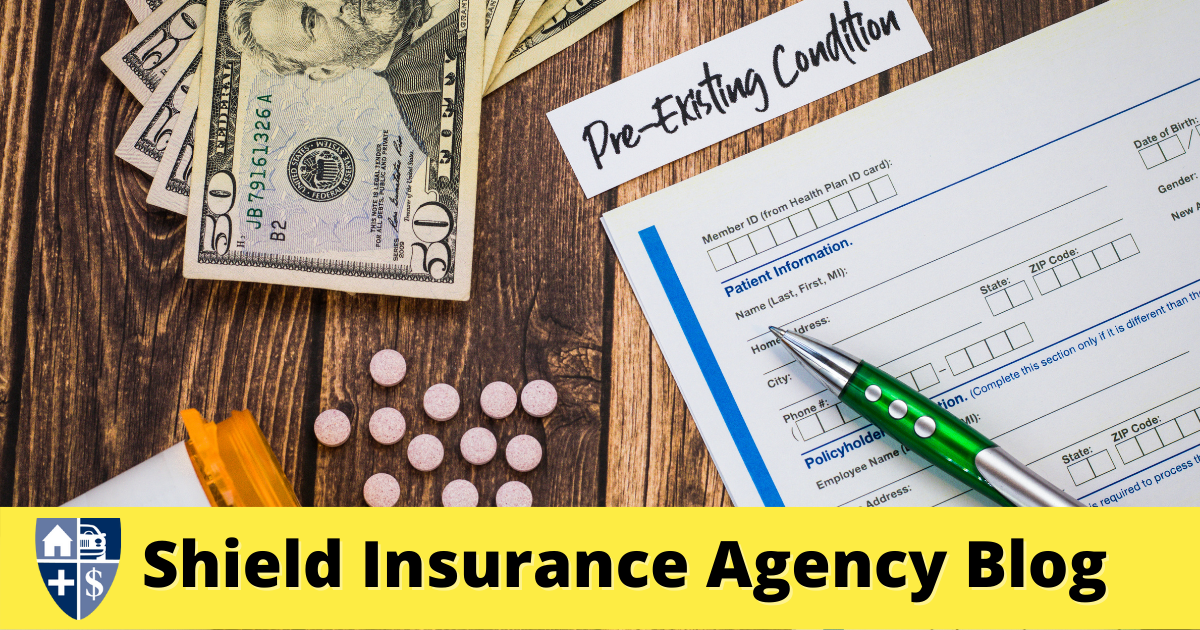
Can I get Health Insurance with Pre-existing Conditions?

Can I get Health Insurance with Pre-existing Conditions?

Health Insurance | Over 65? Click here

Many people wouldn’t be able to afford healthcare if they had to pay for it out of pocket. This is one of the many reasons why health insurance is a wise investment. Our team of insurance experts at Shield Insurance Agency is dedicated to helping Michigan residents understand the benefits of health insurance.     

What is Health Insurance?

In short, health insurance helps you pay for your healthcare. Your health insurance will pay for a portion of your healthcare costs or all of the costs after you pay a monthly premium.

Can I get Health Insurance with Pre-existing Conditions?

As a result of the Affordable Care Act, health insurance companies can’t deny a person coverage based on their pre-existing health condition. A pre-existing condition is a health issue that was present before you got healthcare coverage. Health insurance companies aren’t allowed to deny you coverage based on a pre-existing condition.

They’re also not allowed to charge you more as a result of any prior/ pre-existing health issues. Many health insurance companies consider many common chronic ailments as pre-existing conditions. A person with cancer, diabetes, asthma, and more, would be examples of pre-existing conditions. Even pregnancy can be considered a pre-existing condition. Health insurance companies aren’t allowed to discriminate against people who have these pre-existing conditions and more. 

Conversely…

If you enrolled in your healthcare plan prior to the Affordable Health Insurance Act, you have a grandfathered plan. This means that your insurance policy can still cancel your policy or raise your rates due to a pre-existing condition. However, our team is committed to answering your healthcare questions and getting the coverage you need.

Contact Us Today

We at Shield Insurance Agency are standing by to serve Michigan residents. If you are enrolled in a plan that started before 2010, you have a “grandfathered plan”. These plans can cancel your coverage or can charge you higher rates due to a pre-existing condition.


More great stories from the SHield Insurance Agency Blog

Read More
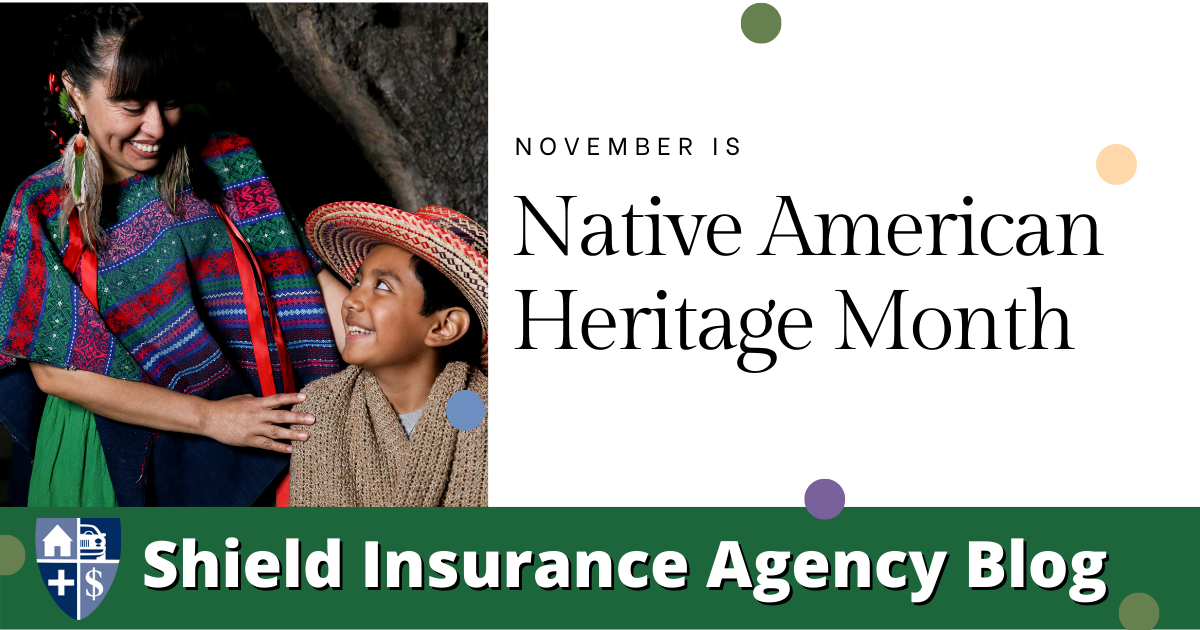
November is Native American Heritage Month

Native American Heritage

November 2022 | National American Heritage | Native American | Special Event Insurance

About National Native American Heritage Month

What started at the turn of the century as an effort to gain a day of recognition for the significant contributions the first Americans made to the establishment and growth of the U.S., has resulted in a whole month being designated for that purpose.

One of the very proponents of American Indian Day was Dr. Arthur C. Parker, a Seneca Indian, who was the director of the Museum of Arts and Science in Rochester, N.Y. He persuaded the Boy Scouts of America to set aside a day for the “First Americans” and for three years they adopted such a day. In 1915, the annual Congress of the American Indian Association meeting in Lawrence, Kans., formally approved a plan concerning American Indian Day. It directed its president, Rev. Sherman Coolidge, an Arapahoe, to call upon the country to observe such a day. Coolidge issued a proclamation on Sept. 28, 1915, which declared the second Saturday of each May as an American Indian Day and contained the first formal appeal for recognition of Indians as citizens.

The year before this proclamation was issued, Red Fox James, a Blackfoot Indian, rode horseback from state to state seeking approval for a day to honor Indians. On December 14, 1915, he presented the endorsements of 24 state governments at the White House. There is no record, however, of such a national day being proclaimed.

November is National American Indian Heritage Month The Library of Congress, National Archives and Records Administration, National Endowment for the Humanities, National Gallery of Art, National Park Service, Smithsonian Institution and United States Holocaust Memorial Museum join in paying tribute to the rich ancestry and traditions of Native Americans.

The first American Indian Day in a state was declared on the second Saturday in May 1916 by the governor of New York. Several states celebrate the fourth Friday in September. In Illinois, for example, legislators enacted such a day in 1919. Presently, several states have designated Columbus Day as Native American Day, but it continues to be a day we observe without any recognition as a national legal holiday.

In 1990 President George H. W. Bush approved a joint resolution designating November 1990 “National American Indian Heritage Month.” Similar proclamations, under variants on the name (including “Native American Heritage Month” and “National American Indian and Alaska Native Heritage Month”) have been issued each year since 1994.

Native American Heritage Month

Click here for more dedicated websites


Check out more great articles by Shield Insurance Agency

Read More
The Consumers Energy Foundation announced today $500,000 in grant funding

Consumers Energy Foundation gives $500,000 in grant money

Consumers Energy Foundation Announces $500,000 in Grants for Basic Needs Assistance to Food Bank Council of Michigan, Michigan Association of United Ways

NewsJournal.com | By Consumers Energy Foundation | Nov 2, 2022 | Contractors Insurance

JACKSON, Mich., Nov. 2, 2022 /PRNewswire/ — The Consumers Energy Foundation announced today $500,000 in grant funding to help two statewide organizations — the Food Bank Council of Michigan (FBCM) and the Michigan Association of United Ways (MAUW) — to provide direct assistance and necessities to Michiganders. The grant funding is part of the Consumers Energy Foundation’s commitment to investing in Michigan’s people and addressing critical and emergent needs in a meaningful way.

“As costs continue to rise in nearly every facet of our lives, we know many in our state are facing significant challenges to accessing basics like food and safe housing,” said Brandon Hofmeister, president of the Consumers Energy Foundation. “The Consumers Energy Foundation is committed to eliminating whatever barriers possible to those basics, and these grants will allow two organizations that are out in our communities every day to continue and expand the work they’re doing to connect people and families with the resources they need to thrive.”

The two $250,000 grants will allow both organizations to distribute the funding throughout the state where the need is greatest, with a focus on addressing immediate needs for residents within the Asset-Limited, Income-Constrained, Employed (ALICE) population. Specifically, the funding will provide:

  • $250,000 for FBCM to distribute to food banks for the purchase of food, which has become increasingly difficult due to increasing food prices and supply chain shortages; every $1 will support six meals, resulting in 1.5 million meals.
  • $250,000 for MAUW to distribute to local United Ways to provide direct assistance with basic needs, including housing repairs, gas and transportation assistance, rental assistance and other necessities.

Those in the ALICE population do not qualify for federal assistance yet are often one major expense — a car repair, broken water heater or unplanned medical expense — away from financial disaster.

“The Food Bank Council of Michigan is grateful, and very appreciative, for the support of the Consumers Energy Foundation to help fund the work of our food bank network to address food insecurity in Michigan,” said Food Bank Council of Michigan executive director Dr. Phil Knight. “For so many people in our state a daily meal has become an impossible choice between food and other crucial needs, such as electricity, childcare, or medicine.  Food banks across the state are seeing an uptick in the number of food insecure individuals due to inflation.  This generous donation from the Consumers Energy Foundation is very timely and impactful and will go a long way toward increasing food access for Michigan residents.”

“The Michigan Association of United Ways works together with Local United Ways across the state every day to help ALICE families thrive,” said Teresa Kmetz, Board Chair of the Michigan Association of United Ways. “With the generous and continued support of the Consumers Energy Foundation, the Michigan United Way Network is able to advance our work to help Michigan’s 1.5 million ALICE families meet their most basic needs – housing, child care, food, technology, health care, and transportation. We are grateful to have steadfast partners, like Consumers Energy Foundation, alongside us in this work.”

The Consumers Energy Foundation

Click here for the full story…


More excellent articles by Shield Insurance Agency Blog

Read More
AirNow.gov - Home of the U.S. Air Quality Index

Home of the U.S. Air Quality Index

AirNow.org | Air Quality | Home Insurance

Put in your zip code and see your air quality

What is AirNow?

AirNow is your one-stop source for air quality data. Our recently redesigned site highlights air quality in your local area first, while still providing air quality information at state, national, and world views. A new interactive map even lets you zoom out to get the big picture or drill down to see data for a single air quality monitor.


AirNow reports air quality using the official U.S. Air Quality Index (AQI), a color-coded index designed to communicate whether air quality is healthy or unhealthy for you. When you know the AQI in your area, you can take steps to protect your health.

AirNow is a partnership of the U.S. Environmental Protection Agency, National Oceanic and Atmospheric Administration (NOAA), National Park Service, NASA, Centers for Disease Control, and tribal, state, and local air quality agencies. Complete list of AirNow partners. Agencies all over the country send their monitoring data to AirNow for display. The Department of State provides data from U.S. Embassies and Consulates to inform personnel and citizens overseas, and the U.S. Forest Service and NOAA provide fire and smoke data.

AirNow’s centralized data system provides quality control, national reporting consistency, and the ability to distribute data to the public, researchers, businesses, educators, and to other data systems. In AirNow, you’ll find:

  • Current and forecast air quality maps and data for more than 500 cities across the U.S. 
  • Current and historical data for U.S. Embassies and Consulates around the world
  • Current fire conditions including fire locations, smoke plumes, and air quality data from permanent and temporary air quality monitors
  • Air quality data for Canada and Mexico
  • Enviroflash emails, apps, widgets, and an API
  • Health and air quality information for
    • the public
    • healthcare professionals
    • teachers and students 
    • weathercasters

Air Quality

Air Quality Index (AQI) & Health
Millions of people live in areas where air pollution can cause serious health problems. Local air quality can affect our daily lives. Like the weather, it can change from day to day. EPA developed the Air Quality Index, or AQI, to make information available about the health effects of the five most common air pollutants, and how to avoid those effects.

Click here to find out how your air quality is!

More fabulous blogs from Shield Insurance Agency

Read More
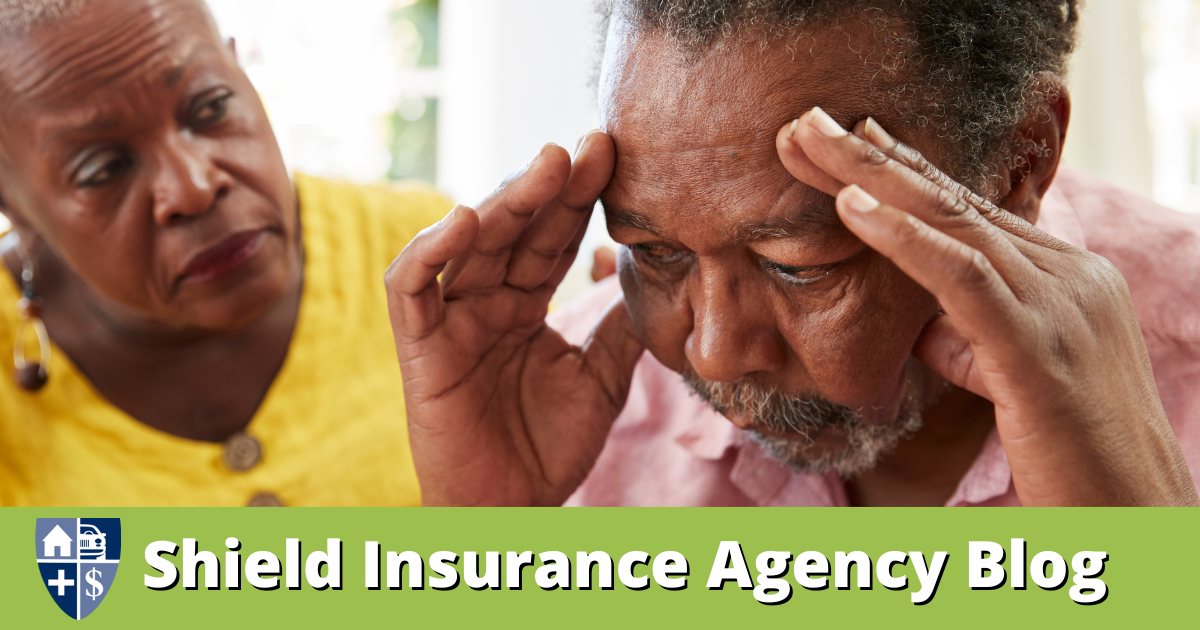
What Black Adults Need to Know About Stroke Risk

What Black Adults Need to Know About Stroke Risk

Preventing and recognizing signs of the medical emergency are key

AARP | By  Joyce Sampson | September 21, 2022 | Black Adults

​Richard Horton, an insurance broker in Pasadena, California, walked around for at least a decade of his middle-aged years with blood pressure hovering around 178/95 millimeters of mercury (mm Hg, the unit of measurement for blood pressure), dangerously close to a hypertensive crisis and a sure candidate for stroke. For comparison, what’s considered a normal level for most adults is less than 120/80 mm Hg.

Diagnosed with high blood pressure during a routine physical exam in the late 1990s, he wasn’t worried. Per his doctor’s orders, he returned for weekly follow-up visits to monitor changes. The numbers didn’t improve. But Horton, who is Black, didn’t receive treatment.

“At that point,” he recalls, “the doctor said that in the medical field, we find that African Americans have a higher blood pressure rate than whites and others. Because of that fact, we’re not going to push medication, but we’ll keep an eye on your pressure. If it gets much higher, then we’ll prescribe medication.” (Research shows Black patients often aren’t offered the full range of appropriate treatments when it comes to blood pressure management.)

In August 2011, while preparing to close a big sale, Horton climbed out of bed and walked into the bedroom wall. He was having a stroke. During a hospital stay that lasted over two months, Horton, who was then 55, had a second stroke. He couldn’t walk, talk or use his left arm. ​

A growing gap | Black Adults

Nearly 800,000 people in the U.S. have stroke each year — this happens when a blood vessel that carries oxygen and nutrients to the brain is either blocked or bursts — and Black adults bear a disproportionate burden of those cases.

In fact, the risk of stroke among Black Americans is nearly twice as high as it is for whites, data from the Centers for Disease Control and Prevention (CDC) shows; some studies suggest it’s even higher. Black Americans are also much more likely to die from stroke, and those who do survive are more likely to be disabled than stroke survivors in other racial groups.

Click here for the rest of the story…


Visit our other blog posts!

Read More
The Unique Challenges of Dementia Caregiving

The Unique Challenges of Dementia Caregiving

Dementia Caregiving. Tips on how to manage such often-difficult care

by Selene Yeager, AARP, May 31, 2022

Dementia Caregiving: Douglas Scharre, M.D., author of Long-Term Management of Dementia and director of the division of cognitive and memory disorders at the Ohio State University Wexner Medical Center, explains how to manage such often-difficult care.

With Alzheimer’s disease, a loved one can seem lucid one day and unrecognizable the next. Why?

Dementia Caregiving: Alzheimer’s is a slow process in which toxic proteins build up in specific areas of the brain, starting with the area where you form new memories. So if you have conversation with someone in early stages, they may not remember the lunch they had with you yesterday, but they may be able to talk about a wonderful anniversary dinner from three years ago, because they’re accessing a stored memory in the part of the brain that’s not damaged.

The disease also causes you to lose brain cells, so you have less of a reserve when something throws you off, such as a bad night’s sleep or being under the weather. So they might seem OK, but if they didn’t sleep well, they can have much more trouble because they don’t have the reserves.

What causes symptoms not related to memory, like mood swings or confusion?

In about 75 percent of people with the disease, those toxic proteins spread to other parts of the brain, like those responsible for comprehension and language, which is why you have to communicate more simply as the disease progresses. It can affect the spatial area, which is why people get turned around and lost. The area that’s responsible for executive function like problem-solving and decision-making can be affected, which is why someone might pause and ponder, How do I figure out this microwave?

In addition, it can affect the limbic lobe, or our emotional brain, so they may have mood issues like anxiety, depression, restlessness and sleep issues. One common behavior when this part of the brain is affected is delusions or false beliefs — they think something happened when it really didn’t.

What are some ways to be an effective caregiver in those circumstances?

You need to change your approach. Your loved one is not going to change even if you explain something 500 times. False beliefs get fixed. If your dad thinks he’s not in his house and needs to get home, trying to bring him back to reality by saying, “My gosh, Dad, don’t be silly. This is your house. You’ve lived here 40 years,” is only going to start a fight. Instead, empathize with them. You can say, “Thank you for telling me. It’s getting late, so why don’t we just hang out here? We’ll figure it out tomorrow.” That way, you are on their side, and they feel reassured.

Also, make them feel that you are doing things together rather than making them feel bossed around. They are constantly being told, “You better go to the bathroom. You better get dressed. You better eat now.” No one likes that. Instead, try, “I’m going to the bathroom now, but would you like to go first?” Then they don’t feel singled out.

Finally, employ redirection. If it’s time to eat, but they’re in a mood or don’t want to come to the kitchen, do not insist they come to the table. Instead say, “Can you help me?” Most often they will say, “OK, what do you need?” Then you can say, “I need help in the kitchen.” And when they get there, you can say, “Let’s sit down and have dinner now.”

Dementia Caregiving

How should a caregiver deal with outbursts of anger? And how common is it for a person with dementia to lash out physically?​

Click here for the rest of the story…


Check out more blogs with Shield Insurance!

Read More